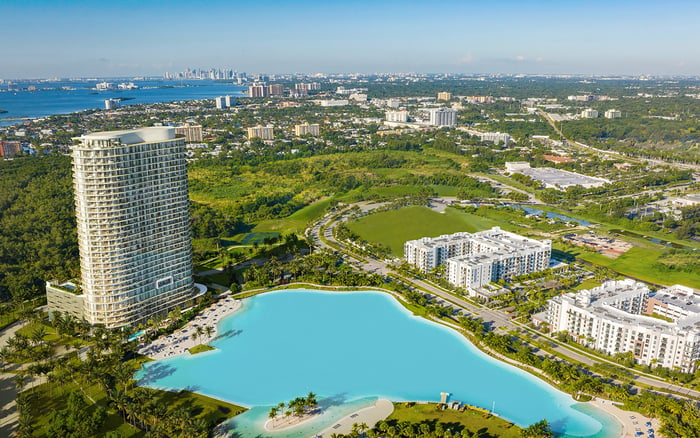
A buyer-focused look at why resident-app data privacy is becoming part of the luxury value proposition at One Park Tower by Turnberry in North Miami.

One Park Tower by Turnberry North Miami sits at the center of a timely buyer question: in a luxury residential setting, how much does digital privacy matter when daily life is increasingly managed through apps, access systems, amenity reservations, service requests, guest registrations, and building communications?
The answer is increasingly important for South Florida buyers. A residence is still judged by its design, location, amenity experience, service culture, and long-term ownership appeal. Yet the invisible layer behind those experiences now matters as well. For a buyer considering One Park Tower by Turnberry in North Miami, technology is not simply a convenience feature. It can become part of the security promise, the ease-of-ownership promise, and the overall asset-quality conversation.
In a market where buyers may compare North Miami with Brickell, Sunny Isles Beach, Bal Harbour, Miami Beach, and other high-profile South Florida addresses, due diligence is becoming more sophisticated. Floor plans, finishes, views, parking, and services still matter. The next layer is more personal: what data may be collected, how long it may be stored, who may access it, and under what circumstances it may be shared or deleted.
Resident apps are often presented as convenience tools. In luxury buildings, they may support access, amenity bookings, delivery notices, maintenance requests, visitor management, building announcements, or communication with management. When thoughtfully implemented, this digital layer can reduce friction and make a building feel more responsive.
That convenience can be especially meaningful for second-home owners, frequent travelers, international buyers, and residents who manage access or service needs while away from South Florida. A buyer may want to coordinate a vendor, approve a guest, review a building notice, or track a service request without being physically present. In that context, the resident app becomes more than a phone feature. It becomes part of ownership management.
The tradeoff is that convenience depends on trust. A system that makes life easier may also create records of activity. That does not make the technology negative. It simply means the privacy framework behind it should be understood before a buyer treats the app experience as a luxury advantage.
The same digital tools that simplify residential life can reveal patterns. Access activity may suggest when someone is home or away. Amenity bookings may reflect routines. Guest registrations may identify visitors. Service requests may indicate occupancy, vendor use, travel timing, or the condition of a residence.
For many affluent buyers, privacy is not an abstract concern. It can relate to family security, personal discretion, professional sensitivity, reputational risk, and asset protection. The key question is not whether technology is useful. It is whether the system is governed with the same discretion buyers expect from a front desk, security team, and residential management structure.
A clear privacy explanation can support confidence. A vague or incomplete answer can create hesitation, even when the physical residence and lifestyle story are compelling. In the luxury market, uncertainty can be enough to slow a decision.
The most practical questions are straightforward. Buyers should ask for the resident-app privacy policy, the vendor name, the data-retention rules, the policy for access-control logs, and the terms governing any third-party sharing. These are not minor technical details. They help define how daily life in a building may be documented and protected.
Buyers should also ask whether data is kept indefinitely or deleted after a defined period, whether building staff can view individual resident activity, whether vendors can access personal information, and whether data can be exported, transferred, or used outside the building ecosystem. The goal is not to reject technology. The goal is to confirm that technology serves the resident.
For a new-construction or pre-construction purchase, this inquiry can be especially useful because operating expectations may be shaped early. Buyers often focus on what will be delivered physically. They should also understand how the completed building is expected to operate digitally.
Privacy is not only a present-tense concern. It may become part of future resale conversations as more buildings rely on app-enabled service models. Future buyers may increasingly ask how resident data is collected, stored, shared, and deleted before deciding whether a building feels secure and professionally managed.
This is where technology infrastructure becomes part of perceived asset quality. A buyer comparing One Park Tower by Turnberry in North Miami with other South Florida luxury options may view digital governance in the same broad category as service standards, maintenance discipline, security protocols, and management quality. The question becomes whether the building’s operating model protects the lifestyle it promotes.
For privacy-conscious buyers, a clear answer can reduce friction. For second-home owners, it can make remote ownership feel more controlled. For investment-minded purchasers, it can become another factor in how the residence may be viewed by a future buyer.
Luxury is often defined by what residents do not have to think about. A well-run building anticipates friction, resolves it quietly, and preserves the resident’s sense of control. Data privacy belongs in that same category. It should not become a surprise after closing. It should be part of the conversation early enough to inform confidence.
For One Park Tower by Turnberry North Miami, the useful lens is buyer discipline rather than assumptions about a specific app vendor or operating policy. In app-enabled residential living, the strongest buildings will not merely offer convenience. They will be able to explain the rules around that convenience.
That distinction matters. A resident app can make a building feel more responsive. A privacy framework can make it feel more trustworthy. In the luxury market, trust is an amenity.
Is One Park Tower by Turnberry in North Miami? Yes. The article topic is One Park Tower by Turnberry in North Miami, with a focus on how resident-app data privacy can affect buyer decisions.
Why does resident-app privacy matter to luxury buyers? Resident apps may involve access activity, amenity bookings, guest registrations, service requests, and building communications that can reveal personal routines.
Does this article claim a specific privacy issue at One Park Tower? No. The point is that privacy transparency should be reviewed as part of buyer due diligence in app-enabled luxury residential settings.
What should buyers request before purchasing? Buyers should ask for the app privacy policy, vendor information, data-retention rules, access-log policy, and third-party sharing terms.
Why is this relevant for second-home owners? Second-home owners may manage guests, vendors, deliveries, and service needs remotely, which makes digital convenience and privacy controls more important.
Can app privacy influence resale value? Potentially. Future buyers may place more weight on how a building collects, stores, shares, and deletes resident data.
Are resident apps only about convenience? No. They can improve convenience, but they can also become part of the security, discretion, and ownership-management conversation.
What is a key privacy concern with access logs? Access logs may create records that suggest when a resident, guest, or vendor entered or used parts of a building.
How should buyers compare technology across South Florida luxury buildings? Buyers should look beyond app features and ask how data is governed, who can see it, and how long it is kept.
What is the main takeaway for buyers? App-enabled convenience can be valuable, but privacy governance should be understood before it becomes part of the ownership experience.
For a confidential assessment and a building-by-building shortlist, connect with MILLION.
If branded residences are on your mind — as a home or as an allocation — we would be glad to share what we are seeing, privately.
Begin a quiet conversation
.jpg&width=700&height=438&fit=cover)