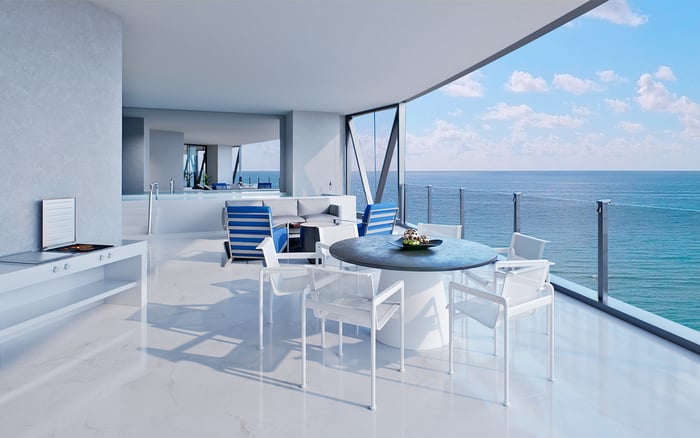
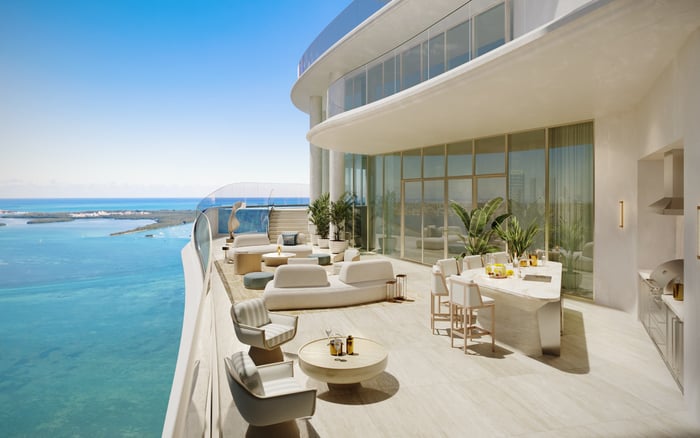
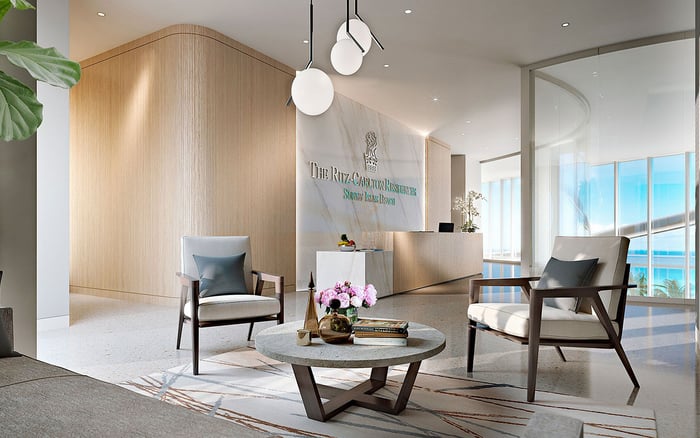
A discreet buyer’s guide to selecting a Sunny Isles Beach or nearby South Florida residence around the full private-aviation arrival routine, from terminal rhythm to building operations.
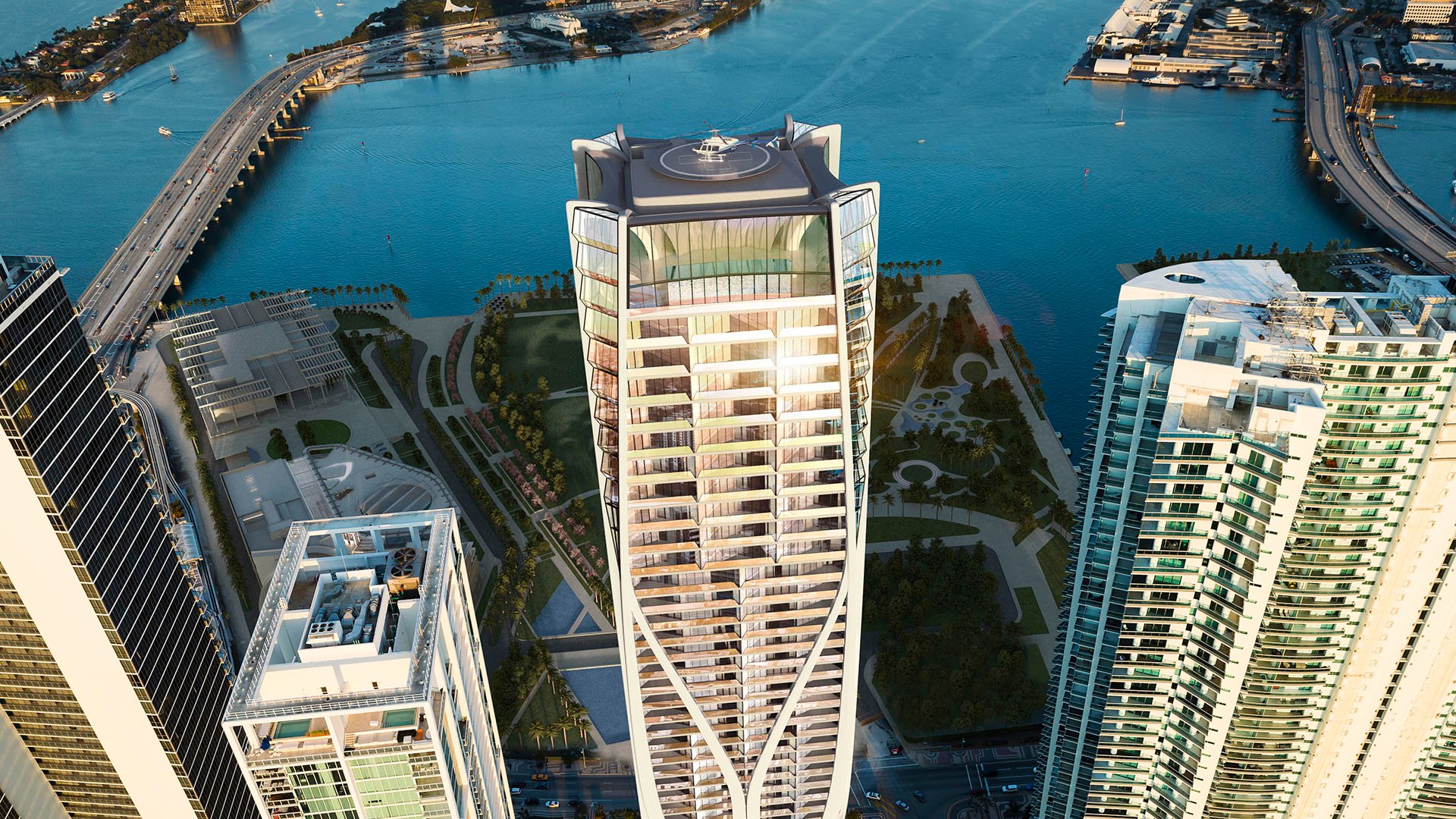
For many New York buyers, the South Florida search now begins before the residence itself. It begins with the routine: leaving the city, reaching a private terminal, landing in South Florida, stepping into a waiting car, and arriving at a building that feels composed rather than crowded. The question is not simply where the home is. It is how gracefully the home receives you after the flight.
Sunny Isles Beach has become a natural part of that conversation because it pairs resort-like coastal living with a residential rhythm that can feel legible to the frequent private-aviation traveler. For the buyer moving between New York and South Florida, the strongest choice is not always the most famous address. It is the address that compresses the psychological distance between aircraft, car, elevator, and terrace.
That is the discipline: choose the home around the full arrival sequence. The view matters. The building matters. The staff matters. The drive pattern matters. The way luggage, guests, pets, children, and security move through the property matters. A private flight can feel effortless, but a poorly matched residence can return that saved time as friction.
Aviation-minded buyers often focus on the flight itself, but the most revealing part of the routine is usually the final segment. After landing, how many transitions remain before the residence feels private? Is the car approach intuitive? Does the building entry feel discreet? Can household staff coordinate an arrival without turning it into a production? Is there room for luggage, garment bags, sporting equipment, and a last-minute grocery delivery without disrupting the lobby experience?
These questions are especially relevant for a second-home buyer. The home may be used intensely for long weekends, school breaks, holidays, and seasonal stays. In that pattern, the first hour after arrival carries unusual weight. A residence that allows a family to move from aircraft to kitchen, pool, beach, or bedroom with minimal decision-making will feel more valuable over time than one that only photographs well.
The right building also anticipates the departure. Private aviation is often chosen for control, and that control is best preserved when the residence can support early departures, late returns, valet coordination, secure storage, and a calm exit from the home. A shorter routine is not only about geography. It is about choreography.
Sunny Isles Beach offers a clear proposition for the New York buyer who wants South Florida to feel immediately different: high-rise coastal living, open water presence, and a residential atmosphere shaped around the ocean. In practical shorthand, Sunny Isles is often considered for oceanfront living with a distinct resort sensibility, while still allowing buyers to compare nearby alternatives with different daily rhythms.
Within Sunny Isles, the decision becomes more nuanced. A buyer drawn to brand-led condominium living may study St. Regis® Residences Sunny Isles for its identity and coastal setting. Those who want an automotive-inflected tower concept may consider Bentley Residences Sunny Isles as part of a broader conversation about privacy, arrival, and ownership style. Buyers who prefer an established ultra-luxury oceanfront name may also compare the experience at Turnberry Ocean Club Sunny Isles.
The key is not to assume that every oceanfront tower solves the same problem. Some buyers prioritize brand familiarity. Others want larger residences, deeper staff support, a quieter lobby atmosphere, or a building culture that suits seasonal use. The aviation routine should be used as a filter: after landing, which address restores the greatest sense of control?
A shorter private-aviation routine can sometimes point beyond the first imagined neighborhood. Aventura may appeal to buyers who want access to shopping, dining, marinas, and a more mainland-oriented rhythm while remaining close to the Sunny Isles and coastal corridor. A residence such as Avenia Aventura can enter the conversation for buyers who want a practical base with a different daily cadence than an oceanfront tower.
Fort Lauderdale is another useful comparison for New York buyers weighing aviation, boating, and a more expansive South Florida lifestyle. Some clients find that the right answer is not the shortest theoretical route, but the place where the entire ownership pattern feels easier. For those considering a hotel-branded residential environment north of Miami, Four Seasons Hotel & Private Residences Fort Lauderdale can be evaluated within a broader lifestyle map.
This is where the search becomes personal. If the residence will be used primarily for beach weekends, Sunny Isles may remain central. If the home must support boating, business guests, extended family, or a quieter seasonal schedule, the map can widen intelligently. A new-construction buyer may also place greater emphasis on service infrastructure, fresh design, and the ability to tailor the home before habitual use begins.
For private flyers, a building is not only architecture. It is an operating system. The strongest residences make arrivals feel anticipated. Valet should be crisp. Elevators should feel private and predictable. Security should be reassuring without becoming theatrical. Loading areas, package rooms, pet access, and service corridors should be understood before purchase, not discovered during the first holiday weekend.
Floor plan also affects the routine. A family arriving from New York may want bedrooms separated from entertaining areas, a kitchen that can be stocked before arrival, and terraces that create an immediate sense of decompression. If guests travel with the owner, secondary suites and staff-friendly circulation become more important. If the owner arrives alone for work-focused stays, privacy, quiet, and a strong primary suite may take precedence.
Parking and car management deserve similar scrutiny. Private aviation often pairs with prearranged ground transportation, but owners still want clarity around resident parking, guest arrival, and the handling of multiple vehicles. The best buildings reduce the need for improvisation. In luxury real estate, that quiet absence of friction is often the truest amenity.
A disciplined search begins with three scenarios. First, the quick weekend arrival: land, reach the residence, change, dine, sleep, and leave with minimal effort. Second, the family stay: children, pets, guests, luggage, provisions, beach equipment, and a longer list of household needs. Third, the extended seasonal stay: staff routines, fitness, wellness, storage, entertaining, and the subtle question of whether the building feels like a home rather than a hotel corridor.
Each candidate address should be tested against those scenarios. A beautiful residence that works for only one pattern may become less compelling over time. A slightly less obvious choice that works across all three may be the more sophisticated purchase.
For New York buyers, South Florida is not a single market experience. Sunny Isles Beach, Aventura, Fort Lauderdale, Surfside, Bal Harbour, Miami Beach, and Brickell each create a different arrival mood. The private-aviation buyer should resist choosing by reputation alone. Instead, the search should be built around repetition: if this trip happened twice a month, which home would still feel effortless?
Should private-aviation buyers choose only by proximity to an airport? No. The better measure is the full door-to-door routine, including car approach, building entry, elevator privacy, and household readiness.
Why does Sunny Isles Beach appeal to New York buyers? It offers a coastal residential setting that can feel immediately restorative after a city departure, especially for buyers focused on oceanfront living.
Is a branded residence always better for frequent travelers? Not always. Brand identity can be useful, but operations, privacy, layout, and building culture should carry equal weight.
What should I test during a private showing? Pay attention to arrival flow, valet behavior, lobby atmosphere, elevator experience, service access, and how the residence feels after the door closes.
Should I consider Aventura instead of Sunny Isles Beach? Yes, if your routine benefits from a more mainland-oriented lifestyle with retail, dining, and marina convenience nearby.
When does Fort Lauderdale make sense? It can be compelling for buyers whose South Florida life includes boating, a broader northern corridor, or a different pace from Miami.
Do high-floor residences improve the arrival experience? They can enhance privacy and views, but they should be weighed against elevator performance, staff coordination, and daily convenience.
Is new construction preferable for a second home? It may be attractive when a buyer wants newer systems, contemporary layouts, and the possibility of a more tailored ownership experience.
How should families evaluate the routine? Families should consider luggage, children, pets, guest suites, kitchen stocking, storage, beach access, and staff movement after every arrival.
What is the simplest rule for choosing? Choose the residence that makes repeated arrivals feel calm, private, and predictable, not merely the one that looks best in isolation.
If you'd like a private walkthrough and a curated shortlist, connect with MILLION.
If branded residences are on your mind — as a home or as an allocation — we would be glad to share what we are seeing, privately.
Begin a quiet conversation