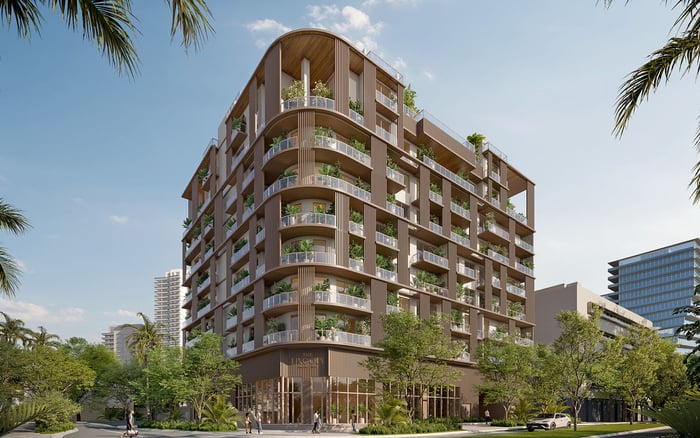
A buyer-focused comparison of daily life at Mr. C Tigertail Coconut Grove, The Lincoln Coconut Grove, and Vita at Grove Isle, with emphasis on service, privacy, neighborhood rhythm, and practical ownership fit.

At the top end of Coconut Grove, the decision is rarely just about square footage, finishes, or a recognizable name. It is about how ownership feels at 8 a.m., at 6 p.m., after a long flight, and on an ordinary Tuesday when nothing dramatic is happening. Mr. C Tigertail Coconut Grove, The Lincoln Coconut Grove, and Vita at Grove Isle all belong in that conversation, but they should not be evaluated as interchangeable luxury addresses.
The central distinction is daily rhythm. Mr. C Tigertail Coconut Grove is the service-forward, branded-hospitality proposition, shaped by the Mr. C service model and a more hotelized condominium style of living. The Lincoln Coconut Grove is the lower-density, boutique residential alternative, with privacy, discretion, and quieter circulation at the center of its appeal. Vita at Grove Isle belongs in the same buyer conversation because purchasers considering the Grove often weigh different versions of seclusion, service, and neighborhood access, but its specific daily-use details should be confirmed through current project materials and legal documents before conclusions are drawn.
For a sophisticated buyer, the right question is not which building is more impressive. It is which building best matches the owner’s preferred level of interaction, management, privacy, and connection to Coconut Grove’s street life.
The appeal of Mr. C Tigertail Coconut Grove begins with its hospitality DNA. Its ownership experience is best understood as hotelized condominium living, not a conventional residential cadence with amenities attached. The service model is not a decorative extra. It is part of the building’s identity and part of how an owner is meant to move through the day.
That distinction is especially relevant for buyers who want a turnkey lifestyle. Frequent staff interaction, a more managed daily environment, and hospitality programming can make ownership feel effortless. For a second-home owner, that can be a meaningful advantage. Arrival, departure, guest coordination, and the general sense of being received all matter more when a residence is used in concentrated intervals rather than as a purely private everyday household.
The aesthetic and operational tone also matters. Mr. C Tigertail’s Italian, modern-classic hospitality sensibility gives the common areas and service experience a curated quality. Owners who enjoy the polish of a branded environment may find that reassuring. Those who prefer invisibility may find it too present.
Its urban Coconut Grove setting is another differentiator. The day-to-day routine is more street-connected than a private-island residential model. Walking out into the neighborhood, using nearby dining and errands, and feeling part of the Grove’s civic texture are central to why this format works. Convenience is the leading daily-life advantage: service, programming, and neighborhood access are bundled into the ownership proposition.
The Lincoln Coconut Grove is framed differently. Its strength is not the drama of a branded hospitality experience, but the refinement of a smaller, more discreet residential environment. Lower density changes the way a building lives. Fewer residents typically mean quieter circulation, more predictable common-area use, and a different social temperature from a building designed around a highly serviced, hotel-like rhythm.
This matters most to owners who want Coconut Grove without the feeling of a quasi-hotel. The Lincoln’s appeal is rooted in privacy and neighborhood living. It is positioned for buyers who want to participate in the Grove’s daily fabric while still returning to a residence that feels calm, composed, and fundamentally residential.
Boutique is not merely a marketing word in this context. It describes a buyer preference: less spectacle, fewer touchpoints, and a more private relationship with the building. For some owners, luxury means being recognized and attended to. For others, it means moving through the property with minimal friction and minimal visibility. The Lincoln speaks more directly to the second buyer.
That distinction also affects long-term comfort. A highly serviced building can be energizing, but it can also feel programmed. A lower-density building can feel more personal, but it may not provide the same intensity of hospitality support. The right answer depends on whether the owner wants daily orchestration or residential quiet.
Vita at Grove Isle should be considered through a separate lens. In a comparison that includes a branded-hospitality condominium and a lower-density neighborhood residence, Vita raises a third question: how much separation from the street-connected Grove routine does the buyer actually want?
That question should be answered carefully. Buyers should verify the exact service structure, access experience, amenity program, residence mix, parking plan, guest policies, and association framework before treating Vita as equivalent to either Mr. C Tigertail or The Lincoln. The most important issue is not the label attached to the project, but the practical life it creates.
For some purchasers, a more separated residential pattern can feel restorative. For others, it can feel less spontaneous than an urban Grove routine. If neighborhood walkability and frequent local interaction are essential, Mr. C Tigertail’s street-connected convenience may carry more weight. If the owner’s priority is discretion and a quieter residential cadence, The Lincoln may feel more aligned. Vita’s role is to clarify whether the buyer is seeking a different relationship with Coconut Grove altogether.
In Coconut Grove shorthand, this is the difference between living with the neighborhood at your doorstep, living quietly within its fabric, or evaluating a more removed pattern of arrival and retreat.
A useful way to compare these projects is to imagine three ownership personalities. The first wants service to be visible, polished, and reliably available. That buyer is likely to understand the value of Mr. C Tigertail quickly. The second wants privacy, lower density, and a residence that does not behave like a hotel. That buyer will likely gravitate toward The Lincoln. The third is still deciding whether Coconut Grove should be an everyday neighborhood experience or a more secluded base, which is where Vita at Grove Isle enters the discussion.
The investment dimension is also qualitative. In ultra-prime residential decisions, the durability of demand often comes from clarity of product. Branded hospitality has a clear audience. Boutique privacy has a clear audience. A more separated residential experience can also have a clear audience, provided the daily operations match the promise. Ambiguity is what buyers should avoid.
New project decisions in this segment should be made with attention to governance as much as design. Service standards, staffing philosophy, amenity rules, and resident density can shape satisfaction more than a single material selection. The most elegant lobby will matter less if the daily rhythm is wrong for the owner.
Choose Mr. C Tigertail if the appeal lies in convenience, service, and a hospitality-inflected life in Coconut Grove. It is the stronger fit for owners who want a managed environment, frequent staff contact, and a building experience that feels curated from arrival onward.
Choose The Lincoln if the priority is discretion. It is better aligned with buyers who value quieter movement, lower density, and a residential atmosphere that supports calm rather than programming. Its proposition is not less luxurious. It is less performative.
Approach Vita at Grove Isle as a diligence-driven decision. Rather than assuming it mirrors either of the other two, buyers should focus on how the property will function every day. Access, services, amenities, and governance should be tested against the owner’s actual habits.
The best choice is ultimately personal. Coconut Grove’s luxury market is mature enough to offer different versions of refinement. The mistake is to compare only finishes when the more consequential difference is how each building manages arrival, privacy, service, and the owner’s relationship to the neighborhood.
What is the main difference between Mr. C Tigertail and The Lincoln? Mr. C Tigertail is centered on branded, service-forward living, while The Lincoln is centered on lower-density residential privacy.
Is Mr. C Tigertail better for a second-home owner? It may be a strong fit for owners who value turnkey support, staff interaction, and a managed daily lifestyle.
Who is The Lincoln best suited for? The Lincoln is best suited for buyers who want discretion, quiet circulation, and a more traditional residential atmosphere.
Should Vita at Grove Isle be compared directly with the other two? It should be compared carefully, with attention to its confirmed services, access, amenities, and ownership structure.
Does branded hospitality always mean a better ownership experience? Not always. It depends on whether the owner wants more service interaction or prefers a more private daily routine.
Why does density matter in luxury condominium living? Lower density can affect privacy, elevator use, common-area calm, and the overall feeling of residential ease.
Is walkability a key advantage for Mr. C Tigertail? Yes. Its urban Coconut Grove setting supports a more neighborhood-connected daily routine.
What should buyers review before choosing among these projects? Buyers should review service standards, association rules, staffing, amenity access, parking, guest policies, and daily operations.
Can The Lincoln feel luxurious without a hospitality brand? Yes. Its luxury is expressed through privacy, discretion, and a quieter residential format rather than overt programming.
What is the simplest way to decide? Choose the building whose daily rhythm best matches how you want to arrive, move, host, and retreat.
For a confidential assessment and a building-by-building shortlist, connect with MILLION.
If branded residences are on your mind — as a home or as an allocation — we would be glad to share what we are seeing, privately.
Begin a quiet conversation