In-residence dining at Mr. C Residences Boca Raton may reduce the work of hosting, but not the space guests require. A buyer-focused guide to balancing private dining capacity, advertised shared amenities, and à la carte costs before choosing a smaller residence.
The appeal is clear: dinner arrives, preparation recedes, and hosting feels more effortless. At Mr. C Residences Boca Raton, advertised in-residence dining raises a practical question for buyers: can hospitality services replace some of the square footage traditionally reserved for entertaining?
Sometimes-but the distinction matters. In-residence dining can reduce cooking and preparation. It does not increase seating capacity, circulation space, or privacy. A smaller home is a convincing choice only when its private gathering spaces still accommodate the occasions you genuinely want to host there.
The project is marketed as a 12-story condominium with 133 private residences, two- and three-bedroom homes, and a rooftop resort deck. That combination warrants a close look at layout efficiency. Bedroom count alone will not tell you whether a residence can transition comfortably from an ordinary evening to a seated dinner.
The advertised dining program includes in-residence food and beverage service, private-event catering, and Bellini Restaurant with indoor dining and an outdoor European-style terrace. Poolside food and beverage service offers another potential setting for a relaxed afternoon with company. These are advertised offerings, not confirmation of current operating availability.
Each serves a different purpose. In-residence dining brings the meal home. Catering can ease the preparation required to host. Restaurant dining moves the gathering outside the residence altogether. Only the last option removes the need to accommodate the entire meal within your own floor plan.
That distinction should guide the purchase. If your preferred evening is a restaurant dinner followed by a quiet drink at home, you may need less private entertaining capacity. If you want every guest seated around your own table, delivered food changes the workload, not the space required.
For a buyer also considering The Residences at Mandarin Oriental Boca Raton, the useful comparison goes beyond the brand name. Apply the same test to each candidate: what must happen inside the home, and what are you comfortable moving elsewhere?
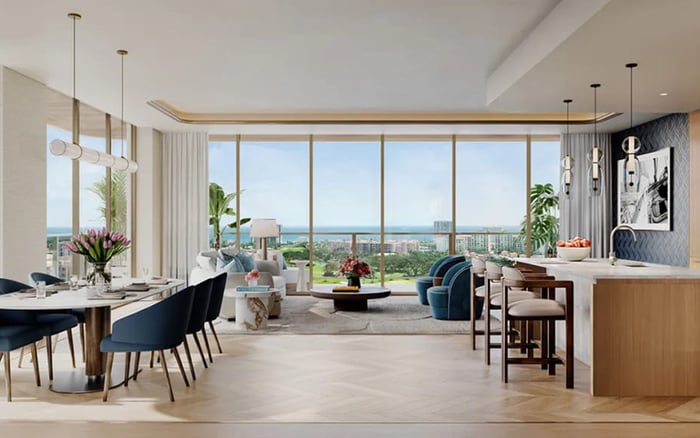
The residences are advertised with spacious, open floor plans and open kitchens, alongside floor-to-ceiling windows and private terraces. Kitchens include custom Italian cabinetry, natural-stone countertops, and Wolf and Sub-Zero appliances. The kitchen remains a meaningful part of the home even when cooking is optional.
Open planning allows living and dining functions to share space, but makes furniture placement consequential. Before choosing a smaller layout, draw the dining table you actually intend to use, with chairs occupied and routes to the kitchen and terrace kept clear. Check whether serving surfaces displace everyday seating or interrupt circulation.
The Residence 06-B plan labels a dining area and wine storage. Residence 09-G identifies three bedrooms, 3.5 bathrooms, a dining area, and wine storage. These plans reinforce the point: hospitality services do not erase the need for dining space at home.
If Alina Residences Boca Raton is also on your shortlist, use the same furniture exercise rather than assuming a room label establishes equivalent hosting capacity. The comparison should turn on usable dimensions and your preferred arrangement, not bedroom count alone.
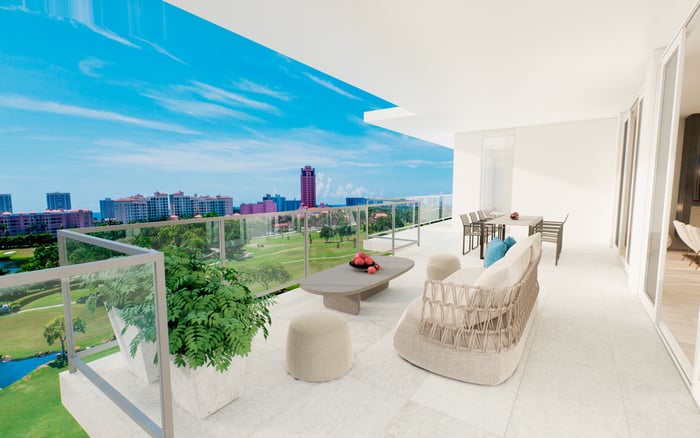
A private terrace may suit your style of informal entertaining, but assess it as carefully as the interior. Consider the furniture you would place there and whether the gathering would still work if you chose to remain indoors. Do not count the same seats twice when judging capacity.
Beyond the residence, advertised rooftop outdoor grills and dining areas offer potential alternatives. A residents-only Mr. C Bar and Lounge, pool seating and cabanas, and a residents’ lounge with billiards and card tables broaden the social settings. An open-air cinema and golf simulator add recreational possibilities.
These amenities are not interchangeable with a private dining room. The advertised program does not establish exclusive-booking rights, guest capacity, or private-event rental, staffing, and food-and-beverage charges for Bellini or rooftop spaces. Until those terms are confirmed, treat shared settings as possibilities-not dependable substitutes for private square footage.
Start with your actual hosting habits, not an imagined social calendar. Separate meals you enjoy at home from those you would happily move to a restaurant. Then identify the occasions for which privacy, familiarity, or control of the setting is essential.
Buyers who favor restaurant meals, casual terrace gatherings, and occasional catering have the strongest lifestyle case for less dedicated entertaining space. Those who regularly host holiday meals, extended family, private chefs, or elaborate dinners should be more protective of dining capacity, staging surfaces, storage, and circulation.
A shortlist that includes Glass House Boca Raton should be tested against the same personal requirements. Decide which gatherings belong at home before comparing residences. That keeps an appealing amenity program from answering a question that is fundamentally about how you live.
For a second residence, the temptation to avoid rarely used entertaining space can be particularly strong. Yet a home occupied intermittently may still need to accommodate the family occasions that define those visits. Judge the plan against those important stays, not simply the number of nights you expect to spend there.
Food, beverage, spa, and certain other services are advertised à la carte, with charges beyond condominium assessments. No purchase-price savings, recurring dining budget, or financial break-even point is established here. A smaller residence should not be presumed financially superior because dining service is available.
Before committing, request current menus, service hours, delivery fees, minimum orders, catering terms, and cancellation rules. Confirm guest access, reservation procedures, capacity, and any exclusivity arrangements for shared venues. Obtain written clarification of post-closing service commitments, distinguishing what is promised from what is merely advertised.
The decision rule is simple: buy enough private space for the gatherings you will not compromise, then use hospitality to make those occasions easier. In-residence dining can support a more efficient home. It cannot make an undersized dining area larger.
For a discreet assessment of the residence and entertaining capacity that suit your life, connect with MILLION.
If branded residences are on your mind — as a home or as an allocation — we would be glad to share what we are seeing, privately.
Begin a quiet conversationIt can support a smaller layout if you prefer dining out or hosting modest gatherings. It reduces preparation work but does not increase seating, circulation, or privacy.
The project is marketed with two- and three-bedroom residences in a 12-story condominium containing 133 private residences.
Yes, private-event catering is included in the advertised program. Pricing, availability, and service terms should be confirmed before relying on it.
Yes, Bellini Restaurant is advertised with indoor dining and an outdoor European-style terrace. Private-event rights and charges are not established by the advertised amenity program.
The published Residence 06-B and Residence 09-G plans both identify dining areas and wine storage. Dining services do not eliminate those functions within the home.
The kitchens are advertised with custom Italian cabinetry, natural-stone countertops, and Wolf and Sub-Zero appliances within open layouts.
They may provide alternatives for some gatherings, but exclusive booking, guest capacity, and event charges require confirmation. They should not be treated as guaranteed private venues.
Food and beverage services are advertised à la carte, with additional charges beyond condominium assessments. Buyers should request current fee schedules.
Buyers who prioritize holiday meals, extended-family gatherings, private-chef service, or elaborate food staging should retain sufficient dining, storage, and circulation space.
Confirm menus, hours, fees, catering terms, guest policies, and shared-space reservation rights. Obtain written clarification of post-closing service commitments.