For a Manhattan family relocating with a teenager, the most revealing property inspection is an ordinary school week. A rental trial can help establish whether admissions, activities, friendships, and transportation work before a permanent home is selected.
A move from Manhattan to Miami asks a teenager to evaluate more than the home itself: the shape of an ordinary afternoon. Where will friends gather? Can practice follow school without consuming the evening? What happens when plans change at the last minute?
For a luxury buyer, these questions deserve the same attention as privacy, architecture, and the view. A beautiful residence cannot secure school admission or create a workable social calendar. The more useful starting point is a week the teenager would willingly repeat.
Rather than assume what independence in either city should look like, document the teenager’s current routine. Identify the relationships, interests, and freedoms worth preserving, then test how they might translate locally. The objective is not to reproduce Manhattan. It is to establish a satisfying Miami life before making a permanent property decision.
Consider a 30-90-day rental near likely schools and activities. This is a planning framework, not a proven minimum or a guarantee of adjustment. Confirm that the proposed rental arrangement is permitted, and choose dates that let the family experience the routine it intends to live.
Begin with school visits and commute simulations. Where admission and enrollment allow, use actual school days; otherwise, recognize that a simulated journey tests transportation, not classroom or social fit. Add two recurring extracurriculars the teenager genuinely wants to try, subject to availability and eligibility. Leave unscheduled time for informal invitations.
Keep the trial selective. A calendar crowded with exceptional outings can conceal an inconvenient everyday pattern. Repetition is more revealing: the same departure, the same practice, and the same return home on several ordinary days.
Agree beforehand on what would make the trial successful. Include the teenager’s assessment alongside the parents’ observations, and do not make a purchase deadline the measure of progress.
Coconut Grove merits consideration for school-centered planning because its private-school cluster includes Ransom Everglades and Carrollton School of the Sacred Heart. Admissions are competitive, however, and proximity should never be treated as securing a place.
Private-school applications may involve tours, application fees, assessments or interviews, and teacher recommendations. Popular programs may fill early or maintain waitlists. Establish the requirements for the relevant grade and entry year before allowing a property shortlist to become a commitment.
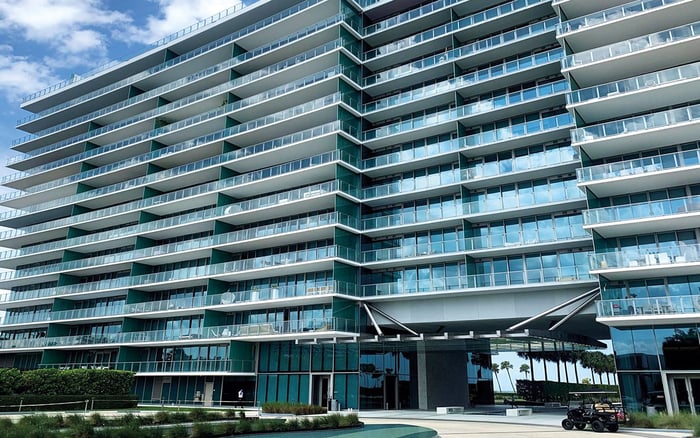
If Arbor Coconut Grove enters that shortlist, evaluate the address against the school and activities under consideration. Do not assume the neighborhood name resolves the logistics. Measure the journey door to door, including departure preparation, arrival, and the return trip.
There are extracurricular possibilities to investigate as well. Coconut Grove Sailing Club offers youth learn-to-sail and racing programs, while Kirk Munroe Tennis Center offers tennis instruction. Confirm age suitability, schedules, openings, and whether a trial is possible. Neither an appealing activity nor a nearby residence establishes that the teenager will find a recurring peer group.
Miami Beach youth services span academics, arts, sports, community service, entrepreneurship, and STEM. That breadth offers avenues to investigate, but the useful question is specific: which program can this teenager attend, during the relevant season, often enough to build familiarity?
Miami Beach All Stars illustrates why eligibility matters. Its after-school program serves students in grades 6-8 attending Nautilus Middle School. Its summer programming serves Miami-Dade residents attending any middle school in those grades. The summer option should not be mistaken for equivalent school-year access.
For a family considering Five Park Miami Beach, test the proposed school-and-activity circuit from the address being evaluated. Do not infer a workable social life from a building’s appeal or a program’s presence elsewhere in Miami Beach.
Ask separately about enrollment, attendance expectations, transport, and pickup arrangements. A program becomes part of the family’s routine only when those details work together.
On Key Biscayne, Crandon Golf offers junior programming that includes instruction, course play, and PGA-certified coaching. If golf is already an interest, investigate the appropriate group and schedule before using it as a reason to select a home.
A buyer considering Oceana Key Biscayne should apply the same practical test: can the teenager attend consistently, and does the arrangement leave room for schoolwork and friendships? Treat the program as a possibility to confirm, not an included feature of the residential decision.
Miami Beach’s specialty camps also include golf for grades 6-12 at Miami Beach Golf Club. A summer offering does not establish a school-year equivalent. Verify dates and availability directly before building a relocation calendar around it.
For a teenager drawn to creative activity, Youth Arts in the Parks offers socially oriented programming for ages 6-17, with and without disabilities, and welcomes young adults with disabilities through age 22. Its spring and fall sessions run for two hours on Saturday mornings, with activities including animation, creative arts, movement, and visual arts. Check the relevant session’s location and enrollment details before assessing the journey.
Record door-to-door travel, total parental driving hours, missed activities, and the coordination required to see friends. Include the teenager’s own observations: which commitments feel worthwhile, where conversation comes naturally, and whether enough unstructured time remains.
Distinguish a route that is technically possible from one the family will comfortably repeat. Where walking, cycling, or public transit may be appropriate, agree on safeguards first and assess the specific route together. Independence should be tested cautiously, not inferred from distance alone.
Review the week as a whole. A successful practice does not automatically compensate for a difficult school journey, and a manageable commute does not establish social connection. Look for a pattern that works without constant improvisation.
Before committing, resolve two separate questions: whether the school pathway is sufficiently clear and whether the teenager has a credible, workable routine. A prestigious address answers neither.
Keep the residence shortlist flexible until those questions are answered. The strongest purchase is not necessarily the first home everyone admires. It is the home whose location supports the life the family has actually tested, with enough flexibility for friendships and interests to evolve.
For a discreet residential search shaped around your family’s tested routine, explore MILLION.
If branded residences are on your mind — as a home or as an allocation — we would be glad to share what we are seeing, privately.
Begin a quiet conversationA rental trial can help test school journeys, activities, and social logistics before a purchase. Consider 30–90 days as a planning framework, not a proven requirement.
No. Admissions are competitive, and proximity should not be confused with an offer of a place.
Applications may require tours, fees, assessments or interviews, and teacher recommendations. Confirm requirements and availability for the relevant grade and entry year.
Track door-to-door journeys, parental driving hours, missed activities, and the coordination needed to see friends. Include the teenager’s assessment of the routine.
Two recurring activities are a useful starting point for the suggested trial. Leave time for informal invitations rather than filling every afternoon.
Coconut Grove Sailing Club offers youth learn-to-sail and racing programs, and Kirk Munroe Tennis Center offers tennis instruction. Confirm age suitability, schedules, and availability.
The after-school program serves grades 6–8 at Nautilus Middle School. Summer programming serves Miami-Dade residents attending any middle school in grades 6–8.
Crandon Golf on Key Biscayne offers junior instruction, course play, and PGA-certified coaching. Miami Beach Golf Club also appears in specialty-camp listings for grades 6–12, but school-year availability requires separate confirmation.
Youth Arts in the Parks serves ages 6–17 with and without disabilities, and young adults with disabilities through age 22. It offers two-hour Saturday-morning sessions in spring and fall.
Treat a sufficiently clear school pathway and a workable social routine as questions to resolve before purchasing. Keep the property shortlist flexible while testing both.