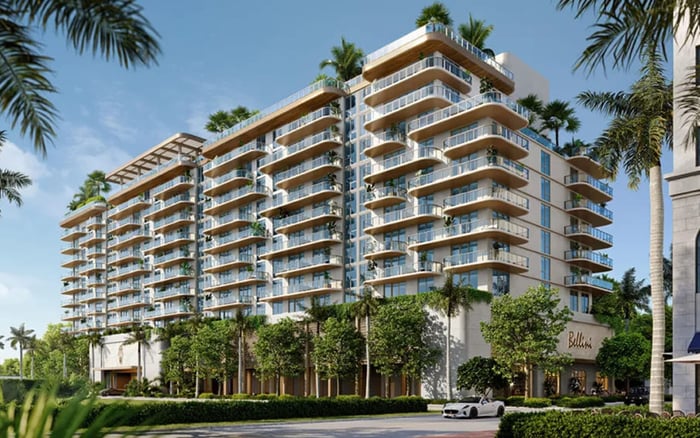
A disciplined framework for an Abu Dhabi family office considering Boca Raton: separate deposit liquidity from closing finance, coordinate portfolio maturities, and scrutinize the purchase contract before committing capital.

For a family office moving from Abu Dhabi to Boca Raton, the residential purchase warrants its own treasury plan. The question is not simply whether the family can afford the residence, but whether capital will be available at every contractual milestone without compromising investment commitments, operating reserves or the relocation itself.
South Florida luxury preconstruction purchases typically require 20-50% of the price before closing, paid in installments. Traditional purchase mortgages generally fund at or near closing, not during the deposit period. A future mortgage therefore does not meet the immediate cash requirement created by signing a contract.
For a buyer considering Glass House Boca Raton, the first financial request should be the transaction’s actual payment schedule. Regional conventions provide context; they do not establish the residence’s terms. Treat home selection and funding as parallel decisions, with neither finalized in isolation.
One common South Florida schedule calls for 10% at contract, 10% at groundbreaking and 10% at structural top-off, leaving 70% payable at closing. Higher-deposit luxury projects can require 40-50% before closing. These percentages reflect market and contractual terms, not deposit requirements mandated by Florida law.
Timing deserves equal scrutiny. A 10% signing deposit can be payable within three to five business days. Groundbreaking installments may fall six to 18 months after signing, though the actual trigger and deadline depend on the contract. Neither interval should be treated as an assumed grace period in the family office’s cash forecast.
Build a capital-call calendar that records each installment’s percentage, dollar amount, contractual trigger, notice requirements and funding source. Separate estimated construction dates from enforceable payment deadlines. Where a milestone has no fixed date, consider reserving the required liquidity before its earliest plausible arrival rather than relying on a single forecast.
Treat reservation payments separately. Miami reservation arrangements can involve $5,000-$25,000, refundable before the formal purchase contract. Do not assume the same amount or refund terms apply in Boca Raton; establish both from the reservation documents.
Preconstruction commitments can span a three-to-five-year construction cycle. The planning horizon should therefore be multiyear, even when the first installment appears modest relative to the family’s assets.
Divide the funding plan into three allocations: cash for the next deposit, resources earmarked for later installments, and capital reserved for closing. Maintain a separate operating reserve for the family and office. For planning purposes, treat committed deposits as unavailable for ordinary liquidity needs, regardless of their escrow treatment.
Align anticipated portfolio maturities with the capital-call calendar, but distinguish scheduled proceeds from hoped-for exits. A prospective asset sale should not carry the same weight as cash already available. Ask the investment team to show how each installment would be funded if a planned realization were postponed.
When comparing Alina Residences Boca Raton with another residential option, obtain transaction-specific payment terms before assessing liquidity demands. Measure how much capital must be available, when it is required, and how much remains outside the purchase. That comparison is more revealing than headline prices alone.
“Portfolio financing” should begin a precise conversation with the private bank, not substitute for a commitment. Do not use portfolio mortgage, securities-backed credit line and hybrid facility interchangeably. Ask the lender to specify the proposed product, collateral, permitted use of proceeds, draw conditions and repayment obligations in writing.
For any proposed facility, request a transaction-specific assessment of international-client eligibility, eligible collateral, advance terms, currency availability and any cross-collateralization provisions. Ask what happens if collateral values change, whether additional assets could be required, and whether availability extends through the expected deposit period. Do not build an assumed portfolio advance rate into the acquisition budget.
Match the proposed facility to specific payments. If it is intended to fund deposits, confirm that use expressly. If it is intended for closing, do not count it as interim liquidity. Where repayment depends on another financing event, document a fallback rather than treating refinancing as assured.
Apply the same discipline to familiar Abu Dhabi banking arrangements: do not carry their assumptions into a U.S. purchase. Obtain written terms for this borrower and transaction before allowing credit expectations to shape the commitment.
Deposits are generally held through an escrow arrangement involving a title company or attorney, with their treatment and release governed by the contract and applicable law. Escrow does not necessarily mean every dollar remains untouched until delivery.
Deposits exceeding 10% may be available for construction if the contract permits and statutory conditions are satisfied. Have Florida counsel explain how those provisions apply to the proposed contract, including which funds may be released and under what conditions.
For a purchase under consideration at The Residences at Mandarin Oriental Boca Raton, request the actual escrow and deposit provisions rather than importing assumptions from another development. This reference does not establish the project’s current deposit schedule or release terms.
Assignment rights vary and may be restricted. Do not underwrite the purchase on the assumption that selling the contract will recover committed deposits before delivery. Counsel should review assignment permissions, reservation refundability, default provisions and delay remedies together, so the office understands both its payment obligations and its available responses.
For purchases requiring 30-50% before delivery, the remaining 50-70% is payable at closing through cash, mortgage financing or a combination. Maintain a separate closing forecast; meeting every deposit does not complete the funding exercise.
Test at least three scenarios: milestones arrive earlier than expected, delivery takes longer than expected, or anticipated closing finance is unavailable. Identify a funding response for each without assuming that deposits can be withdrawn or the contract assigned.
For the Abu Dhabi-to-Boca Raton transition, assign responsibility for payment authorization, transfer preparation and confirmation of receipt. Ask banking advisers to review currency and settlement requirements for the actual accounts involved rather than adopting a blanket conversion or hedging strategy. Keep immigration, tax residency, entity ownership and estate planning as separate specialist workstreams.
Before signing, bring the adviser team back to one document: the capital-call calendar. Every payment should have an identified funding source, an accountable decision-maker and a fallback. The result is not simply a financed residence, but a purchase structured to preserve the family’s freedom of action.
For a discreet conversation about your Boca Raton residential search, connect with MILLION.
If branded residences are on your mind — as a home or as an allocation — we would be glad to share what we are seeing, privately.
Begin a quiet conversationSouth Florida luxury preconstruction purchases typically require 20–50% of the purchase price before closing. The specific contract, not the regional range, establishes the buyer’s obligation.
One common schedule is 10% at contract, 10% at groundbreaking and 10% at structural top-off, with 70% due at closing. It is not a confirmed schedule for any particular Boca Raton development.
A 10% signing deposit can be due within three to five business days. Confirm the actual deadline before signing and arrange the required liquidity in advance.
Traditional purchase mortgages generally fund at or near closing rather than during the deposit period. Interim payments require a separate funding plan.
No. Deposit percentages are market and contractual terms; Florida law regulates deposit handling and permitted use.
No. Deposits exceeding 10% may be available for construction if the contract permits and the statutory conditions are met.
Assignment rights vary by contract and may be restricted. Buyers should not assume an assignment will provide an exit or restore liquidity before delivery.
Ask the lender to specify the product, collateral, permitted uses, draw conditions and repayment obligations in writing. Do not assume eligibility, an advance rate or approval.
Preconstruction commitments can span a three-to-five-year construction cycle. Plan for each deposit and closing, while testing the effect of earlier milestones or later delivery.
Some Miami reservation arrangements involve refundable payments before the formal purchase contract. Refundability for a particular purchase must be established from its reservation documents.