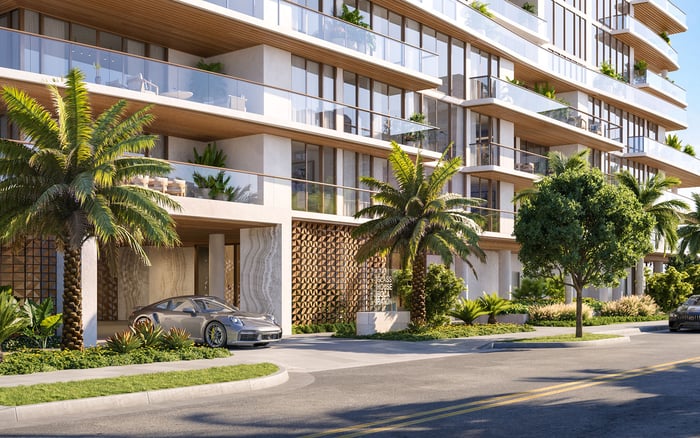
A discreet buyer’s guide to selecting a grantee, understanding deed visibility, and aligning privacy, financing, homestead, and closing documentation.

For purchasers considering Mr. C Residences Boca Raton or Viceroy Brickell, ownership privacy is not a preference to raise near the end of a transaction. It is a structural decision that should be settled before the deed and related closing documents are prepared.
A Florida condominium may be titled in an individual’s name, an LLC, a conventional trust, or a Florida land trust. The selected grantee appears on the recorded deed, making that choice the starting point for public-record visibility. Personal ownership creates the clearest searchable connection between buyer and residence. Entity or trust ownership can place another legal name on the deed, but no structure should be mistaken for absolute anonymity.
This distinction is particularly relevant to Branded Residences and Pre-Construction purchases, where buyers may have meaningful lead time to coordinate legal, lending, tax, and estate-planning advice. The central question is not merely which structure appears most private, but which remains workable through financing, closing, ownership, and an eventual transfer.
Privacy is strongest when the ownership structure and closing package are designed together.
Personal ownership.
Taking title personally is typically the most direct option from a record-visibility perspective because the individual’s name appears as grantee. Its simplicity may be attractive, but buyers who prioritize discretion should recognize that searchable property records can create a clear link to the condominium.
LLC ownership.
When an LLC acquires Florida real estate, the deed identifies the company rather than its individual members. This can reduce immediate personal-name visibility on the deed. It remains a privacy layer, however, not a guarantee that an individual can never be connected to the entity or transaction. Setup, annual administration, financing compatibility, liability planning, and potential homestead consequences all warrant advance review.
Conventional trust ownership.
A standard trust may keep beneficiaries off the face of the deed while naming the trustee. This can soften the public connection to beneficial ownership, although the trustee may remain a searchable link to the property. The result depends on how the trust, trustee, and acquisition documents are arranged.
Florida land-trust ownership.
In a land trust, the trustee holds legal title for the beneficiary. County property records generally identify the trustee rather than the beneficial owner, while the land-trust agreement is ordinarily private and unrecorded. This can provide meaningful title privacy, but it does not, by itself, offer the liability protection associated with an LLC.
A trust-owned LLC may create a higher-privacy arrangement, but it also introduces greater complexity and potentially variable homestead treatment. Buyers should resist choosing the most layered structure solely because it appears discreet. The right solution must remain administratively coherent and legally appropriate.
For a Viceroy Brickell purchase, recorded deeds and mortgages enter Miami-Dade County’s Official Records framework, where the public can locate and inspect recorded documents online. The practical privacy issue is immediate: the grantee named on the deed becomes part of a searchable recording environment.
The same consideration extends to other Brickell acquisitions, including The Residences at 1428 Brickell. Each project has its own transaction documents and closing procedures, but the broader public-record principle remains consistent. Recorded instruments are distinct from the private agreements that may sit behind an LLC or land trust.
Boca Raton requires its own records analysis. The city maintains a public-record request service for city-controlled documents, separate from county real-property recording systems. Buyers comparing Mr. C with Glass House Boca Raton should not assume that every government-held document is accessed through a single portal-or that entity titling shields every category of information.
Florida also allows certain protected individuals to seek statutory exemptions limiting disclosure of qualifying personal information. Such exemptions and entity titling address different privacy risks. When legally available, they may operate together, but one is not a substitute for the other.
The cleanest execution begins with the buyer, independent Florida counsel, lender, title insurer, and project closing team working from the same intended ownership structure. If an LLC, trustee, or trust is expected to take title, that decision should be communicated before the deed and transaction-specific closing package are finalized.
Timing matters because a privacy-oriented structure may affect more than the grantee line. Financing compatibility can differ materially among personal, LLC, trust, and land-trust ownership. A land trust may accommodate conventional mortgage financing more readily than direct LLC ownership, but that remains subject to lender and legal review. Buyers should obtain approval for the actual structure rather than rely on a general assumption.
At The Residences at Mandarin Oriental Boca Raton, as at the two projects named in this guide, definitive closing requirements must come directly from the project’s current closing team and the buyer’s independent counsel. The exact package is both project- and transaction-specific. A structure suited to a cash acquisition may not pass unchanged through a financed closing.
Public-record privacy does not eliminate lawful disclosure obligations. A buyer may still need to provide information to lenders, title insurers, condominium associations, tax authorities, or regulators. The objective is disciplined control over public visibility-not concealment from parties legally entitled to receive the information.
For Investment ownership, an LLC may be considered not only because the company name appears on the deed, but also within a broader liability and administration discussion. For a primary residence or second home, homestead treatment and estate planning may carry greater weight. A land trust may offer strong deed-level privacy, yet it should not be treated as a complete asset-protection plan.
The most useful comparison is therefore multidimensional. Counsel should review deed visibility, setup cost, annual cost, financing, homestead consequences, estate planning, liability exposure, and ongoing administration. A buyer who values simplicity may accept greater public visibility; another may accept added governance to reduce the personal connection displayed in property records.
The emphasis should be on sequencing: choose advisers, identify the intended grantee, test the structure against financing and homestead objectives, confirm current project requirements, and only then authorize preparation of closing documents. A late change of course can create avoidable friction among the deed, lender expectations, and supporting ownership records.
At Mr. C Residences Boca Raton and Viceroy Brickell, privacy planning should be precise rather than theatrical. Personal title, an LLC, a conventional trust, and a Florida land trust each create a different balance of visibility and complexity. None should be selected by considering the deed alone.
Before signing final closing documents, buyers should ask independent Florida counsel to confirm who will be named as grantee, what will become publicly searchable, what will remain private, and whether the arrangement is compatible with financing, homestead objectives, estate planning, and liability strategy. The project closing team should then confirm the current documentation required for that exact transaction.
For discreet guidance on South Florida’s finest residences, connect with MILLION.
If branded residences are on your mind — as a home or as an allocation — we would be glad to share what we are seeing, privately.
Begin a quiet conversationYes. When an LLC purchases Florida real estate, the deed names the LLC rather than its individual members.
No. An LLC can reduce personal-name visibility on the deed, but it should be viewed as a privacy layer rather than guaranteed anonymity.
The trustee holds legal title for the designated beneficiary, and county property records generally identify the trustee rather than the beneficiary.
The land-trust agreement is ordinarily private and is not recorded in county property records.
No. A land trust principally provides title privacy and does not by itself supply the liability protection associated with an LLC.
It may keep beneficiaries off the deed, although the named trustee can remain a searchable public-record connection to the property.
Yes. Buyers should settle the intended grantee before the deed and transaction-specific closing documents are prepared.
It may accommodate conventional mortgage financing more readily than direct LLC ownership, subject to lender and legal review.
Recorded deeds and mortgages fall within Miami-Dade County’s Official Records framework, where recorded documents can be located and inspected online.
No. Lawful disclosure may still be required for lenders, title insurers, condominium associations, tax authorities, or regulators.