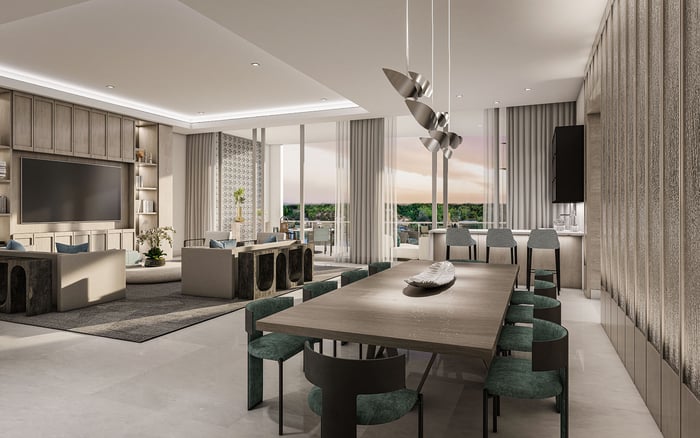
A discreet buyer’s framework for turning a West Palm Beach residence into a fully prepared seasonal home, from furniture sequencing to staff-led arrival protocols.

For a luxury residence, readiness is not a single date. Closing, possession, furniture delivery, staff access, and the owner’s first stay may occur at different times. The essential question is not simply when the home can be entered, but when it can support the owner’s intended routine without improvisation.
At Edgeworth West Palm Beach, buyers should approach readiness as a planning framework rather than assume any project-specific service, furnishing, or delivery commitment. Before establishing a move-in calendar, confirm every relevant detail in the governing documents, purchase materials, building rules, and written communications.
For a West Palm Beach new-construction purchase, define three milestones: legally accessible, operationally functional, and personally complete. A residence may be accessible while window treatments, tabletop pieces, technology settings, or wardrobe systems remain unfinished. A true move-in-ready standard should reflect how the household actually lives.
Start with the first nonnegotiable occupancy date and work backward. Separate furniture into essential, supporting, and decorative categories. Beds, primary seating, dining requirements, lighting, and basic outdoor pieces generally belong in the first group. Art, specialty objects, and secondary-room details can follow once circulation and proportions have been assessed in the finished space.
Do not allow estimated manufacturing or shipping windows to dictate the move-in plan. The schedule should reserve time for receiving, inspection, storage, delivery clearance, installation, packaging removal, touch-ups, and final styling. Confirm elevator procedures, loading access, permitted hours, insurance requirements, and vendor approvals in writing with the appropriate parties.
A phased approach also protects design decisions. Install large pieces first, then assess rugs, occasional tables, art placement, and accessories in context. Buyers considering alternatives such as Alba West Palm Beach can apply the same discipline while comparing each property’s disclosed access and delivery procedures.
The smoothest installations have a single household representative with decision-making authority. This may be an owner’s representative, estate manager, designer, or trusted family-office contact. The title matters less than the mandate: one person should control the master schedule, contact list, approval log, keys, vendor access, and escalation path.
Create a room-by-room installation register documenting each item, vendor, expected arrival, receiving status, condition, placement, assembly needs, and final approval. Add photographs of damaged goods or unresolved details. This keeps a delayed side table from receiving the same attention as a missing bed or an untested refrigerator.
Staff coordination should begin before occupancy, not on arrival day. Housekeepers, drivers, private chefs, security advisers, and property managers may each require different instructions and levels of access. Share only the information each role needs, and document who may authorize entry, accept deliveries, or approve remedial work.
A second home should be organized around arrivals and departures. Before the first extended stay, conduct a short trial occupancy with enough time to correct practical shortcomings. Test sleeping comfort, lighting scenes, climate settings, internet coverage, kitchen equipment, water temperature, entry procedures, and the placement of everyday supplies.
Seasonal readiness also requires an opening checklist. It can cover cleaning, linens, groceries, wardrobe preparation, vehicle arrangements, guest-room setup, floral preferences, and reservations. A corresponding closing checklist should address perishables, laundry, valuables, vendor access, climate settings, and the next inspection date.
This is where lifestyle planning becomes operational rather than decorative. A beautiful residence should also feel intuitive at breakfast, remain prepared for an evening guest, and stay secure during a prolonged absence. Owners reviewing Mr. C Residences West Palm Beach or The Ritz-Carlton Residences® West Palm Beach should compare written responsibilities carefully rather than infer that similarly positioned residences follow identical procedures.
Approximately one month before the intended stay, freeze nonessential design changes and concentrate on operational gaps. Confirm what has arrived, what remains outstanding, who has access, and which decisions still require the owner. Then conduct a final walkthrough following the household’s actual sequence: arrival, entry, unpacking, bathing, dining, entertaining, sleeping, departure, and remote monitoring.
Palm Beach seasonality can make a missed detail feel disproportionately disruptive when calendars are full and guests are expected. The most discreet solution is disciplined preparation: generous buffers, written responsibilities, limited handoffs, and a residence tested before it must perform.
Is closing the same as being move-in ready? No. Legal access may precede furniture installation, household setup, technology testing, and personal completion.
When should furniture planning begin? Begin as early as practical, then build the working schedule backward from the first firm occupancy date.
Should every room be furnished before the first stay? Not necessarily. Prioritize essential rooms and functions, then complete secondary spaces after evaluating the installed residence.
Who should manage vendors and deliveries? Appoint one authorized household representative to control schedules, access, approvals, records, and escalation.
What should be confirmed with building management? Confirm current access, delivery, elevator, insurance, working-hour, vendor, and protection requirements in writing.
How much schedule contingency is appropriate? Use a meaningful buffer that reflects fabrication, freight, receiving, installation, correction, and approval dependencies.
What is a trial occupancy? It is a short stay used to test comfort, systems, supplies, staffing routines, and the practical flow of the home.
How should household staff be introduced to the residence? Provide role-specific access, written procedures, key contacts, and clear authority before the owner’s arrival.
What belongs on a seasonal opening checklist? Include cleaning, linens, provisions, climate, technology, transportation, guest preparation, and unresolved maintenance items.
How can buyers evaluate readiness across different residences? Compare written obligations, access procedures, completion status, and household requirements rather than relying on broad labels.
For a confidential assessment and a building-by-building shortlist, connect with MILLION.
If branded residences are on your mind — as a home or as an allocation — we would be glad to share what we are seeing, privately.
Begin a quiet conversation