At 2000 Ocean, Minotti’s involvement spans shared spaces, design assistance and an original furniture offering. A resale buyer must distinguish those features from the furnishings actually included in a specific purchase.
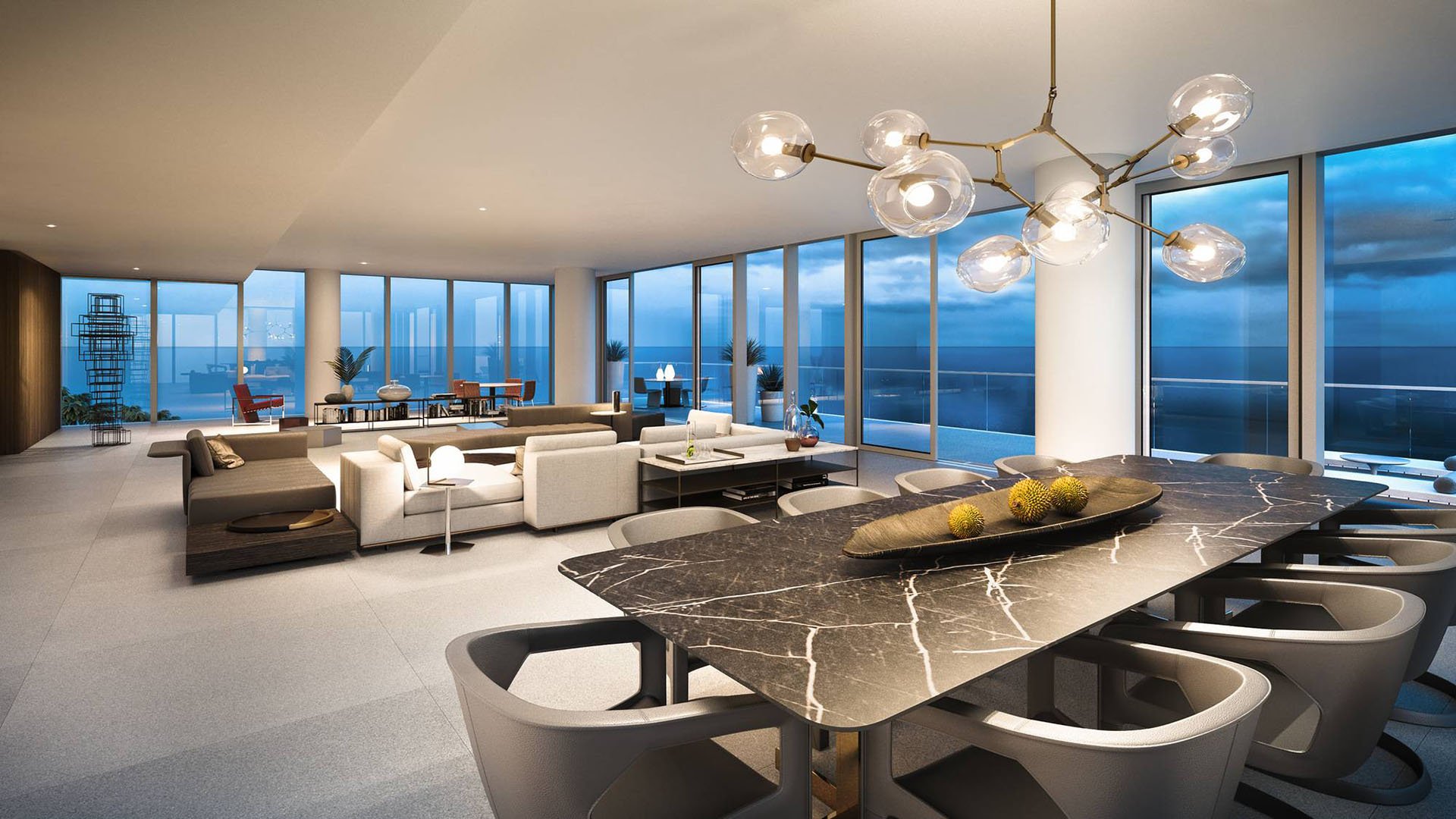
At 2000 Ocean Hallandale Beach, the Minotti connection is part of the development’s design identity. It is not, by itself, an inventory of what comes with a resale. For a buyer drawn to a composed interior, that distinction matters before the furniture becomes part of the purchase rationale.
Located at 2000 South Ocean Drive in Hallandale Beach, the development comprises 64 residences, including half-floor homes, full-floor penthouses and a duplex sky villa. Its design collaborators include Taller de Enrique Norten, Sasaki, Minotti, Minotti Cucine and Boffi. That collaboration should not blur four distinct components: shared-space furnishings, professional design assistance, installed kitchen and bathroom elements, and privately owned movable furniture.
Each calls for separate evaluation. The building’s design identity provides context. The residence’s present condition, documented contents and negotiated purchase terms establish what the buyer is actually acquiring.
The interior and exterior amenity spaces are exclusively furnished by Minotti. That describes the shared environment, not the contents of an individual residence. Buyers should not extrapolate from the amenity interiors to the furniture included behind a private front door.
The residences are “fully finished, furniture-ready,” with personalized interior-design services by Minotti. The original offering presented that service as complimentary and available to all residences. Design assistance, however, is a service-not a collection of physical objects. Whether a subsequent purchaser can access it should be confirmed directly, not assumed from the original offering.
Installed elements form another category. Minotti Cucine supplied all-stone custom kitchens and full-slab stone floating vanities for the primary bathrooms. Those features are distinct from sofas, dining tables, beds, rugs and accessories. Buyers should have their closing attorney confirm the treatment of fixtures and furnishings rather than treating every branded element as part of one package.
The original 2018 offering allowed buyers to choose a custom Minotti furniture package for their residence. The proposed turnkey selection covered living-room, dining-room and bedroom furniture, along with coordinated accent lighting, rugs and accessories. It was a substantial furnishing concept, separate from the installed kitchen and bathroom features.
Under that historical procedure, buyers received a furniture-package contract at closing. They could accept the proposed selection or modify it through a Minotti showroom for an additional payment. Buyers who declined the designated package could still use the complimentary interior-design service.
The essential distinction is that access to design assistance did not depend on accepting the designated furniture selection. Nor does the historical offering establish that every original buyer took the package. It is not evidence of a current resale program or a promise that its contents automatically pass to the next owner.
“Furniture-ready” is not interchangeable with “furniture included.” The former describes the residence’s presentation and readiness for furnishing; it does not identify movable items a seller has agreed to leave. Similarly, a Move-In Ready description should prompt practical questions, not substitute for an inventory.
When a resale is presented as turnkey, ask whether its contents are the original Minotti selection, later replacements or a mixture. A coherent visual scheme can conceal those distinctions. The question is not simply whether the apartment looks complete, but whether the specific objects creating that impression are included in the transaction.
Request a room-by-room schedule identifying each proposed inclusion. Separate furniture, rugs, lighting and accessories, and make exclusions equally explicit. If a particular piece is central to a room’s appeal, identify it precisely rather than relying on a photograph or a broad reference to furnishings.
Begin with the original furniture agreement, paid invoices and delivery records. Together, these can help establish what was selected and delivered. Reconcile those records with what is currently in the residence and what the seller proposes to convey. An original order is not a substitute for a present-day inventory.
For significant pieces, request available identifying information and note their condition. Ask which items have been replaced and which are excluded from the sale. Where documentation and the current presentation differ, resolve the discrepancy before assigning a furniture value to the purchase.
Have the closing attorney confirm how the transaction documents will address included furnishings and the treatment of fixtures. This is a due-diligence step, not a universal legal conclusion about any particular object. The objective is a clear agreement that reflects the buyer’s understanding, including any pieces the seller intends to remove before closing.
A buyer also considering Armani Casa Sunny Isles Beach should apply the same discipline: separate the appeal of a design name from the documented contents of a particular transaction. This is a comparison of purchasing questions, not an assumption that different developments offer equivalent services or furniture arrangements.
The same approach applies to a shortlist that includes Casa Bella by B&B Italia Downtown Miami. Ask what is installed, what is movable, what is included and what services are available to the specific purchaser. A project name cannot answer those questions on its own.
At 2000 Ocean, any proposed Minotti-furniture premium should rest on verified pieces, their condition and their inclusion in the sale. Without those checks, a buyer risks valuing an impression rather than an agreed collection. Architectural character and furniture value deserve separate consideration, even when they work beautifully together.
The complimentary design offering deserves its own inquiry. The original description does not establish automatic transfer of that benefit to subsequent owners. Ask directly whether the resale purchaser is eligible, what assistance is available and whether any proposed furniture purchases or customization would involve separate charges.
Keep that answer separate from the seller’s inventory. A residence could include furniture without establishing access to a design service; the original offering also allowed design assistance without acceptance of the designated package. Neither category is evidence of the other.
The strongest purchase decision preserves the pleasure of the interior while removing ambiguity from the transaction. Understand the building’s Minotti connection, document the residence’s actual contents and confirm service access independently. Then assess the home on what will remain after closing, not simply what was visible during the showing.
For a considered approach to South Florida’s design-led residences, explore MILLION.
If branded residences are on your mind — as a home or as an allocation — we would be glad to share what we are seeing, privately.
Begin a quiet conversationThe original furniture offering does not establish that every owner accepted it or that its contents convey in a resale. Confirm the specific seller’s inventory and purchase terms.
It does not, by itself, establish that movable furniture is included. Buyers should request an explicit schedule of inclusions and exclusions.
The interior and exterior amenity spaces are marketed as exclusively furnished by Minotti. That does not establish the contents of individual residences.
Yes. The original offering allowed buyers who declined the designated furniture package to use the complimentary interior-design service.
Automatic transfer to subsequent owners is not established. A resale purchaser should verify eligibility and the available scope of assistance directly.
The proposed package covered living-room, dining-room and bedroom furniture, plus coordinated accent lighting, rugs and accessories. Those historical terms do not establish a current resale’s contents.
The 2018 offering allowed buyers to accept the proposed selection or modify it through a Minotti showroom for an additional payment.
Minotti Cucine supplied all-stone custom kitchens and full-slab stone floating primary-bathroom vanities. Those installed elements are separate from the movable furniture package.
Request the original furniture agreement, paid invoices, delivery records and a current room-by-room inventory. Have the closing attorney confirm the treatment of included furnishings and fixtures.
No premium should be assumed without verifying the pieces, their condition and their inclusion in the transaction. Ask whether the contents are original selections, replacements or a mixture.