Miami’s Michelin-recognized dining scene is no longer a special-occasion itinerary. For today’s luxury buyer, it functions more like infrastructure: a reliable network of reservations, tasting menus, chef-driven neighborhoods, and hospitality standards that shape where people want to live, not just where they want to eat. As the Michelin Guide expands its Florida footprint and Miami continues to command the spotlight, developers are responding with branded residences and chef collaborations that fold culinary culture into daily life.
Miami now sits among a small group of U.S. cities where Michelin recognition is not a one-off headline, but a recurring feature of the cultural calendar. The Michelin Guide’s Miami selection spans stars, Bib Gourmands, and recommended destinations, creating a broad, frequently refreshed index of quality across multiple neighborhoods.
A 2025 update added six new Miami restaurants and reported that Florida now has 14 Michelin-starred restaurants across Miami, Orlando, and Tampa. For luxury real estate, the value is less the tally and more the signal: serious operators see Florida as a place to build enduring concepts, not seasonal experiments.
For buyers, this plays out like other forms of infrastructure. Reliable, high-caliber dining influences where residents spend time, how often they host, and how easily they can enjoy the city without building an entire evening around traffic and peak demand.
Michelin also functions as shorthand for ambition, polish, and consistency. L’Atelier de Joël Robuchon Miami in the Design District holds Two Stars in the Michelin Guide. That level of recognition draws a global clientele that already evaluates quality through service choreography, material discipline, and brand fidelity.
In Miami, where design literacy is high and travel patterns are international, that audience tends to favor neighborhoods that can deliver an entire evening within a tight radius. When a restaurant district becomes a destination, nearby residences often pick up secondary prestige. The benefit is not adjacency to nightlife. It is proximity to a cultural asset that can hold relevance over time.
Brickell has evolved from finance-forward to hospitality-forward. Branded residential projects increasingly borrow the logic of luxury hotels, which is a notable shift from the older amenity model anchored mainly by a gym, pool, and generic social room.
Within this context, Baccarat Residences Brickell is promoted with a signature restaurant component as part of its development story. Even when operator details can evolve between marketing and delivery, the intent is clear: dining is being treated as a pillar of residential value, not a nearby convenience.
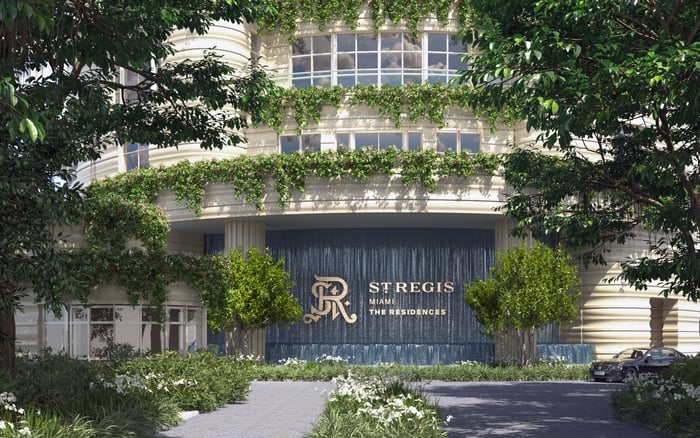
Brickell’s branded landscape reinforces the direction. St. Regis Residences Brickell is positioned as an ultra-luxury project with St. Regis-branded residential services. Cipriani Residences Miami is tied to the Cipriani hospitality and dining brand. ORA by Casa Tua is marketed around Casa Tua hospitality with planned on-site dining concepts. Nobu Hospitality has also extended its worldview into Brickell through a residential concept that includes a Nobu restaurant as part of the proposition.
For buyers, the takeaway is straightforward. In Brickell, the building is increasingly curated like a members club. Service standards, arrival sequences, and social energy can matter as much as square footage, especially for primary residences and pied-à-terre buyers seeking a polished, city-forward lifestyle.
Miami Beach remains distinct because its luxury is often defined by discretion. The most compelling residential experiences tend to emphasize limited residence counts, quieter amenity programming, and oceanfront positioning, while still keeping the broader dining map within reach.
In Mid-Beach, The Perigon Miami Beach at 5333 Collins Ave speaks to this preference with a limited residence count and private amenity programming. For buyers who want calm at home and access to the city’s recognized dining scene, this is the classic Miami Beach advantage: the ability to retreat without leaving the center of gravity.
This is also where Michelin’s influence becomes more nuanced. Many Miami Beach buyers are not looking for restaurants downstairs. They want a building that reads as residential, not a lobby that doubles as a public venue. In that context, proximity to Michelin-recognized dining is valuable as optionality rather than constant activation.
Sunny-isles has long appealed to international buyers seeking ocean views, new construction, and turnkey ownership. What has been changing is product sophistication: branding, design authorship, and experiential differentiators that read as globally fluent.
Bentley Residences Sunny Isles is planned at 18401 Collins Ave and is marketed around Bentley-branded design, along with a car-elevator and garage concept. Whether a buyer uses that feature daily or simply appreciates the engineering, it reflects a broader reality: ultra-luxury towers are competing on distinct experiences, not interchangeable amenities.
For the Sunny-isles buyer, Michelin proximity may carry less weight than it does in Brickell, but it still contributes to the lifestyle ecosystem. Many owners split time between neighborhoods. A high-design oceanfront base paired with access to Miami’s dining districts fits the second-home pattern for those who want the feel of vacation without giving up urban variety.
If Brickell is where hospitality brands formalize service, Midtown is where culinary creativity can be woven into neighborhood identity. Chef partnerships in residential development are equal parts branding and programming, signaling a tone for day-to-day life, from casual lunches to private resident events.
Miami Tropic Residences is a Midtown project at 3501 NE 1st Ave partnered with chef Jean-Georges Vongerichten and a planned ABC Kitchens concept. For buyers, the relevance is not only the name. It is the idea that food culture is designed into a building’s rhythm, shaping how residents entertain and how the property presents itself to guests.
This aligns with the Michelin era: a city where diners follow chefs, where hotel bars operate as informal meeting rooms, and where coveted tables are part of how Miami is experienced.
Outside Brickell proper, the market continues to reward projects that operate with five-star discipline. The Residences at Mandarin Oriental, Miami is a planned Brickell Key luxury residential project marketed with Mandarin Oriental hospitality and amenities. For buyers who value predictable service and an internationally legible brand, that framing is compelling.
Downtown pushes the same logic at scale. Waldorf Astoria Residences Miami is planned for 300 Biscayne Blvd with luxury residences and hotel-style services. The appeal is simple: a residence that functions like a hotel suite, supported by staffing, routines, and standards that reduce friction in daily life.
These models tend to be durable because, in global gateway cities, the strongest luxury buildings are rarely only about finishes. They are also about operational competence and the ability to deliver a consistent experience year after year.
Michelin recognition shapes residential decisions in practical, repeatable ways.
First, it compresses the city. When a neighborhood develops a critical mass of highly regarded restaurants, residents stay local more often. Walkability, valet routines, and the value of a true five-minute radius become more meaningful.
Second, it reinforces the case for branded residences. A buyer who trusts Michelin as a quality filter is often the same buyer who values hospitality brands for service consistency. That alignment helps explain why Brickell’s branded pipeline feels so timely.
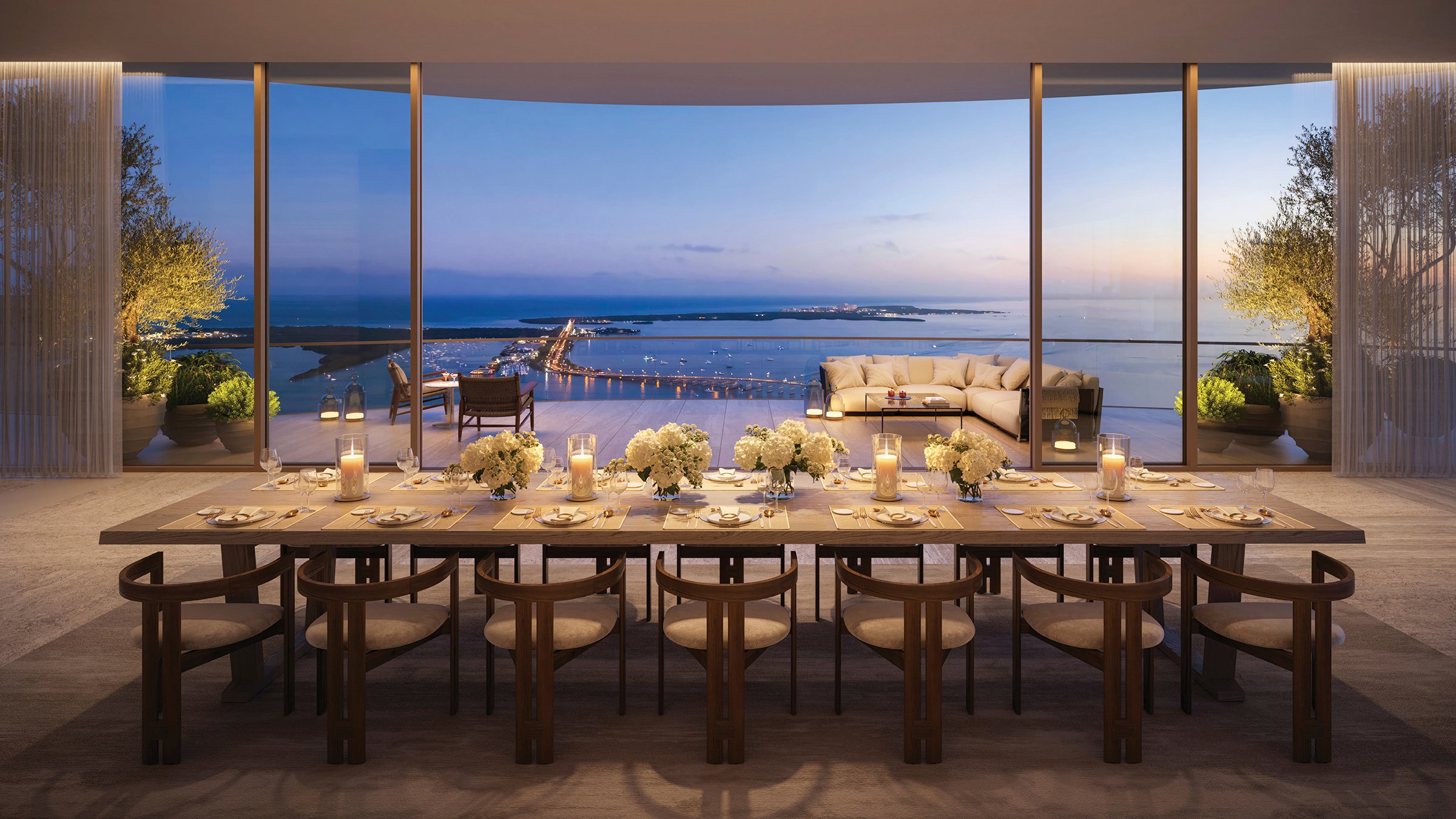
Third, it changes how buyers host. In a Michelin-forward city, entertaining often becomes a sequence: aperitifs, a formal dinner, then a discreet lounge. The right address makes that flow easier.
Finally, it refines what “amenity” means. In 2026, the most persuasive amenity packages are not only spaces. They are outcomes: controlled arrivals, stronger privacy, smoother service, and curated social energy.
Before choosing an address based on the dining map, sophisticated buyers tend to pressure-test a few essentials.
Operationally, ask what is truly delivered in terms of service, not just what is rendered in marketing. Many luxury projects are pre-construction or newly launched, and publicly disclosed details can evolve between early promotion and delivery.
Lifestyle-wise, decide whether you want dining integrated into the building or nearby. Brickell buyers often embrace the integrated model. Miami Beach buyers frequently prefer separation, keeping the building quieter while relying on the city for variety.
Geographically, evaluate your habits. If you plan to spend meaningful time in the Design District, Midtown, or Brickell, the friction of crossing causeways or navigating peak traffic becomes a real quality-of-life variable. The right neighborhood is the one that makes your most common evenings feel simple.
Finally, consider how the neighborhood will age. Michelin recognition can be a catalyst, but lasting value typically rests on broader fundamentals: water adjacency, walkable nodes, enduring retail, and sustained investment in the public realm.
Is Miami’s Michelin scene established or still emerging? It is established enough to guide decision-making. The Michelin Guide’s Miami selection spans starred, Bib Gourmand, and recommended restaurants, and updates continue to add new entries.
Do I need a building with an on-site restaurant to benefit from the dining scene? Not necessarily. Many buyers prefer a residential-first building and rely on nearby dining. The best fit depends on whether you want activation at home or optionality nearby.
Which Miami neighborhood is most aligned with chef-driven, branded living? Brickell stands out due to the concentration of hospitality-branded residential projects and concepts that emphasize dining and service as part of the lifestyle.
How should I evaluate chef partnerships in new developments? Treat them as a signal of intent and programming, then confirm what is contractually delivered as projects progress, since details can evolve from launch to completion.
For a discreet, buyer-aligned view of South Florida’s most compelling addresses, connect with MILLION Luxury.
If branded residences are on your mind — as a home or as an allocation — we would be glad to share what we are seeing, privately.
Begin a quiet conversation