Miami buyers focused on wellness should assess how a residence supports repeatable routines, private and shared spaces, practical access, operating terms, resilience, and preconstruction diligence.
Buyers considering a wellness-oriented Miami residence should begin with the habits they want to maintain. The useful question is whether the home, shared facilities, and location make those habits easier to follow during a normal week.
One buyer may prioritize strength training, recovery, and private treatments. Another may value meditation, outdoor movement, or convenient access to preferred practitioners. A detailed personal routine helps distinguish practical features from amenities that may see little use.
Create a written schedule before touring. Note when each activity occurs, whether it requires privacy, how much time it takes, and what equipment or services it depends on. Then test each residence against that schedule.
Coconut Grove and Brickell should be compared according to the buyer's work, exercise, dining, care, and travel patterns. Visit at the times when the routine would occur and evaluate traffic, noise, pedestrian comfort, outdoor conditions, and the time required to reach regular appointments.
Buyers exploring Coconut Grove may compare The Well Coconut Grove with Four Seasons Residences Coconut Grove. The comparison should focus on disclosed facilities, residential layouts, access rules, operating arrangements, and purchase documents rather than assumptions based on branding.
In Brickell, buyers may also review House of Wellness Brickell and 619 Residences by Foster + Partners + Nobu Hospitality. For each option, confirm how wellness themes translate into usable spaces, staffing, services, availability, and recurring costs.
Wellness does not need to occur only in common areas. A buyer who exercises, meditates, stretches, or receives treatments at home should examine whether the residence has an appropriate flexible space.
Check dimensions, acoustics, privacy, ventilation, storage, flooring, natural light, and proximity to bedrooms. Also consider terrace usability and the route between the residence and shared fitness, recovery, or treatment areas.
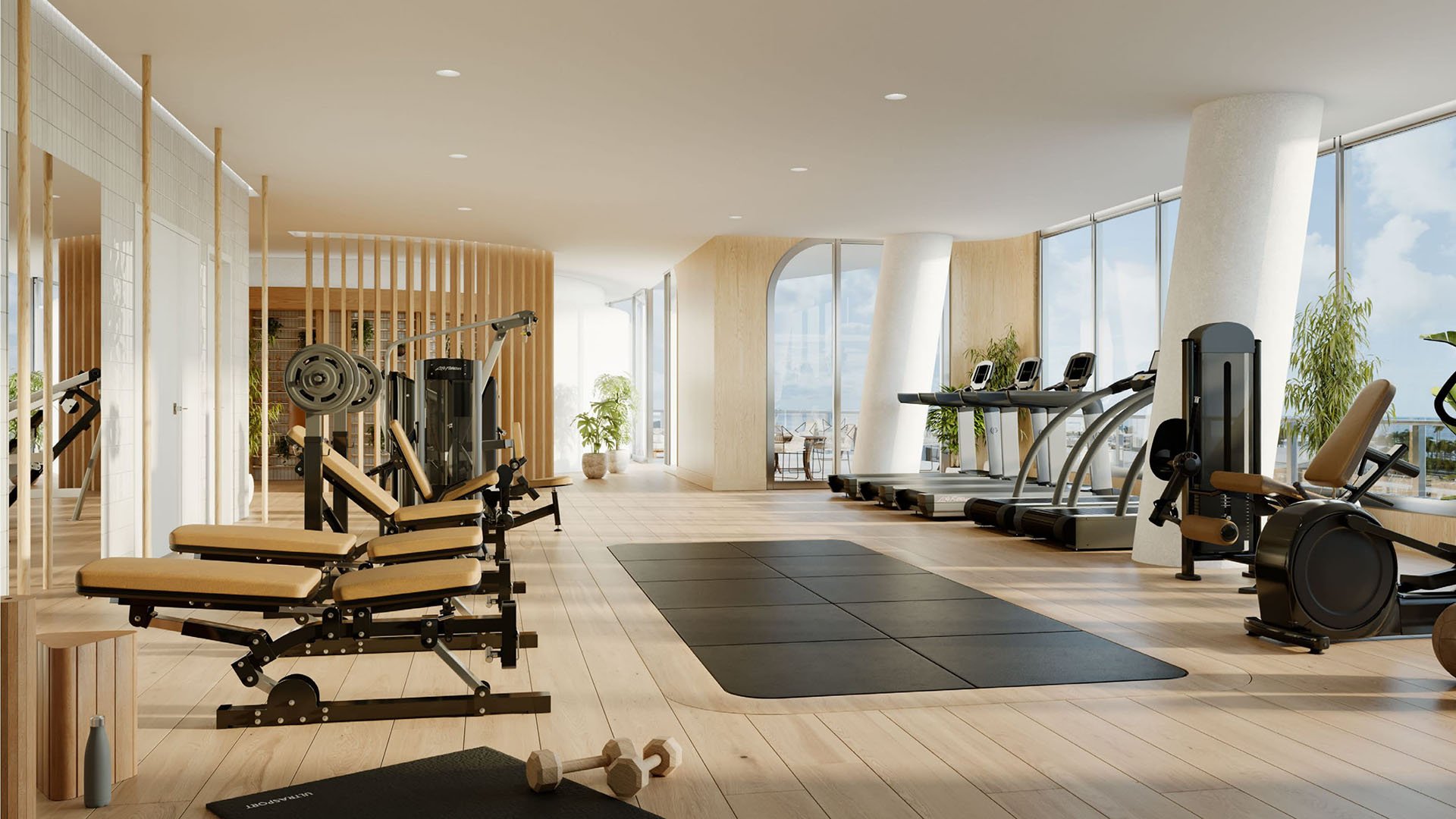
Shared facilities require a different review. Ask how residents reserve them, whether guests are permitted, whether classes or private sessions can limit general access, and how peak demand is managed. Tour the spaces when possible rather than relying only on renderings or a list of amenities.
Facilities alone do not establish the quality of a wellness program. Buyers should request clear information about the operator, staffing, hours, booking procedures, resident priority, guest access, maintenance, and sanitation.
Ask which services are included in common charges and which require separate payment. Treatment rooms, classes, assessments, equipment, and private bookings may be governed by different rules, so the full cost and access structure should be reviewed before assigning value to them.
Capacity also matters. Consider whether the number and type of spaces appear suitable for the building and ask how scheduling conflicts will be addressed. Noise, scent, humidity, equipment upkeep, and privacy can affect daily use.
Wellness positioning does not replace conventional property diligence. For a preconstruction purchase, review the deposit schedule, estimated timing, cancellation provisions, and the developer's rights to alter plans, finishes, facilities, operators, or programming. Marketing materials should be considered alongside the governing and purchase documents.
Property review should also address flood exposure, drainage, insurance, backup power, indoor air systems, elevators, and continuity of essential services. Buyers should seek property-specific documentation and appropriate professional advice rather than infer performance from branding or amenity descriptions.
Finally, consider whether the residence still works if a preferred facility is temporarily unavailable or a program changes. A suitable floor plan, practical location, and manageable operating structure can help preserve the routine even when shared services evolve.
What should buyers define before touring a wellness residence? They should outline the activities, timing, privacy, equipment, and services their regular routine requires.
How should Coconut Grove and Brickell be compared? Compare them through daily travel patterns, outdoor preferences, appointments, work locations, and the hours when wellness activities occur.
Why is a private wellness space useful? It can support exercise, meditation, stretching, or treatments without depending on reservations for a shared facility.
What should buyers inspect in a flexible wellness room? Review its dimensions, acoustics, ventilation, privacy, storage, flooring, light, and relationship to other rooms.
Which shared-facility rules matter most? Confirm operating hours, reservations, resident priority, guest access, class schedules, and peak-demand procedures.
Why does the operating model matter? Staffing, maintenance, booking practices, and service availability determine how reliably residents can use the facilities.
What costs should buyers clarify? Ask what common charges cover and whether treatments, classes, assessments, guest use, or private sessions cost extra.
What should preconstruction buyers review? Examine deposit terms, estimated timing, cancellation provisions, and rights to modify plans, finishes, amenities, operators, or programs.
Which building systems can affect a wellness routine? Backup power, indoor air systems, elevators, drainage, and continuity of essential services can influence access and comfort.
Should buyers rely on amenity renderings? No. They should compare marketing materials with governing documents, purchase terms, disclosed specifications, and property-specific professional advice.
For a tailored shortlist and next-step guidance, connect with MILLION.
If branded residences are on your mind — as a home or as an allocation — we would be glad to share what we are seeing, privately.
Begin a quiet conversation