A buyer-focused comparison of Miami Design Residences and Aria Reserve Miami, examining the trade-off between Midtown walkability, design-forward urban living, and Biscayne Bay resort-style scale.
For discerning buyers in Miami, the distinction between an address and a lifestyle is rarely academic. It shapes the cadence of mornings, the character of evenings, and the extent to which home feels connected to the city or insulated from it. That is the essential comparison between Miami Design Residences Midtown Miami and Aria Reserve Miami.
Miami Design Residences is defined by Midtown Miami, where walkability, restaurant access, retail convenience, and proximity to the Design District become part of daily life. It is the more urban proposition: a design-forward residential tower for buyers who want the city at their feet rather than in the distance.
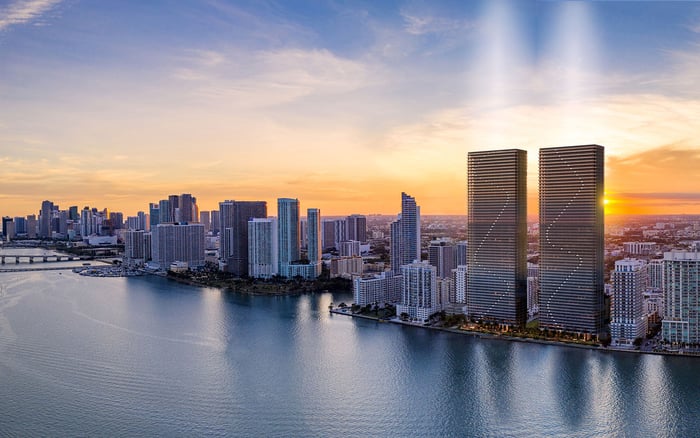
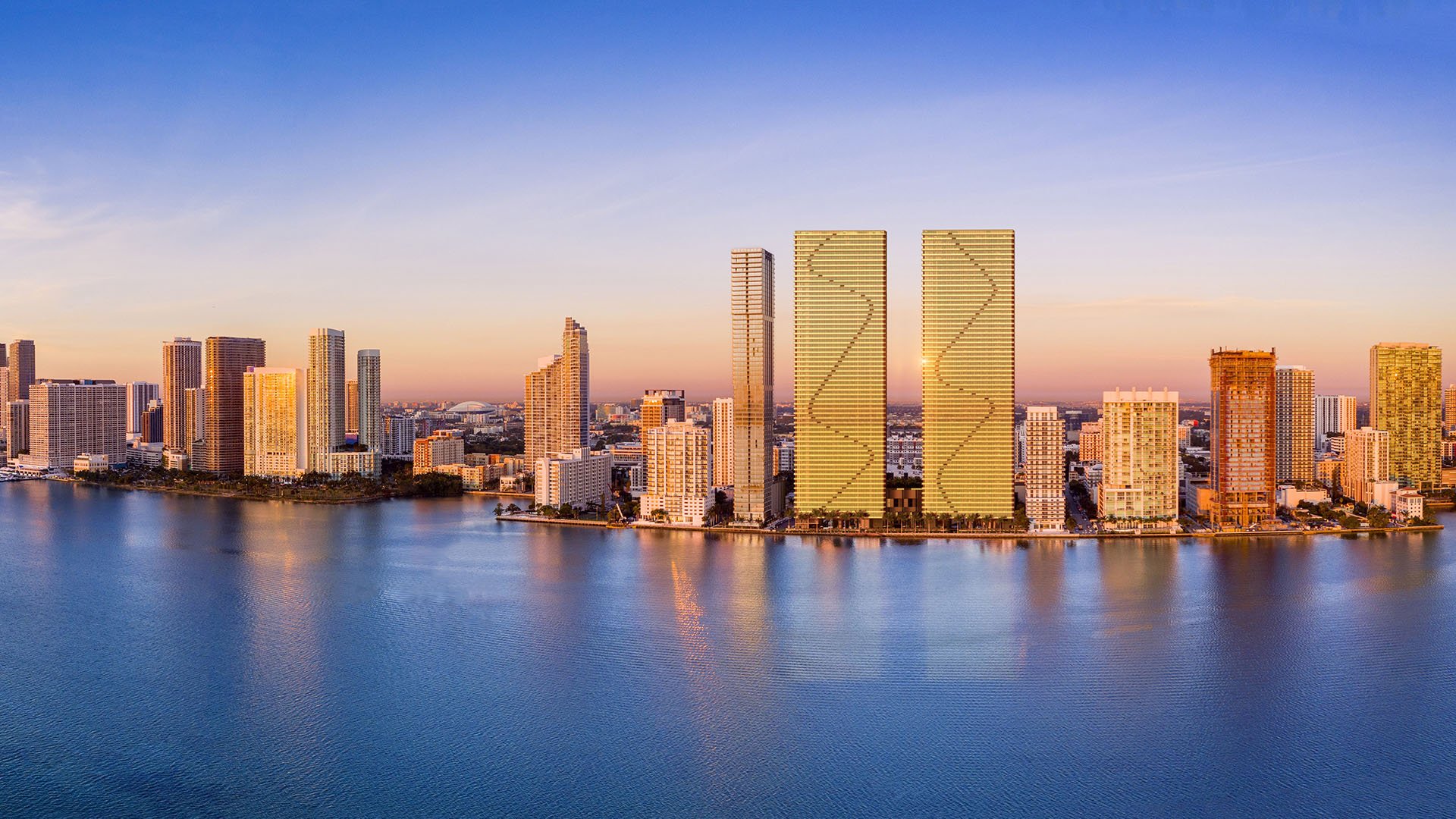
Aria Reserve Miami presents the opposite luxury logic. Positioned on Biscayne Bay, it emphasizes waterfront placement, sunrise-facing exposure, and a larger-scale residential environment with resort-style programming. Where Midtown offers cultural density and neighborhood integration, Edgewater bayfront living offers breadth, visual calm, and a more hospitality-driven residential experience.
This is not simply Midtown versus Edgewater. It is access versus atmosphere, immediacy versus expanse, and in many cases, primary-residence logic versus second-home sensibility.
Midtown has matured into one of Miami's most legible live-work-play districts. The appeal is straightforward but enduring: residents can move easily between dining, casual retail, everyday services, and the neighboring creative energy of Wynwood and the Design District. That level of frictionless access carries real value for buyers who prefer not to organize every outing around a car ride.
Within that context, Miami Design Residences reads as an urbanism-first proposition. Its appeal lies less in creating a self-contained compound and more in participating in the district around it. The project is associated with a design-led architectural approach and is generally positioned toward buyers who value spatial refinement, modern finishes, and open-plan layouts in one-, two-, and three-bedroom formats.
This places it in conversation with other neighborhood-anchored developments where the surrounding district matters as much as the amenity deck. Buyers who appreciate the cultural adjacency of Midtown and Wynwood may also look at nearby projects such as Frida Kahlo Wynwood Residences or design-centered urban offerings like Kempinski Residences Miami Design District. The common thread is not identical product type, but the premium attached to location-driven daily living.
Aria Reserve Miami competes on a different emotional register. Its value proposition begins with Biscayne Bay itself: open-water exposure, broad views, and an arrival experience shaped more by resort cues than by neighborhood storefronts. For some buyers, especially those transitioning from a house or purchasing a second home, that distinction is decisive.
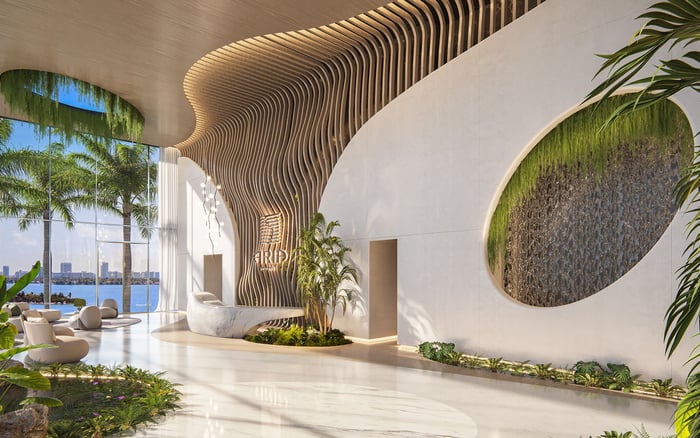
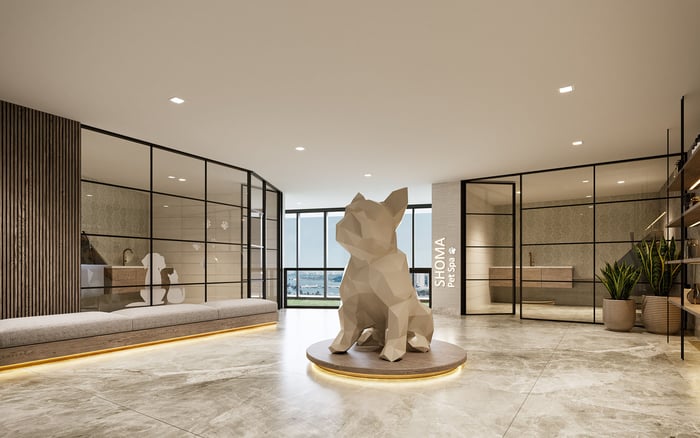
The project is characterized by large-scale amenities and hospitality-influenced operations, with resort-style pools, spa facilities, concierge services, and water-oriented lifestyle features forming part of the residential identity. It is also framed as having multiple amenity zones and a wider range of programming than a more moderate-scale Midtown tower. That matters because scale changes the feel of ownership. A larger waterfront development can create a sense of destination that a neighborhood tower, however elegant, may not attempt to replicate.
Aria Reserve also aligns with a broader Edgewater and bayfront luxury pattern in which buyers prioritize water, horizon, and service culture over immediate retail density. In that lane, it shares thematic territory with other waterfront-driven offerings such as EDITION Edgewater and Villa Miami, both of which reinforce how strongly the bayfront market prizes scenery, privacy, and amenity immersion.
The residences themselves reflect the broader difference in philosophy. Miami Design Residences is typically presented with modern interiors, open-plan layouts, and a scale of living that suits urban professionals, design-conscious buyers, and downsizers who want a polished home base without excessive operational complexity.
Its amenities are best understood as curated urban support: fitness, lounge areas, and co-working-style spaces that serve contemporary routines. They are useful, refined, and relevant, but they do not attempt to replace the city outside. This is a crucial distinction. At Miami Design Residences, the neighborhood remains part of the amenity package.
Aria Reserve Miami, by contrast, leans into the idea that much of the lifestyle can unfold on site. Resort pools, spa-oriented wellness, concierge support, and water-related offerings suggest a property designed to keep residents within its orbit for longer stretches of the day. The difference is not merely that Aria has more amenities. It is that the amenities are part of the identity of the purchase.
For buyers comparing both projects, the right question is not which amenity collection looks better on paper. It is whether they want amenities that supplement city life or amenities that become the lifestyle itself.
Miami Design Residences will likely resonate most with buyers who want a primary residence embedded in daily urban movement. That can include executives who divide time between office, dining, and cultural districts; couples seeking a lower-maintenance luxury residence with strong architectural intent; and downsizers who still want to feel connected to Miami's creative core. It may also appeal to value-conscious luxury buyers, given its generally lower entry point than the bayfront premium associated with Aria Reserve.
Aria Reserve Miami is more naturally aligned with buyers seeking a broader sense of retreat. Second-home purchasers, international owners, and residents who prioritize views, service, pools, spa access, and the psychological calm of the waterfront may find its proposition more complete. It is especially compelling for those who want Miami to feel less like a dense urban grid and more like a private resort with skyline proximity.
That distinction also maps to how buyers use time. Midtown ownership often suits those who intend to be out in the city frequently. Bayfront resort ownership tends to suit those who want more reasons to stay in.
While precise pricing can shift with market conditions, the broader positioning is clear: Miami Design Residences generally sits at a lower entry point than Aria Reserve Miami. That premium differential reflects more than water views alone. It also captures larger grounds, broader amenity offerings, and the status attached to a direct bayfront residential environment.
Still, a lower entry point does not mean lesser ambition. In luxury real estate, value is often found in fit. A buyer who rarely uses extensive resort amenities may derive more satisfaction from Midtown's walkability and design focus than from paying for a larger waterfront ecosystem. Conversely, a buyer who wants sunrise views, concierge support, and a destination feel may regard the Aria Reserve premium as entirely rational.
This is why the comparison is best framed as lifestyle efficiency rather than simple price hierarchy. The best purchase is the one whose daily logic aligns with the owner's actual habits.
If your idea of luxury is stepping out into Midtown for coffee, dinner, galleries, and the wider cultural weave of Wynwood and the Design District, Miami Design Residences is the sharper fit. It offers a more neighborhood-centric version of high-end Miami living, with architecture and interiors supporting an urban life already in motion.
If your idea of luxury is arriving home to Biscayne Bay, moving between pool, spa, concierge, and water-oriented experiences within a larger residential enclave, Aria Reserve Miami is the more compelling choice. Its strength is not just location, but the scale at which it delivers waterfront living.
The decision, then, is elegantly simple. Choose Miami Design Residences for Midtown access, design literacy, and city rhythm. Choose Aria Reserve Miami for bayfront serenity, resort programming, and a more expansive sense of residential escape.
Is Miami Design Residences better for full-time living? It may be, particularly for buyers who want walkability, daily convenience, and close access to Midtown, Wynwood, and the Design District.
Is Aria Reserve Miami more suited to second-home buyers? In many cases, yes. Its bayfront setting and resort-style amenities align naturally with second-home and retreat-oriented ownership.
Which project offers stronger walkability? Miami Design Residences has the advantage here because Midtown is defined by restaurant, retail, and neighborhood access.
Which project has the stronger water connection? Aria Reserve Miami does, with direct Biscayne Bay frontage, open views, and water-oriented lifestyle appeal.
Are the amenity styles meaningfully different? Yes. Miami Design Residences emphasizes curated urban conveniences, while Aria Reserve Miami leans into resort-scale programming.
Does Miami Design Residences appeal to design-focused buyers? Yes. It is positioned as a design-forward residential tower with an architectural emphasis that suits aesthetically driven buyers.
Is Aria Reserve Miami a larger-scale development? Yes. It is characterized as a broader residential community with multiple amenity zones and a more expansive footprint.
Which property may have the lower entry point? Miami Design Residences is generally positioned at a lower entry point than Aria Reserve Miami.
Is Midtown or bayfront living better for entertaining? It depends on style. Midtown favors spontaneous city entertaining, while bayfront living favors private, amenity-rich hosting.
How should buyers choose between the two? Buyers should decide whether their highest luxury priority is neighborhood access or a resort-style waterfront environment.
When you're ready to tour or underwrite the options, connect with MILLION Luxury.
If branded residences are on your mind — as a home or as an allocation — we would be glad to share what we are seeing, privately.
Begin a quiet conversation