Lilli Miami Edgewater and Aria Reserve Miami offer distinct wellness propositions, but shared-ownership buyers should separate advertised facilities from confirmed booking capacity, guest rights, and practitioner access.
For buyers considering a residence shared among family members or other co-users, wellness has two dimensions: the quality of the facilities and the ability to use them on the desired terms. A treatment room is appealing; an appointment that fits a short stay makes it useful. Guest eligibility and practitioner permissions deserve equal scrutiny.
In Edgewater, Lilli Miami Edgewater and Aria Reserve Miami present distinct wellness propositions. Lilli emphasizes an integrated philosophy of movement and recovery, while Aria Reserve advertises fitness, spa amenities and customized resident services. Neither project's publicly disclosed wellness details establish which offers easier appointment access or whether a proposed shared-ownership arrangement is permitted.
The distinction matters: advertised facilities do not guarantee service capacity. A sound comparison starts with the experience each property describes, then seeks written confirmation of the rights and operating rules that make it available to each intended user.
At 717 NE 27th Street, Lilli Miami Edgewater organizes its wellness program around four Living Pillars: Movement, Recovery, Nourishment and Connection. The framework helps buyers evaluate how the residence might support a regular wellness routine, rather than assessing each amenity in isolation.
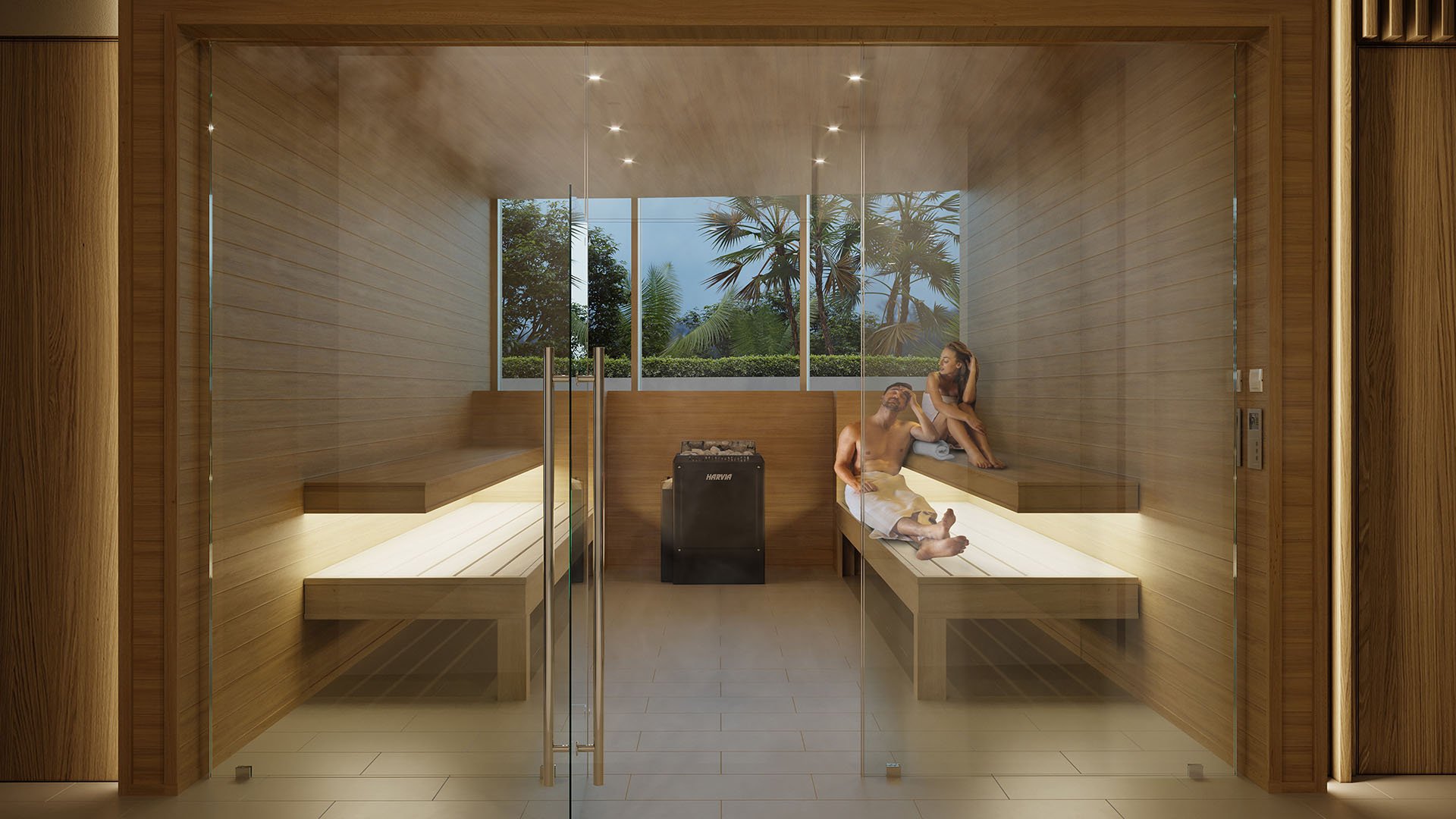
Its advertised recovery offering includes infrared sauna, cold-plunge facilities, a hot tub, body-composition analysis, recovery tools and treatment rooms. A fitness and movement studio promotes circuit-based programming tailored to individual goals. For a household with varied preferences, these descriptions suggest several potential activities. They do not establish separate access rights for every household member or co-user.
Lilli also identifies a dedicated Director of Lifestyle and Wellness. That role is not evidence of practitioner staffing, clinical services or appointment availability. Lifestyle coordination and treatment delivery are different functions; buyers should ask who performs each service and how appointments are allocated.
Treatment-room counts, practitioner numbers, booking lead times, advance-reservation requirements and separate treatment charges are not publicly specified in the disclosed wellness information. Guest eligibility for the spa, sauna, cold plunge, movement studio and practitioner appointments also remains unconfirmed. These are matters to verify, not evidence that access is unrestricted or unavailable.
At 725 NE 24th Street, Aria Reserve Miami advertises indoor and outdoor fitness facilities, a yoga lounge and an exterior meditation garden. Its spa offering includes massage rooms, sauna, steam room, a relaxation area and a solarium deck with cabanas.
The resident-service description extends to customized massages, beauty treatments and lap-pool sessions. Cardio and weight-training equipment, studio and class space, and massage-therapy facilities round out the advertised wellness program. These offerings describe an intended experience, not a guaranteed appointment schedule.
Massage-room counts, treatment slots, practitioner staffing levels, resident-to-treatment-room ratios and maximum daily bookings are not publicly disclosed in the wellness information. Guaranteed appointment availability is not established either. Buyers should not mistake a broad amenity selection for greater treatment capacity.
The provider model also needs clarification. The disclosed service descriptions do not identify whether massage and beauty practitioners are employees, contracted operators or independently booked professionals. That distinction matters when determining who controls scheduling, handles cancellations and maintains continuity for returning residents.
For either property, begin with the number of treatment rooms and practitioners available during the hours your household expects to use them. A room count cannot establish capacity without staffing levels, service duration and operating hours.
Request weekday and weekend schedules, advance-booking windows, limits on simultaneous reservations and any allocation by residence. Ask whether each approved co-user can book independently or whether reservations must pass through one designated account. Clarify owner priority, waitlists, cancellation charges, no-show policies and service fees.
Then test the rules against a realistic visit. If two approved users want treatments on the same morning, can both reserve? Can a co-user secure an appointment before arriving? What happens when a practitioner is unavailable? Present these practical scenarios to management rather than making assumptions about either building's current operations.
Written answers should distinguish shared-facility access from separately scheduled services. Permission to enter a wellness area does not, by itself, establish the right to book a treatment or bring another person.
For shared ownership, the word “resident” is not precise enough. Neither project's resident-focused wellness descriptions establish separate rights for deeded owners, tenants, guests or shared-ownership co-users. Before comparing lifestyle value, define how each intended user would be classified under the applicable rules.
Ask whether guests may use each facility, receive treatments and make reservations. Request confirmation of guest fees, caps, owner-hosting requirements and whether an owner must remain present. Do not assume that a household visitor and an approved co-user hold identical privileges.
Outside-practitioner access requires a separate written answer. Neither property's disclosed wellness information establishes permission to bring an outside wellness or medical practitioner into the building. Confirm whether any approved service may take place inside a residence, in a treatment room, or both.
If outside providers are permitted, ask about licensing, insurance, registration and appointment procedures. Building entry approval and permission to use a communal treatment room are distinct issues. Buyers seeking continuity with a preferred practitioner should resolve both before relying on that arrangement.
A shared-use purchase needs two separate reviews: whether the ownership and occupancy structure is permitted, and whether the intended users qualify for the desired amenities. Neither Lilli's nor Aria Reserve's wellness offering establishes permission for shared ownership. Have counsel review the proposed arrangement alongside the applicable documents, and obtain written access confirmations.
Apply the same discipline if the shortlist includes EDITION Edgewater. Questions about co-user classification, booking rights and practitioner entry remain useful, but no policy should be carried over from one property to another.
Lilli's advertised strengths lie in its four-pillar framework and recovery-focused facilities. Aria Reserve's descriptions emphasize fitness settings, spa amenities and customized resident services. The available details support that distinction, but do not establish a winner on booking availability, guest flexibility or outside-practitioner access.
For a shared household, the better fit is the property whose confirmed rules support the intended pattern of use. Prioritize independent booking rights, transparent costs, clear guest treatment eligibility and a workable provider policy. Until those terms are established, treat the wellness proposition as an invitation to investigate, not an access guarantee.
For a discreet assessment of wellness priorities and residential fit, connect with MILLION.
If branded residences are on your mind — as a home or as an allocation — we would be glad to share what we are seeing, privately.
Begin a quiet conversationLilli is at 717 NE 27th Street, and Aria Reserve is at 725 NE 24th Street, Miami, FL 33137. Both are in Edgewater.
Lilli organizes its wellness program around Movement, Recovery, Nourishment and Connection.
Lilli advertises infrared sauna, cold-plunge facilities, a hot tub, body-composition analysis, recovery tools and treatment rooms.
Aria Reserve advertises indoor and outdoor fitness facilities, a yoga lounge, a meditation garden and spa amenities including massage rooms, sauna and steam room.
The disclosed wellness details do not establish a booking-capacity advantage for either project. Treatment-room counts and practitioner staffing require confirmation.
No. The Director of Lifestyle and Wellness role does not establish treatment-provider staffing or appointment availability.
Independent booking rights for shared-ownership co-users are not established for either project. Request written confirmation of eligibility and any per-residence limits.
Guest treatment eligibility is not established in the disclosed wellness details. Confirm fees, caps and owner-hosting requirements before planning guest use.
Permission for outside practitioners is not established for either property. Ask separately about building entry, in-residence services and communal treatment-room use.
No. Buyers should have the proposed ownership and occupancy arrangement reviewed separately from amenity eligibility and booking rights.