Miami Beach offers greater residential variety and condominium scale, while Surfside presents a more compact rhythm with low-rise house districts, a walkable center, and a northern orientation. The right choice depends on school-run performance, preferred household separation, and the privacy implications of each property’s zoning and surroundings.
The choice between Miami Beach and Surfside is often framed as a question of atmosphere. For a family buyer, it is more accurately a question of household operations. Where will the children attend school? How often will grandparents, adult children, or caregivers stay? Does the household want one front door, adjoining residences, or separate homes within a short drive?
Surfside offers a compact, family-oriented setting, a walkable Harding Avenue district, and access to a comparatively uncrowded beach. Its residential spectrum extends from detached homes and older condominiums to luxury oceanfront buildings. Miami Beach presents a broader, often more intense urban-resort environment, encompassing single-family enclaves, lower-scale apartment districts, and taller condominium settings.
The best address is the one that makes the family’s most repeated journey work.
Neither location wins in the abstract. A more useful framework scores each candidate on weekday travel, household privacy, property configuration, and the likely character of adjacent development.
Families in Surfside, Bal Harbour, and nearby coastal communities commonly consider Miami Country Day School, Ransom Everglades, and Gulliver Prep. Geography matters. Surfside is oriented more naturally toward Miami Country Day in North Miami, while Ransom Everglades and Gulliver Prep sit farther south. Miami Beach may improve southern access from certain neighborhoods, but suitability depends on the precise address and route.
Do not rely on an off-peak map estimate. Drive the proposed school run on a weekday morning, repeat it at afternoon dismissal, and test the return journey. If siblings attend different campuses, simulate the complete sequence rather than evaluating each leg separately. Include extracurricular pickups, caregiver handoffs, and the possibility that one parent must continue to another destination.
Surfside also has a nearby public-school alternative: the town is zoned for Ruth K. Broad Bay Harbor K-8 Center in neighboring Bay Harbor Islands. Boundaries and eligibility should be confirmed before purchase, but the proximity gives families another scenario to assess alongside private education.
A practical test assigns each residence three commute scores: an ordinary school day, a day with multiple pickups, and a disrupted day when another adult must take over. The result is more revealing than a single best-case drive.
Multigenerational privacy is not simply a bedroom count. It is the ability to share daily life without forcing every generation onto the same schedule. Buyers should determine whether older relatives need an independent entry, a full kitchen, quiet outdoor space, elevator access, or proximity to household help. Adult children may value a separate entertaining zone more than additional square footage.
Three formats merit comparison. A detached home can consolidate the family behind one threshold, but its internal plan must provide genuine acoustic and circulation separation. Adjoining condominium residences can offer autonomy while keeping relatives close. A house-plus-condo arrangement creates the clearest division, though it introduces two sets of building rules, costs, and logistics.
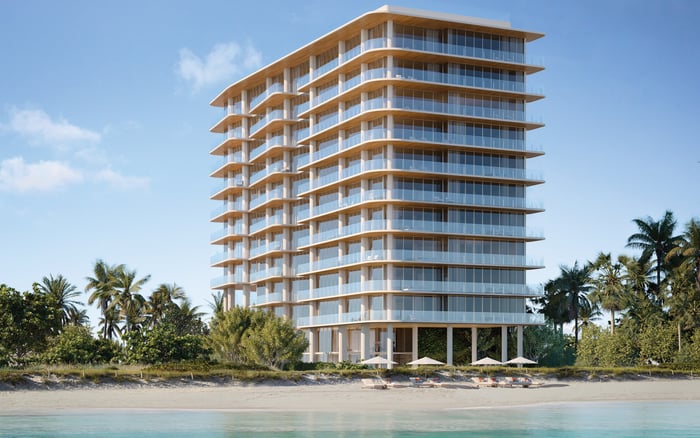
Surfside allows buyers to compare these formats within a relatively compact area. They might assess a detached inland residence against oceanfront options such as Arte Surfside or The Surf Club Four Seasons Surfside. The purpose is not to assume that every building permits adjoining-unit combinations, but to compare service, access, separation, and shared-space preferences property by property.
Miami Beach broadens the field. A family can contrast a house with condominium candidates such as The Perigon Miami Beach and The Ritz-Carlton Residences® Miami Beach. Confirm inventory, association rules, renovation permissions, and any proposed combination before treating a layout strategy as feasible.
Zoning shapes the future setting around a residence. Surfside’s Low Density Residential designation permits up to eight dwellings per acre, limits height to 30 feet, and restricts uses to single-family residences, parks, and open space. Moderate Low Density Residential areas permit up to 17 dwellings per acre at the same 30-foot maximum.
Other parts of Surfside allow greater intensity. Moderate-High Density Residential areas permit up to 79 dwellings, or 108 hotel units, per acre, with a 40-foot limit. High Density Residential/Tourist areas permit up to 109 dwellings per acre and heights up to 120 feet. The town’s H30C, H40, and H120 districts likewise signal materially different building envelopes. A block-by-block review is therefore essential.
Miami Beach can accommodate substantially larger multifamily projects. Its RM-3 district permits a floor-area ratio of 2.25 on lots of 45,000 square feet or less and 2.7 on larger lots, with regulations generally allowing heights up to 150 feet. Oceanfront lots within architectural districts are generally capped at a 2.0 floor-area ratio. These distinctions affect residence count, amenity scale, arrival patterns, and the number of neighbors sharing common spaces.
Even within one island, assumptions can mislead. On Belle Isle, the north side’s RM-1 zoning provides a maximum floor-area ratio of 1.25 and a 55-foot height limit when ground-level parking or other non-habitable space is included. The south side is RM-2, where allowable intensity and height are greater. Privacy-sensitive buyers should review the subject parcel and nearby parcels-not merely the neighborhood name.
Waterfront living can mean direct beach access, a bay outlook, or simply proximity to the water. Each creates a different family routine. Oceanfront condominium living may simplify arrival, staffing, recreation, and lock-and-leave ownership, yet it also places privacy within a shared governance structure. A detached home offers greater control over circulation but makes maintenance, resilience planning, and household operations more personal responsibilities.
Surfside’s asking-price references have ranged from approximately $500,000 for older condominiums to more than $20 million for penthouses, while finished houses have commonly occupied an indicative range of roughly $2 million to $5 million-plus. These are broad guideposts, not current valuations. Condition, location, exposure, building quality, and property-specific risk all require fresh analysis.
In either municipality, verify current zoning, flood-elevation requirements, school boundaries, and allowable home configurations. For a condominium, examine governance and rules alongside the floor plan. For a house, study legal use, elevation, access, and the feasibility of any proposed reconfiguration before assigning value to it.
The strongest comparison begins with a short list of non-negotiable days. Test a normal school morning, a grandparent’s medical appointment, a weekend with guests, an evening when children and adults entertain separately, and a month when the primary owners are away. Ask how each property handles arrivals, staff circulation, packages, parking, noise, and supervision.
Surfside is likely to appeal when compactness, a northern school orientation, Harding Avenue walkability, and lower-density inland surroundings carry greater weight. Miami Beach is likely to appeal when the family wants a wider spectrum of neighborhood types, taller amenity-rich buildings, or greater flexibility in choosing between house and condominium lifestyles.
The final purchase should reflect the family’s repeated patterns rather than its occasional ones. A spectacular residence can compensate for many compromises, but it cannot erase an unsuitable school run or a household plan that gives different generations too little independence.
For confidential guidance in comparing South Florida residences, connect with MILLION.
If branded residences are on your mind — as a home or as an allocation — we would be glad to share what we are seeing, privately.
Begin a quiet conversationSurfside is geographically oriented toward Miami Country Day in North Miami. Buyers should still test the exact route during morning arrival and afternoon dismissal.
Families in Surfside, Bal Harbour, and nearby coastal communities commonly consider Miami Country Day School, Ransom Everglades, and Gulliver Prep.
Surfside is zoned for Ruth K. Broad Bay Harbor K–8 Center in neighboring Bay Harbor Islands. Buyers should confirm current boundaries and eligibility before purchasing.
School-run traffic can differ materially from off-peak conditions. Testing morning, dismissal, and multi-campus routes reveals the household’s real daily burden.
Useful formats include a detached home, adjoining condominium residences, and a house-plus-condo arrangement. The right choice depends on caregiving, autonomy, and desired separation.
Surfside’s Low Density Residential designation permits up to eight dwellings per acre with a 30-foot height limit. Other Surfside districts allow greater density and height.
Miami Beach RM-3 regulations generally permit buildings up to 150 feet. Parcel-specific rules and current approvals should always be verified.
Belle Isle’s north side is RM-1, while its south side is RM-2 with greater allowable intensity and height. That difference can affect future context and privacy.
No. The broad figures cited are indicative asking-price guideposts, so every house or condominium requires current, property-specific valuation.
Confirm zoning, flood-elevation requirements, school boundaries, legal use, and allowable configurations. Condominium buyers should also review governance and renovation rules.