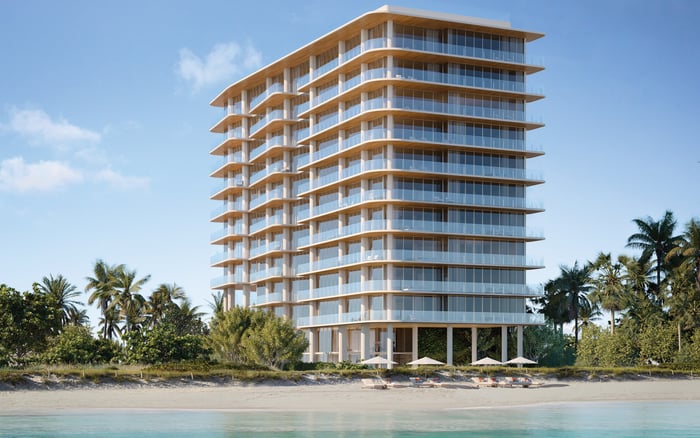
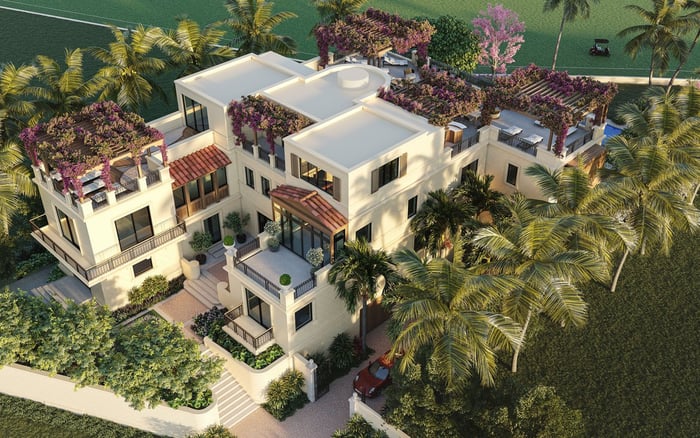
For Connecticut buyers, Surfside offers a nuanced choice between low-density oceanfront living and a broader full-service experience, all within reach of its compact commercial core and Bal Harbour.
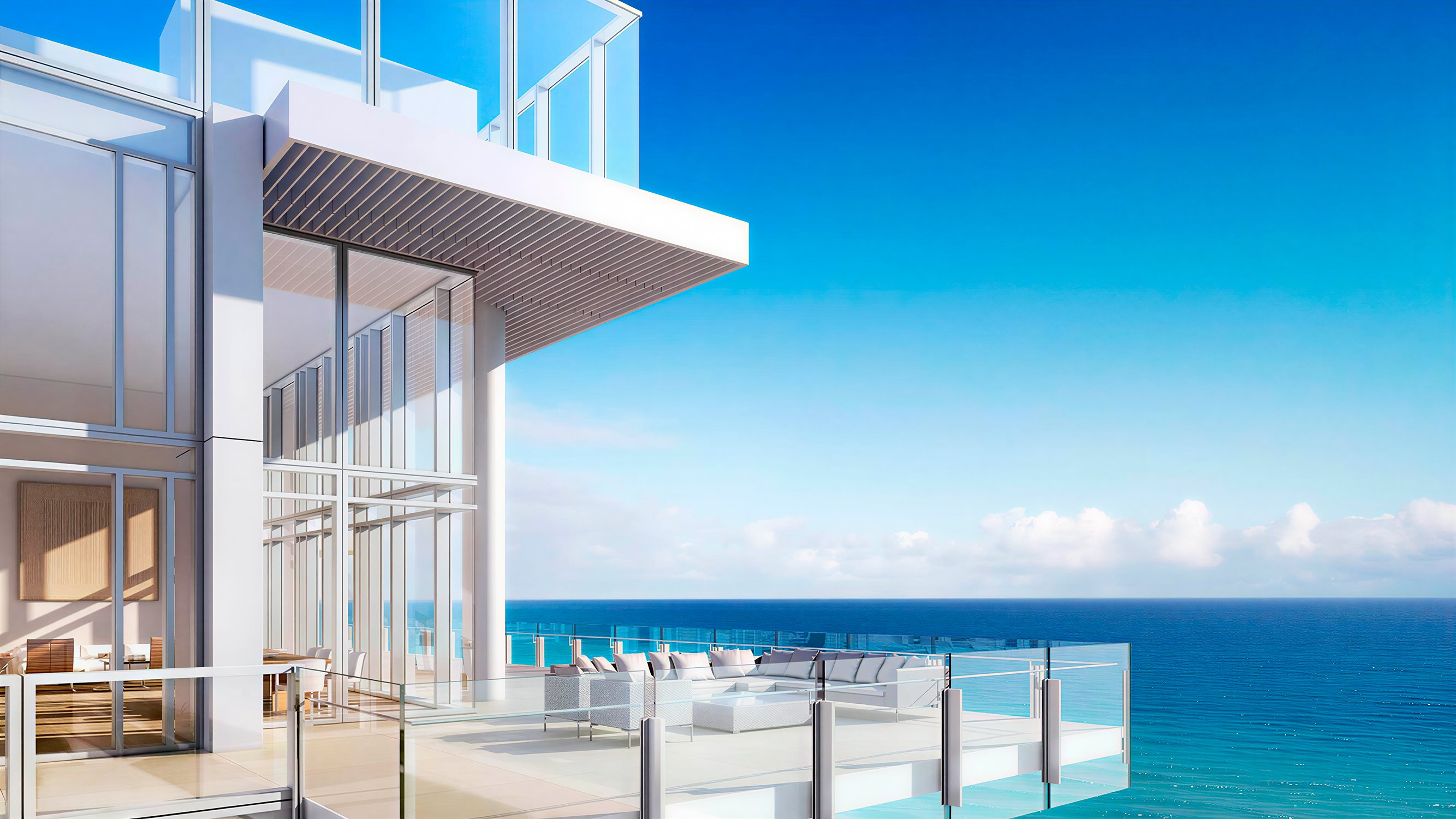
For Connecticut buyers, Surfside’s appeal extends beyond warm weather and Atlantic views. It offers the opportunity to create a highly private coastal base without surrendering the conveniences that make a second residence effortless. Along Collins Avenue, oceanfront condominiums sit near a compact commercial core, while Bal Harbour offers luxury retail, dining and hospitality less than a mile away.
The right purchase therefore begins with a practical question: How should the residence function on an ordinary day? A buyer who wants to walk to coffee, dinner and shopping will assess location differently from one who expects to spend most days moving between the beach, pool and residence. Surfside can support both patterns, though rarely in precisely equal measure.
Central and northern Surfside generally offer the strongest car-light proposition. From Harding Avenue, the typical walk to Bal Harbour Shops takes about 10 to 15 minutes. Addresses closer to the northern boundary shorten both the mental and physical distance between a quiet home base and polished retail or hotel environments.
At 9501 Collins Avenue, Ocean Seven sits directly across from Bal Harbour Shops and the St. Regis Bal Harbour. The trade-off is intuitive: Immediate access to prominent destinations may feel more connected, while a property farther south can provide greater separation from that activity.
The Waves at 9455 Collins Avenue occupies a similar northern setting, offering a tranquil oceanfront alternative to busier Miami Beach districts. Buyers should still visit at several times of day. Walkability can be measured on a map, but the preferred balance of movement, arrival patterns and atmosphere is personal.
Boutique living in Surfside is often defined by a limited number of homes rather than isolation. Arte Surfside, at 8955 Collins Avenue, contains only 16 residences, placing it among the town’s lowest-density oceanfront choices. Its southern position also provides greater separation from the Bal Harbour boundary while retaining access to Surfside’s core.
Farther north, Ocean House Surfside is planned with 25 residences across 12 stories, emphasizing privacy and boutique scale. The Delmore Surfside, planned at 8777 Collins Avenue, comprises 37 homes averaging approximately 7,000 square feet. That unusually generous scale may suit extended stays, visiting family or multigenerational use.
These lower residence counts can support discretion, but buyers should not assume privacy is guaranteed. Elevator design, service access, amenity circulation and residence exposure can matter as much as the total number of homes.
At the other end of the spectrum, The Surf Club Four Seasons Surfside occupies eight acres of oceanfront grounds. Its North and South condominium buildings contain 144 residences, including 14 penthouses. Compared with Surfside’s smallest properties, this creates more inventory and a broader shared environment.
The distinction is not simply large versus small. It is a choice between intimacy and depth of service. A Connecticut owner seeking a seamless arrival, a substantial amenity setting and the reassurance of a larger operation may prefer this model. A buyer who values fewer neighbors and less common-area circulation may accept a narrower amenity program in return.
Pricing reflects the stature of both approaches. In one market snapshot, The Surf Club Four Seasons Residences averaged about $5,501 per square foot in list pricing, while Arte averaged about $5,207 per square foot. These figures are time-sensitive asking-price indicators, not closed-sale values. Surf Club listings ranged from approximately $7.9 million to $55 million, illustrating the breadth possible within a single address.
Space should be evaluated by use rather than spectacle. Large homes may accommodate adult children, guests and longer seasonal stays, but they also introduce greater furnishing, maintenance and carrying-cost considerations. A smaller residence in a 16- or 25-home building may offer the more valuable luxury of simplicity.
Fendi Château Residences Surfside, an Arquitectonica-designed 12-story building with 58 residences, occupies a middle ground between the smallest boutique properties and the 144-residence Surf Club. The decision should turn on how often guests arrive, whether owners work from Florida and how much of the property must remain ready while the family is in Connecticut.
The final comparison should extend beyond interiors and views. Review each condominium’s leasing rules, service charges, insurance, reserves and beach-access arrangements. These details vary by building and can materially shape flexibility, privacy and annual ownership costs.
Study staffing and access patterns as closely as floor plans. Ask how guests, deliveries and vendors enter; whether elevators are shared; how beach service operates; and which amenities draw the most traffic. For an oceanfront buyer, the best choice is the property whose operating model supports the desired lifestyle after the novelty of arrival has faded.
Where should convenience-focused buyers look in Surfside? Central and northern addresses near Harding Avenue, Collins Avenue and the Bal Harbour boundary generally offer the easiest car-light routine.
How close are Surfside and Bal Harbour? They are less than a mile apart, making it practical to pair a Surfside residence with Bal Harbour retail and dining.
How long is the walk to Bal Harbour Shops? A typical walk from Harding Avenue takes about 10 to 15 minutes, although the precise time depends on the starting address.
Which Surfside building has the fewest residences discussed here? Arte has 16 residences, placing it among Surfside’s lowest-density oceanfront options.
Is a smaller building automatically more private? No. Residence count is important, but elevator configuration, amenity circulation, staffing and access design also influence discretion.
What does The Surf Club offer relative to boutique buildings? Its 144 residences and eight-acre oceanfront setting support a broader full-service environment than Surfside’s smallest properties.
Which option may work for multigenerational stays? The Delmore’s planned homes average approximately 7,000 square feet, providing notable room for family and extended visits.
Should buyers rely on price-per-square-foot comparisons? Use them as time-sensitive asking-price benchmarks, then evaluate residence condition, layout, views, services and building economics separately.
What documents deserve close review before purchasing? Examine condominium rules, leasing policies, service charges, insurance, reserves and beach-access arrangements with qualified advisers.
What is the central trade-off for Connecticut buyers? Northern convenience and full-service scale can increase connectivity, while smaller or more southerly properties may better support separation and discretion.
For a tailored shortlist and next-step guidance, connect with MILLION.
If branded residences are on your mind — as a home or as an allocation — we would be glad to share what we are seeing, privately.
Begin a quiet conversation