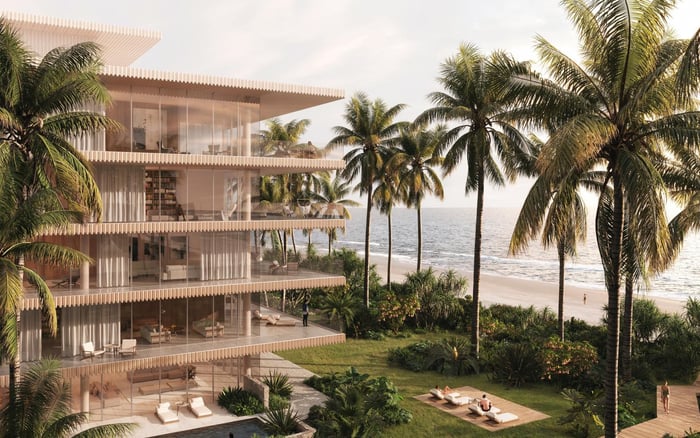
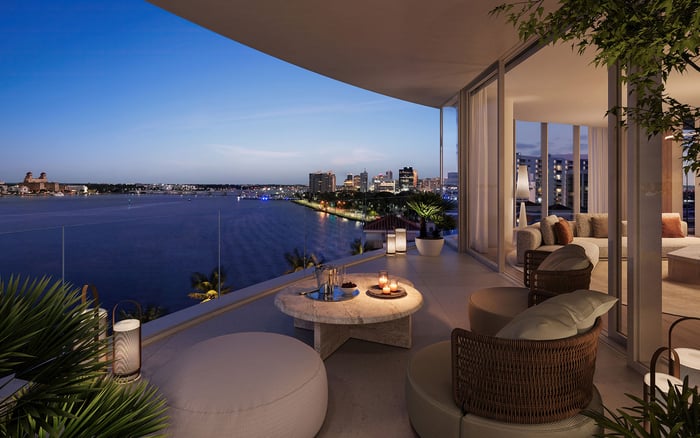
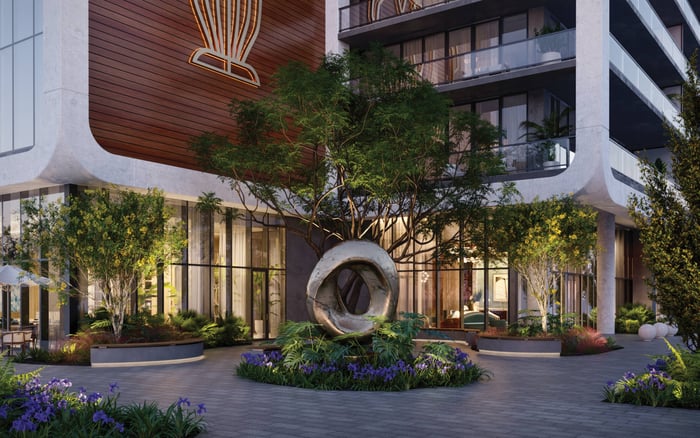
Maison d’Or South Flagler’s 39-residence scale suggests a more intimate amenity environment, yet the practical value of its pool terrace, guest suites, entertainment rooms, wellness spaces, and dockage will depend on final operating rules. Buyers should examine booking priority, quotas, fees, guest limits, and holiday restrictions before equating an amenity’s presence with dependable access.
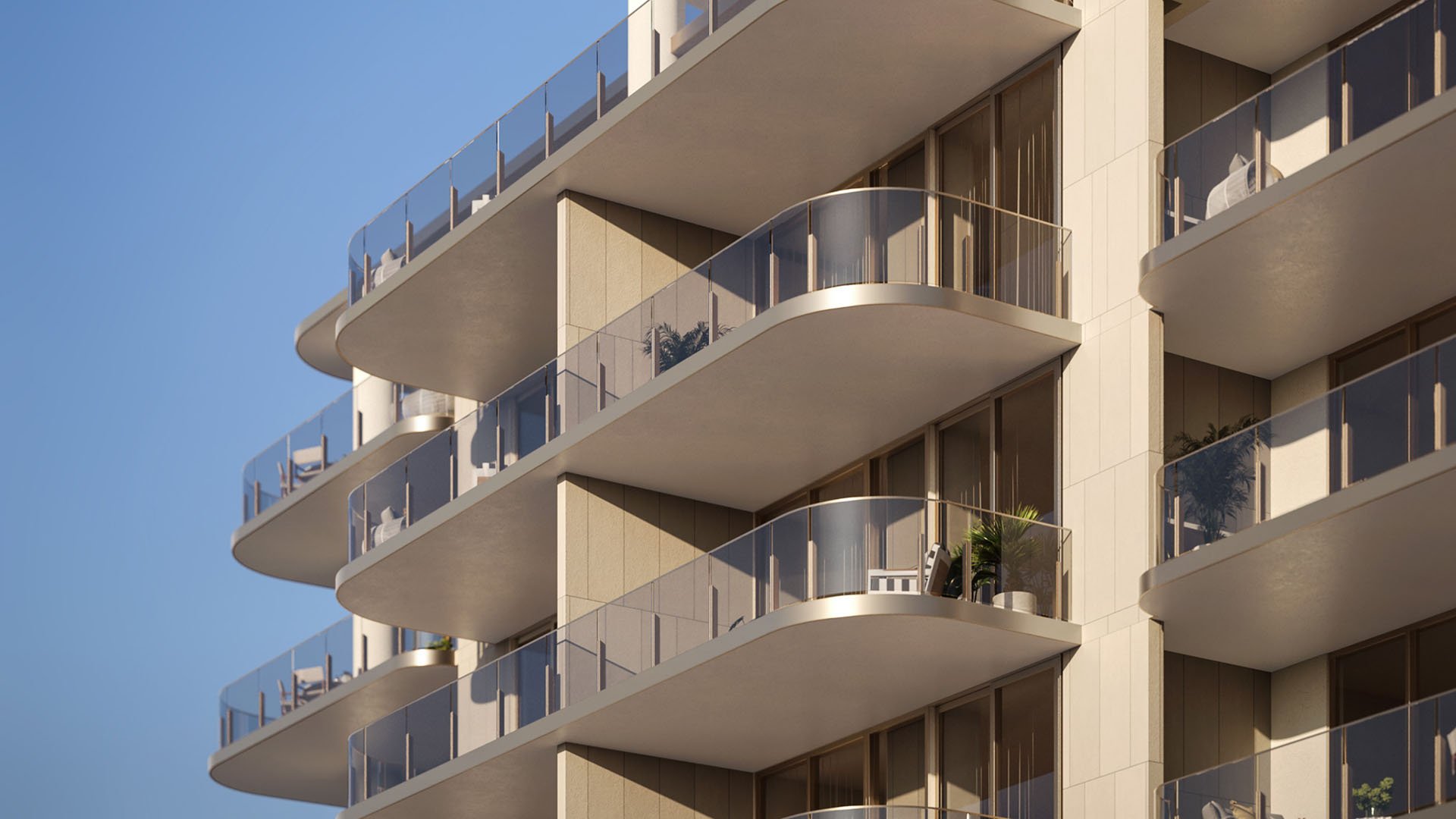
At Maison D'Or South Flagler, the defining number may be not the length of the amenity inventory, but the 39 residences expected to share it. That boutique scale could reduce competition compared with a large tower. It does not, by itself, establish whether an owner can secure a cabana on a peak-season weekend, reserve private dining for a holiday gathering, or accommodate visiting family in one of only two guest suites.
The distinction is central to evaluating luxury condominium living in West Palm Beach. An amenity can be beautifully designed yet difficult to use when it matters most. Reliable access depends on capacity, reservation windows, priority rules, fees, cancellation policies, guest allowances, and the authority granted to management or the concierge.
In a luxury condominium, access is not proven by an amenity list but by the rules governing its use.
Maison d’Or’s program is substantial. Kolter Urban is developing the property, with architecture by 10 Design, interiors by Hirsch Bedner Associates, and landscape design by EDSA. The waterfront plan encompasses recreation, wellness, entertaining, work, guest accommodations, services, and dockage. Yet many of the operating terms that will shape peak-season use remain undisclosed.
The resort-style pool and spa are planned to overlook the Intracoastal Waterway, with cabanas along the waterfront terrace. The number of chairs and cabanas, total deck capacity, and system for cabana use have not been disclosed. Whether cabanas will be first-come, reservable, fee-based, or assigned to particular residences also remains unclear.
Those distinctions can materially alter the ownership experience. A reservation system may create certainty, but its fairness depends on lead times, per-residence limits, holiday rules, cancellation penalties, and safeguards against repeat bookings. A first-come system avoids advance planning but may favor full-time occupants over seasonal owners arriving during the busiest weeks.
The wellness offering includes treatment rooms, separate men’s and women’s steam rooms and saunas, a cold plunge, and a salon suite. Fitness spaces include a waterfront fitness center, movement studio, and private training room. Buyers should determine whether treatments, classes, or personal-training sessions can close or restrict general access, and whether day guests may use these facilities with a resident.
Maximum day-guest counts for the pool, wellness areas, fitness center, and entertainment rooms have not been stated. That omission matters when residences are occupied by extended families or owners entertain during the social season.
Maison d’Or plans two decorator-furnished guest suites to serve visitors across 39 residences. This is the clearest example of a scarce shared resource. Even if only a portion of owners seek accommodations at once, demand could concentrate quickly during holiday periods.
No disclosed policy establishes nightly rates, maximum stays, annual usage caps, booking priority, holiday blackouts, or cancellation penalties. A buyer expecting the suites to function as an extension of the residence should ask whether bookings open on a rolling basis, whether consecutive nights are capped, and whether one household may reserve both suites simultaneously.
Priority is equally important. Final policies could distinguish among owner-occupants, seasonal residents, renters, and guests, but no such hierarchy has been disclosed. Buyers considering other Flagler Drive offerings, including South Flagler House West Palm Beach, should review each property’s governing documents independently rather than assume a common local practice.
The entertainment program includes a lobby-level club room and formal private dining space supported by a catering kitchen. The Green Room is positioned for full-time residents, seasonal owners, and family-office use, yet its reservation window, guest limit, deposit, and staffing requirements remain unpublished.
These details determine whether the room functions as a spontaneous extension of the home or as a venue requiring significant advance planning. Buyers should ask about minimum and maximum booking durations, cleaning charges, approved caterers, alcohol policies, security requirements, and whether private reservations exclude other residents from adjoining spaces.
A screening theater and sports-simulator swing suite are also planned. Session length, advance-booking limits, recurring reservations, and no-show sanctions have not been specified. The same issue applies to the boardroom, where reservation duration and repeated use remain unaddressed. For owners who work remotely or manage a family office, recurring access may be more valuable than occasional availability.
Private wine storage is paired with a tasting lounge, although whether the lounge may be reserved for private events remains unclear. A waterfront café with a daily coffee and beverage station is presented as an informal resident amenity, not a staffed public restaurant. Owners should therefore distinguish everyday common-space access from services that may require scheduling or outside vendors.
New-construction dockage is part of the plan, but no terms establish whether slips will be deeded, assigned, rented, waitlisted, or offered through short reservations. Boat-slip allocation can be especially consequential because physical supply is inherently fixed. Buyers should request dock provisions, vessel limitations, transfer rules, fees, insurance requirements, and any priority system before treating dockage as assured personal access.
Arrival features include a private garage and valet operations, while concierge services are expected to coordinate chefs, chauffeurs, childcare, yacht charters, private aviation, and absentee-owner care. These offerings can add meaningful convenience, but coordination is not guaranteed fulfillment. Advance notice, third-party availability, cost, and cancellation terms may shape the outcome during peak periods.
The pet-grooming facility presents a smaller but similar question: whether appointments are required or outside groomers are permitted has not been specified. Each unresolved operating detail illustrates the same principle. Service breadth should be evaluated alongside the mechanism for obtaining it.
Prospective buyers comparing the service environments at The Ritz-Carlton Residences® West Palm Beach or Mandarin Oriental Residences, West Palm Beach should avoid importing expectations from one residence to another. Branding, scale, staffing, and association rules can produce materially different access models.
The most consequential materials are the condominium declaration, association rules, management handbook, concierge policies, guest-suite agreement, pool and cabana rules, event-space agreements, theater and simulator booking terms, and dock allocation provisions. Marketing language describes intention; these documents define practical use.
For each reservable space, buyers should seek answers to the same core questions: How far in advance may an owner book? Are peak dates released differently? Is there an annual or monthly quota? How many guests are allowed? Are fees, deposits, staffing charges, or minimum spends imposed? What happens after a late cancellation or no-show? Can renters or unaccompanied guests reserve independently?
Maison d’Or’s low residence count remains an attractive structural advantage, but it is no substitute for disclosed capacity and final rules. Amenity due diligence should be treated as an access analysis, not a checklist exercise. The strongest ownership proposition is one in which the desired spaces remain realistically available when South Florida demand is at its highest.
For discreet guidance on South Florida luxury residences and the documents that define real-world access, connect with MILLION.
If branded residences are on your mind — as a home or as an allocation — we would be glad to share what we are seeing, privately.
Begin a quiet conversationMaison d’Or South Flagler is planned with 39 residences, creating a relatively limited number of households sharing the amenity program.
The available information does not specify whether the waterfront cabanas will be first-come, reservable, fee-based, or assigned to residences.
The plan includes two decorator-furnished guest suites for residents’ visitors.
No disclosed terms specify nightly rates, holiday restrictions, priority, maximum stays, annual caps, or cancellation penalties.
The Green Room is presented as a private dining venue, but its reservation window, guest limit, deposit, and staffing requirements have not been published.
The available information does not disclose booking duration, advance-booking limits, or cancellation policies for these amenities.
The available information does not establish whether slips will be deeded, assigned, rented, waitlisted, or available through short-term reservations.
That remains unclear because the available information does not explain whether classes or private sessions can limit access to fitness spaces.
No disclosed rules establish peak-season priority among owner-occupants, seasonal residents, renters, or unaccompanied guests.
Buyers should request the declaration, association rules, management and concierge policies, guest-suite terms, amenity agreements, and dock allocation provisions.