A discreet guide for Madrid buyers weighing amenity-rich South Florida residences, with a focus on privacy, service rhythm, architectural calm, and daily life in Sunny Isles Beach.
For a Madrid buyer considering Sunny Isles Beach, the most refined question is not which building offers the most amenities. It is which building supports your preferred rhythm without making home feel like a hotel lobby. South Florida’s luxury market can be generous with pools, spas, lounges, fitness rooms, beach service, children’s spaces, private dining rooms, and arrival experiences. Yet depth and discretion are not the same thing.
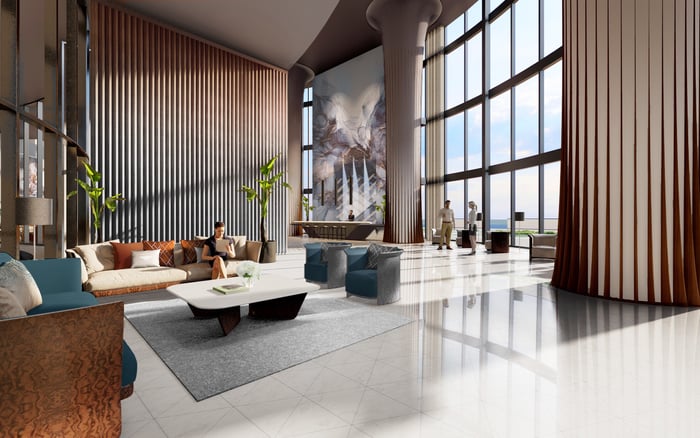
Amenity depth means the building has enough layers to absorb real life. There is a place to exercise before breakfast, host a visiting friend without turning the residence into an event space, work quietly when the household is full, step outside toward the water, and return through a staffed, composed environment. A resort feeling begins when those layers become theatrical, crowded, or too externally oriented.
This is why the strongest search begins with behavior. Do you entertain formally, casually, or rarely? Will the residence be a primary home, a seasonal base, or a family bridge between Europe and South Florida? Do you prefer an active social building, or one where amenities exist but do not announce themselves? The answer should guide every tour.
Madrid life often prizes walkable routine, long meals, family visits, privacy within the home, and a sense of urban culture. Sunny Isles Beach offers a different proposition: vertical Oceanfront living, broad views, immediate beach access in many settings, and a more resort-adjacent geography. The goal is to preserve the civility of home while gaining the climate and water orientation of South Florida.
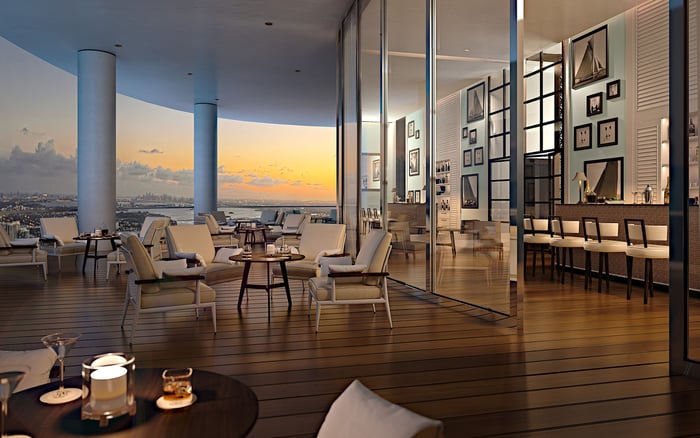
On a tour, do not only ask what the building offers. Ask how it feels at 8 a.m., 3 p.m., and 8 p.m. A gym can be beautiful and still too visible. A pool deck can be expansive and still lack quiet corners. A residents’ lounge can be impressive and still feel more like a club than an extension of home.
For some buyers, the right answer may be a highly serviced tower such as St. Regis® Residences Sunny Isles, evaluated through the lens of whether the service culture feels residential rather than performative. Others may compare that experience with an architecturally expressive address such as Bentley Residences Sunny Isles, focusing less on brand recognition and more on how arrival, parking, privacy, and daily movement function for the household.
Service is quiet. Spectacle asks to be noticed. In a truly residential building, staff presence should reduce friction rather than create ceremony. The best amenity programs make ordinary life easier: packages handled without drama, guests received gracefully, cars managed efficiently, beach days simplified, and maintenance questions resolved without repeated explanation.
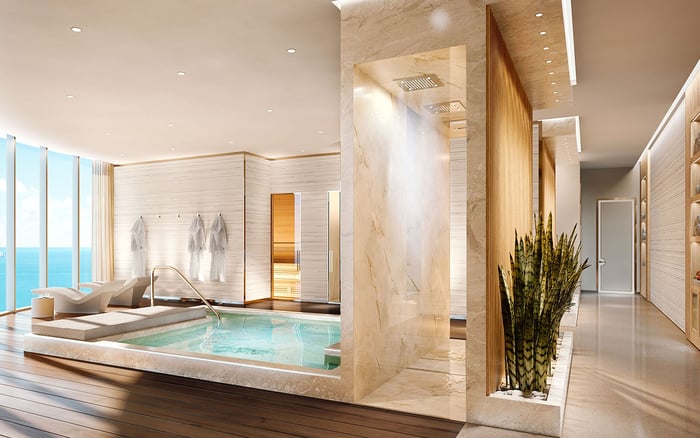
A resort feeling often appears when common spaces are designed primarily for visual impact. Grand rooms can be useful, but only if they have an everyday purpose. Ask whether you would actually use the private dining room for a family meal, whether the lounge is comfortable for reading, whether the children’s area is separated enough from adult spaces, and whether the wellness areas feel restorative rather than promotional.
This is a Buyer's Guides question as much as a Lifestyle question. The buyer who wants depth without resort energy should treat amenities as an operational system. The issue is not whether a building has a spa. It is whether the spa can be used naturally, privately, and repeatedly without feeling as though one has entered a public hospitality venue.
Privacy is not only about square footage or a private elevator. It is about the choreography of the building. How many moments occur between car and front door? How visible is the path from lobby to residence? Are amenity areas layered so residents can choose between social and quiet zones? Can visiting family enjoy the building without overrunning the home?
In Sunny Isles Beach, this matters because many buyers are drawn to the energy of the shoreline but do not want that energy to dominate the residence. A project such as The Ritz-Carlton Residences® Sunny Isles can be considered through this privacy lens: not merely as a Branded Residences decision, but as a question of whether the brand’s service language aligns with the buyer’s preferred domestic tone.
Look for separation between guest-facing and resident-only experiences. Notice whether staff areas, service elevators, beach access points, delivery routes, and valet sequences are intuitive. These practical details rarely photograph as dramatically as a pool, but they shape the true residential quality of the building.
The strongest amenity match is personal. If you swim every morning, the pool experience matters more than the screening room. If you work between European and U.S. hours, quiet work areas may be more important than social lounges. If your children or grandchildren visit for long stays, family-oriented spaces become valuable only if they are well placed and easy to supervise.
A buyer comparing Armani Casa Sunny Isles Beach may be drawn to design identity, but the better question is how that design supports day-to-day calm. Are materials and spaces serene after repeated use? Does the building feel elegant in transition moments, not just in hero images? Can a guest come for dinner without turning the evening into an outing?
Boutique buyers should ask the same questions, though the answers may differ. A smaller building may feel quieter, but it may also offer fewer layers of amenity depth. A larger building may offer more services, but it must be studied carefully for crowding, circulation, and tone. Neither format is inherently better. The correct choice depends on how much shared infrastructure your life genuinely requires.
The most successful luxury residential buildings share a private-club logic. They anticipate use, create hierarchy, and preserve familiarity. A hotel is built for turnover. A residence should reward repetition. If the staff recognizes your routine, if amenity spaces feel better on the tenth visit than the first, and if guests can be hosted without disrupting privacy, the building is moving in the right direction.
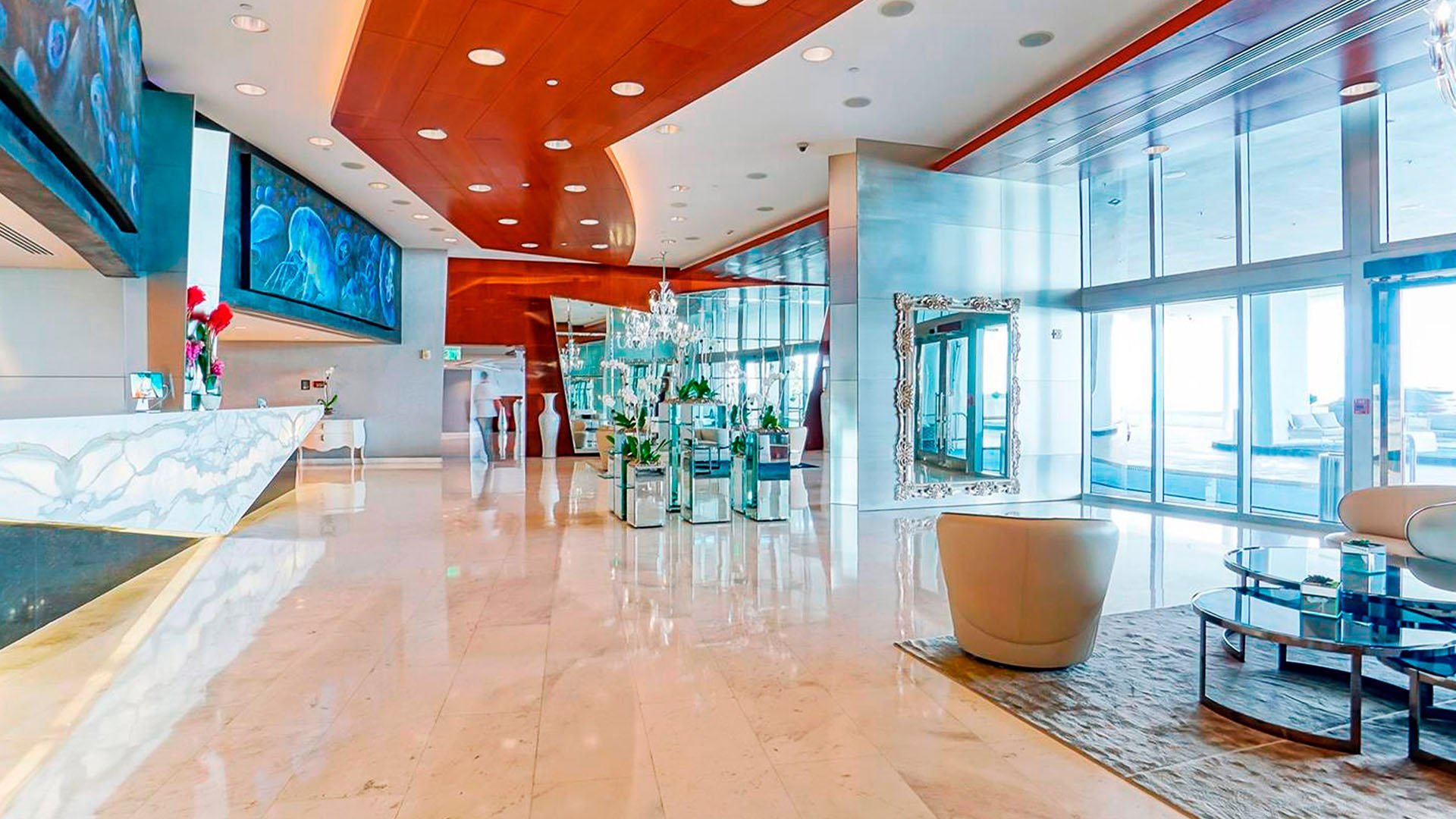
During showings, spend time in the spaces most buyers rush through. Stand in the lobby and listen. Walk from the elevator to the amenity level. Study where wet bathing suits, grocery bags, luggage, dogs, drivers, and visiting family members actually go. These details reveal whether amenity depth has been designed for living or staged for marketing.
For Madrid buyers, the emotional test is simple: does the building allow South Florida to feel expansive without making private life feel exposed? If the answer is yes, the home can hold both worlds: European restraint and coastal ease.
Begin with four priorities. First, define your household pattern: full-time, seasonal, extended family, or frequent guests. Second, rank your top five real-use amenities, not your aspirational ones. Third, evaluate privacy from arrival to residence. Fourth, compare the building’s social temperature. Some addresses feel animated; others feel hushed. The difference is not always visible in a brochure.
Then test each residence against a normal week. Morning exercise. A delivery. A family dinner. A guest arrival. A rainy afternoon. A beach day. A quiet evening. If the building supports all of these without forcing you into a resort posture, it deserves serious consideration.
Sunny Isles Beach is compelling because it can deliver water, height, service, and international familiarity in one setting. The best purchase is not necessarily the most amenitized home. It is the home where amenities disappear into the background, available when needed and silent when not.
How should a Madrid buyer define amenity depth? Amenity depth means practical layers of service and space that support daily life, not simply a long list of features.
What creates a resort feeling in a residential building? A resort feeling usually comes from visible crowds, theatrical common spaces, and amenities that feel more public than private.
Is Sunny Isles Beach better for full-time living or seasonal use? It can serve either purpose if the building’s service rhythm, privacy, and residence layout match the household’s routine.
Are Branded Residences always more hotel-like? Not necessarily. The key is whether the brand expression feels discreet, residential, and useful in everyday situations.
Should buyers prioritize Oceanfront access over amenity variety? Buyers should prioritize the combination they will use most consistently, especially if beach access is central to daily life.
Can a large tower still feel private? Yes, if circulation, elevator flow, staff protocols, and amenity zoning are designed to reduce unnecessary exposure.
Is a Boutique building always quieter? Often it may feel more intimate, but buyers should still study service depth, guest handling, and shared-space capacity.
What should I observe during a building tour? Watch arrival, lobby tone, elevator movement, amenity placement, staff interaction, and how residents actually use spaces.
How many amenities are enough? Enough means the building supports your normal week with ease, without adding spaces you will rarely use or maintain mentally.
What is the best first step before comparing buildings? Define your household’s daily rituals, privacy expectations, guest patterns, and tolerance for social energy.
For a confidential assessment and a building-by-building shortlist, connect with MILLION.
If branded residences are on your mind — as a home or as an allocation — we would be glad to share what we are seeing, privately.
Begin a quiet conversation