A discreet buyer’s framework for assessing medical-equipment power, caregiver access and emergency-response logistics at The Links Estates at Fisher Island, with estate-specific documentation at the center of the decision.

At The Links Estates at Fisher Island, ownership readiness deserves the same attention as architecture. A collection of 12 bespoke single-family homes rather than a condominium development, the enclave calls for a residence-by-residence assessment. For a household relying on powered medical equipment or regular caregivers, the question is not simply whether the setting is exceptional. It is whether the specific home can support daily routines and credible contingency plans.
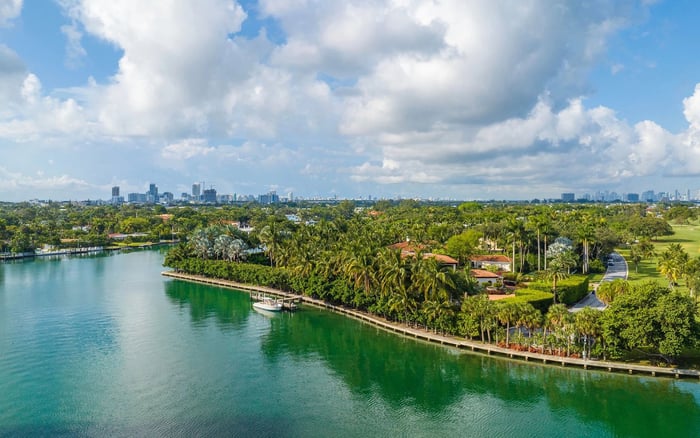
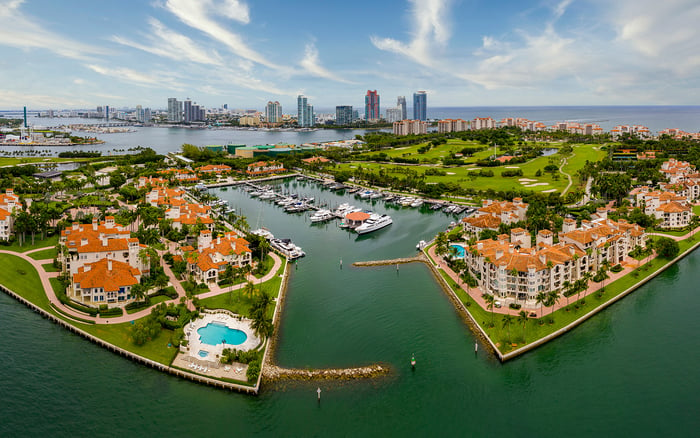
The homesites line the golf course on the island’s north side. Contemporary floor plans and integrated pools define the residential experience, but do not establish medical-equipment readiness. An effective audit separates three priorities: continuity of power, continuity of care and access for emergency responders. Each should be addressed through property-specific documents, written permissions and a practical walkthrough before occupancy.
Do not treat a general assurance of backup power as proof that essential equipment will remain operational. Luxury positioning establishes neither generator capacity nor fuel autonomy, transfer-switch behavior or UPS-backed medical circuits for an individual estate. Those details require review by the home’s electrical professionals, equipment suppliers and the household’s clinical team.
Begin with an equipment inventory prepared with the care team. Identify which devices require power, where they will be used and what interruption, if any, their specifications permit. Then ask a qualified electrical professional to map that inventory to the home’s actual electrical design. The review should cover both normal operation and the transition away from utility power.
Request a coordinated package that includes:
Estate-specific electrical drawings and the circuits proposed for essential equipment.
Generator and transfer-switch specifications, supported by critical-load calculations.
Fuel-runtime assumptions tied to the proposed operating load, not an unexplained duration.
Maintenance records and a professionally supervised testing plan.
UPS provisions, where appropriate, reviewed against each device’s requirements.
Distinguish clearly between a proposed installation and an operating, tested system. If modifications are needed, establish responsibility, approvals and completion criteria before relying on them. Ask the care team to define a separate contingency plan for an outage that exceeds the home’s verified capabilities. This is a suitability review, not an occasion to experiment with life-support equipment in use during a property inspection.
One Links Estates residence has parking capacity for up to nine cars. That capacity is residence-specific, not a standard established for every estate. Physical space also does not establish a caregiver’s right to bring a vehicle onto the island or leave it overnight.
Fisher Island’s access arrangements distinguish residents and guests from employees and commercial traffic. Residents and guests use the terminal on Terminal Island Road off the MacArthur Causeway; employees and commercial traffic use a separate terminal. Visitors require pre-arranged security clearance. A visiting nurse, therapist or substitute caregiver therefore needs a confirmed access classification, not an assumption based on the owner’s credentials.
Obtain written answers on employee versus guest credentialing, vehicle permissions, overnight parking and replacement-caregiver clearance. Cover night shifts, shift overlap and storm-related ferry or shuttle arrangements. Off-island employee parking and employee trolleybus service do not, by themselves, establish caregiver-specific entitlements.
For buyers also considering Palazzo del Sol, apply the same discipline: request permissions for the specific residence rather than carrying over an answer from another property. Before occupancy, trace a normal shift change from mainland arrival through clearance, transport, parking and entry into the home.
Miami-Dade Fire Rescue has an island-based presence at Station No. 42, which serves Fisher Island. Initial response should therefore not be described as invariably dependent on responders arriving from the mainland. That presence, however, establishes neither a response-time commitment nor a staffing level or guaranteed hospital-transfer interval.
In a medical emergency, call 911 first. Contact the Fisher Island Community Association’s Public Safety operation only after the dispatcher says it is appropriate to hang up. Public Safety coordination should complement, not replace, the emergency call.
Before occupancy, ask Miami-Dade Fire Rescue and the association to confirm the exact property address, gate-entry procedure and approach to the estate. Review driveway clearance and the route from the responder arrival point to the rooms where care will occur. The north-side golf-course location makes a precise address and route more useful than a general description of the enclave.
Request a walkthrough covering stretcher movement, entry clearances, changes in level and an elevator contingency if the care arrangement depends on one. Ask how post-storm access would be handled. These are audit questions, not confirmed deficiencies or features of any particular home. The objective is a route the household understands and the relevant operational teams have reviewed.
Fisher Island has no bridge or public-road connection to the mainland. Regular access centers on a private vehicle/passenger ferry and private yachts. The 24-hour auto-ferry service is an operating profile, not an emergency-response guarantee. Likewise, a crossing of approximately 7½ minutes is not total mainland travel time or hospital-transfer time.
Ask separately about routine care appointments, disrupted transport and emergency transfer procedures. Do not treat private yacht or helicopter access as proof of an available medical evacuation service. The household’s clinical advisers should help determine whether its care requirements are compatible with the arrangements actually confirmed.
Courtesy golf-cart shuttle service is another convenience to evaluate without assumptions. Its availability does not establish wheelchair accessibility or medical-transport capability. If a resident needs assistance between the home, ferry and appointments, verify that specific journey rather than relying on an amenity description.
Create a simple decision file with three sections: power, caregiver access and responder access. For each, record the supporting document, responsible contact, unresolved question and required action. Have the appropriate professionals review their portions, and do not treat a verbal assurance as a completed item.
If The Residences at Six Fisher Island is also on the shortlist, use the same questions without assuming identical systems or permissions. Consistent questions make comparison useful; property-specific answers make it meaningful.
The most reassuring outcome is not a promise that disruption cannot happen. It is a documented understanding of what the residence supports, what requires modification and what the household will do if normal arrangements are unavailable.
For a considered approach to your next South Florida residence, explore MILLION.
If branded residences are on your mind — as a home or as an allocation — we would be glad to share what we are seeing, privately.
Begin a quiet conversationIt is marketed as a collection of 12 bespoke single-family homes on Fisher Island. Readiness should be assessed for the individual estate.
No estate-wide guarantee is established. Obtain the specific home’s electrical drawings, generator specifications, load calculations and any proposed UPS provisions.
The household’s clinical team, equipment suppliers and qualified electrical professionals should review device requirements against the home’s actual systems.
Parking for up to nine cars is advertised for one residence. It is not a documented standard for every estate or proof of caregiver parking rights.
Confirm credentialing, terminal assignment, vehicle permissions, overnight parking and substitute-caregiver clearance in writing. Include night-shift and storm-related arrangements.
Yes, Fisher Island has an island-based Miami-Dade Fire Rescue presence, with Station No. 42 identified as serving the island. This does not establish a guaranteed response time.
Call 911 first. Contact the association’s Public Safety operation only after the dispatcher says it is appropriate to hang up.
No. The approximately 7½-minute advertised crossing is not total mainland travel time or a verified hospital-transfer interval.
No wheelchair accessibility or medical-transport capability is established by the shuttle description. Verify the resident’s specific transport requirements separately.
Review the exact address, gate entry, driveway clearance and stretcher route. Include any elevator dependency and post-storm access arrangements.