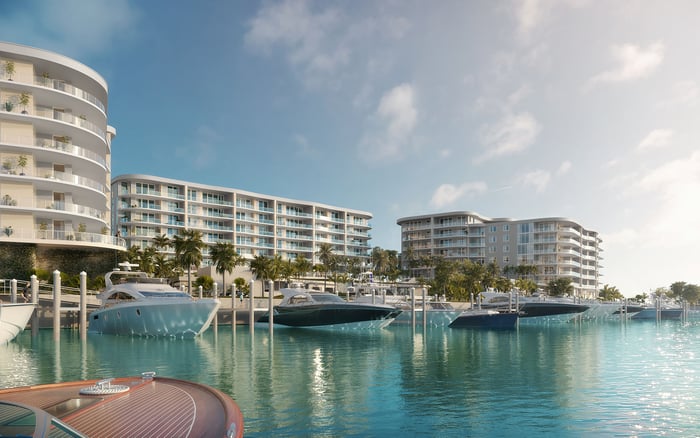
A long-term ownership plan for Palm Beach Gardens should connect garage design, charging costs, battery-backup priorities, and permitting before equipment is selected. The essential luxury is flexibility: space and infrastructure that can adapt without compromising the home.

Long-term ownership in Palm Beach Gardens calls for a quieter kind of luxury: a residence that accommodates changing vehicles, household routines, and energy priorities without repeated disruption. EV charging, battery storage, utility billing, and garage organization belong in one plan, not a series of separate purchases after move-in.
The starting point is not a charger model or battery specification. It is a clear understanding of how the property will function over time. Will a second vehicle need charging? Which household functions matter most during an interruption? What space should remain available for equipment rather than cabinetry?
For buyers considering The Ritz-Carlton Residences® Palm Beach Gardens alongside other Palm Beach-area options, these are due-diligence questions, not assumptions about project amenities. Establish what the residence permits, what infrastructure exists, and which decisions remain under the owner's control.
Before choosing a home-charging program, confirm eligibility for the specific property and parking arrangement. An attractive residence and a convenient parking space do not, by themselves, establish access to a particular program.
If considering EVolution Home, request current written terms covering eligible property types, equipment, installation, maintenance, recurring charges, and the length of the commitment. Ask what happens if the home is sold or the arrangement is ended before the term expires, rather than assuming those details.
Have the electrician assess the existing infrastructure and identify what work the selected charger would require. Clarify whether the installation proposal includes electrical work and permitting or assumes an existing suitable circuit. A nearby outlet is not proof that the garage is ready.
A beautifully finished garage can be difficult to adapt once every wall is assigned to storage. Ask the designer and electrician to coordinate future charger locations, conduit routes, spare panel capacity, and equipment-wall space before committing to permanent millwork.
These are planning prompts, not universal installation specifications. The appropriate arrangement depends on the property and the selected equipment. A drawing should show how charging access relates to parked vehicles, how equipment remains accessible, and which areas should stay free of fixed cabinetry.
Think beyond the first vehicle without assuming every future possibility requires equipment today. Ask whether a second charging location could be accommodated and what work would be needed later. The objective is to preserve options, not to buy capacity without a defined purpose.
Keep the resulting plans with the property's ownership records. Documented decisions give future designers and electricians a clearer starting point than recollections of construction discussions.
Build the charging budget from the written proposal and applicable utility terms. Distinguish any initial equipment or installation payment from recurring program charges and the electricity used for charging. Do not interpret an offer without upfront costs as a promise of free charging.
Ask whether the proposed arrangement offers time-based electricity pricing, which charging periods qualify, and whether enrollment requires meter changes. Confirm how usage will appear on the bill rather than assuming that a home-charging program and a general residential rate option work the same way.
When comparing a Gardens property with a West Palm Beach option such as Alba West Palm Beach, request the applicable charging and billing arrangements rather than carrying one property's assumptions into another. Compare equipment fees, electricity rates, and any shared-property arrangements separately.
Battery planning begins with a household brief. Ask the project electrician and designer to distinguish whole-home backup ambitions from a critical-load approach. Identify the functions you want supported, then have the proposed system assessed against those priorities.
Do not turn an appealing battery concept into a promised operating duration. Backup capacity must be evaluated against the selected equipment and the property's actual requirements. Likewise, no universal footprint, clearance, or budget should be assumed for every Palm Beach Gardens residence.
Reserve potential equipment space only after discussing location and installation requirements with the professionals responsible for the design. If both charging and storage are contemplated, ask them to review the combined plan rather than design each system independently.
The ownership objective is clarity: what the system is intended to support, where it belongs, and what remains outside its scope. A defined brief is more valuable than a broad promise of resilience.
Before scheduling work, establish which local permits and homeowners association approvals the proposed installation requires. For a townhouse purchase, clarify which alterations require association consent and who is responsible for obtaining it.
Ask the Palm Beach Gardens building department or the permitting team to confirm the submission requirements for the parcel and proposed work. Do not assume that a Palm Beach County requirement automatically establishes the process for a property within the city.
Flood-related requirements also deserve property-specific attention. Have the permitting team review whether floodplain provisions affect equipment placement or documentation before finalizing the layout. Keep the confirmed approval requirements with the installation plans.
If public charging will supplement home charging, include it as a separate budget item. Check the selected stations' current pricing and applicable fees rather than treating public charging costs as interchangeable with the household electricity rate.
Whether reviewing a Gardens home or Forté on Flagler West Palm Beach, bring the same practical brief: confirm charging access, understand billing, define backup priorities, and identify approval responsibilities. These questions establish suitability without presuming any project's equipment or policies.
Long-term comfort rests on decisions that remain useful as the household changes. Preserve space deliberately, document the electrical plan, and verify commitments before installation.
Explore South Florida residences with a long-term ownership perspective at MILLION.
If branded residences are on your mind — as a home or as an allocation — we would be glad to share what we are seeing, privately.
Begin a quiet conversationRequest current eligibility terms for the specific property type and parking arrangement. Do not assume that having a parking space establishes program access.
Request written terms covering equipment, installation, maintenance, charges, and the commitment period. Clarify what happens if the property is sold or the arrangement ends early.
Do not assume so; check recurring program charges and electricity costs separately. Use the written terms to build the budget.
Ask whether each proposal includes electrical work and permitting or assumes an existing suitable circuit. Have an electrician assess the property's infrastructure.
Separate equipment or program payments from electricity spending. Confirm current prices and applicable billing terms before budgeting.
Confirm whether the selected arrangement offers time-based pricing and which periods qualify. Ask whether enrollment requires any meter changes.
No; request the applicable equipment, access, and billing details for each property. Review shared-property arrangements separately.
Define whole-home or critical-load priorities with the electrician and designer. Have capacity assessed for the selected equipment and actual household requirements rather than assuming a standard backup duration.
Ask the city's building department or the permitting team to confirm requirements for the parcel and proposed installation. Do not assume that county requirements automatically establish the city process.
Discuss charger locations, conduit routes, spare panel capacity, and equipment-wall space before finalizing finishes. Required locations and clearances should be determined for the selected equipment and property.