Art lighting, private wine refrigeration, and two-vehicle charging call for more than an amenity description. Here is the electrical due diligence buyers should complete at The Ritz-Carlton Residences® Palm Beach Gardens.
A beautifully composed residence should accommodate the way its owner lives: a collection precisely illuminated, wine stored under appropriate conditions, and vehicles ready when needed. At The Ritz-Carlton Residences® Palm Beach Gardens, those ambitions require a clear distinction between an advertised amenity and the electrical specifications that support a particular installation.
The advertised provision includes Level 2 EV charging stations with “220-volt service” available, up to two per residence. Backup power is described for select common areas. Neither statement, on its own, establishes the capacity available for an owner's art lighting, private wine refrigeration, or simultaneous vehicle charging.
These are due-diligence questions, not evidence of inadequate infrastructure. For Palm Beach Gardens buyers planning a highly personalized home, the objective is to establish what is included, what is permitted, and what requires additional engineering or expense before committing to a design.
“Up to two” charging stations describes availability, not an explicit guarantee that two vehicles can charge simultaneously at maximum output. The disclosed description does not specify amperage, kilowatt output, simultaneous-use limits, load management, or dedicated electrical capacity per residence.
Begin with the equipment and installation scope. Ask for the charger make and model, its location, the installation timing, and the continuous amperage available to each vehicle. Confirm whether the second station is included, optional, or subject to additional approvals and costs.
Then ask what happens when both stations operate together. Can each maintain its specified output, or is capacity shared? Is charging managed across a larger garage system? Request the operating rules in writing rather than treating voltage or station count as a performance commitment.
The distinction also matters when comparing The Ritz-Carlton Residences® West Palm Beach: ask the same questions independently, without transferring assumptions from one project to another.
Ask a qualified electrical professional to confirm circuit, load-calculation, permitting, and inspection requirements for the proposed equipment. Request the actual equipment and circuit specifications rather than trying to reconcile the advertised “220-volt” wording yourself.
Smart-home prewiring for lighting, climate, and security controls does not establish spare electrical capacity for specialty art lighting. Nor do descriptions of ceiling downlights and LED lighting define an electrical allowance for a substantial collection-focused installation.
Have the proposed lighting design reviewed against the residence's electrical documents. Seek written answers on dedicated dimmable circuits, permitted fixture loads, junction-box locations, ceiling access, and alteration approvals. The question is not simply whether lighting can be controlled, but whether the intended installation can be accommodated within the approved system.
Keep the design scope specific. A request to illuminate several works is more useful with fixture specifications and a proposed circuit layout than with a general request for “gallery lighting.” Ask who approves the plan, who performs the work, and whether any required changes affect delivery or installation timing.
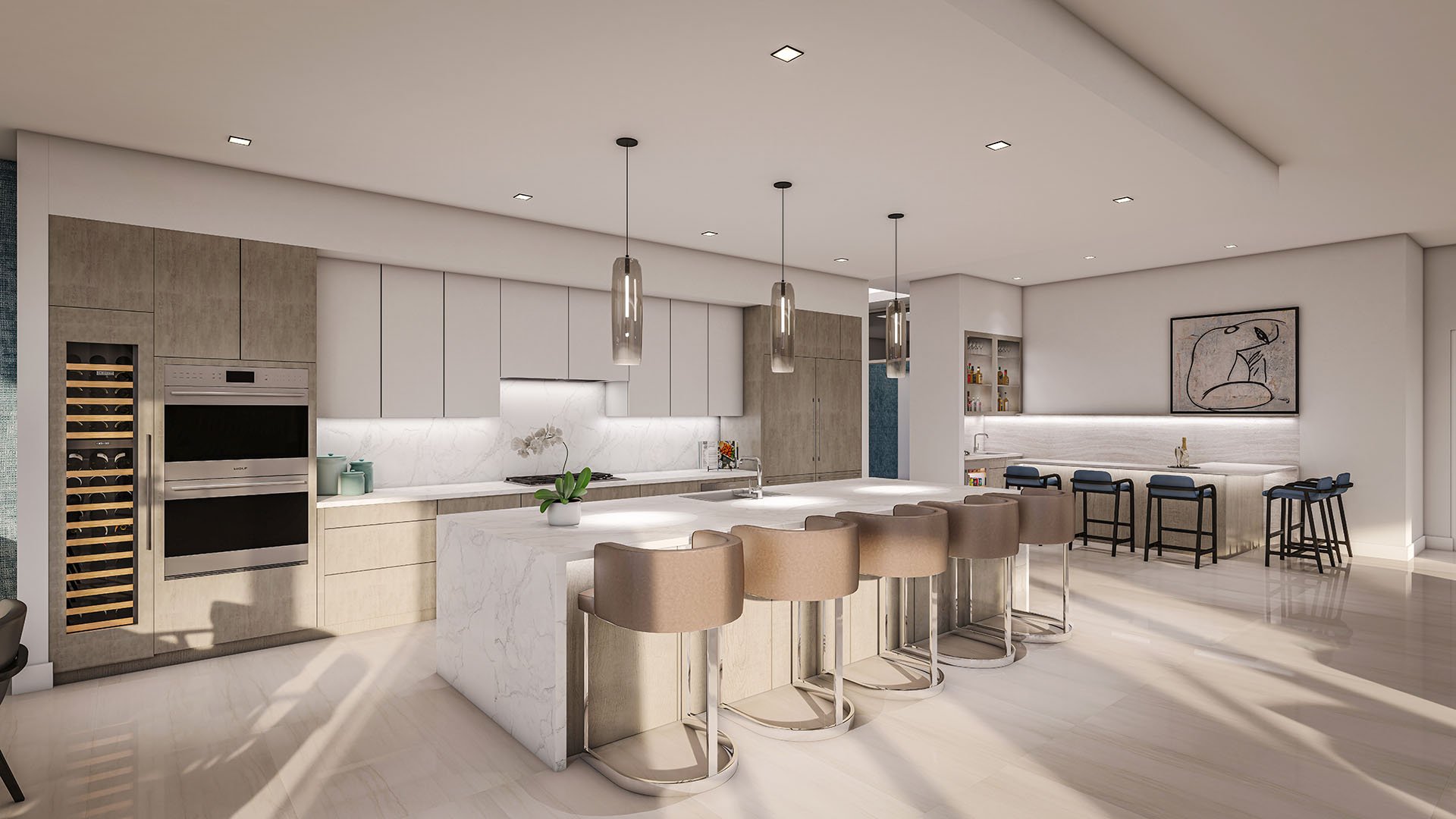
The disclosed specifications do not provide a dedicated wine-storage electrical allowance covering cooling equipment, circuit capacity, humidity control, drainage, or emergency power. A description of climate-controlled storage does not establish permission for private wine refrigeration or generator-backed storage conditions.
Define the intended installation before seeking approval. A refrigerated cabinet and a dedicated wine room should each be reviewed against their own equipment specifications, not treated as interchangeable interpretations of storage space.
Confirm permitted cooling capacity, dedicated circuit availability, receptacle location, drainage requirements, humidity controls, and noise limits. Establish whether the equipment would sit within the residence or in a separate storage area, and whether installation is permitted there. Any expectation of outage protection requires a separate, explicit written answer.
A buyer also considering Forté on Flagler West Palm Beach can use the same equipment-specific brief to compare responses. The comparison should rest on documented permissions and capacity, not on how expansively storage is described.
Backup power in select common areas is materially different from an express promise of whole-building or in-residence emergency power. The advertised language does not establish outage coverage for private wine refrigeration, art-lighting circuits, or EV charging.
Request a circuit-level schedule identifying which residential, storage, garage, and charging loads are generator-backed. Also request generator capacity, fuel autonomy, and transfer-system configuration; none is supplied in the disclosed backup-power description.
Keep the answer tied to the exact location and equipment under consideration. Confirmation that some common-area systems have backup does not establish whether a particular receptacle or charger remains energized. If continuity is essential to the purchase decision, make that requirement explicit before proceeding with specialty equipment.
The most useful starting package is the electrical one-line diagram, residence panel schedule, main-breaker rating, feeder size, spare breaker spaces, and approved load calculations. Ask a qualified electrical professional to review those documents alongside the proposed lighting, cooling, and charging equipment.
Clarify how residential and garage charging loads relate to the available infrastructure. Charging descriptions do not supply circuit sizes, metering arrangements, transformer capacity, or total building EV load. Do not assume that every proposed addition draws from one interchangeable pool of capacity.
For branded residences, this is also a question of responsibility. Identify who approves alterations, who pays for upgrades, and who maintains equipment. Separate included delivery specifications from owner-requested additions, and obtain written confirmation of any feature essential to the purchase.
Have counsel verify current charging requirements and the applicable condominium documents. Ask for clarification on metering, installation costs, association approvals, contractor requirements, and insurance responsibilities rather than assuming a particular arrangement applies.
The purchase decision should align permissions, engineering capacity, costs, and outage coverage with the owner's intended use, without treating unanswered specifications as defects.
For a considered perspective on South Florida residences and buyer priorities, explore MILLION.
If branded residences are on your mind — as a home or as an allocation — we would be glad to share what we are seeing, privately.
Begin a quiet conversationLevel 2 EV charging stations with “220-volt service” are advertised as available, up to two per residence. The description does not specify charger amperage or kilowatt output.
The advertised station count does not establish simultaneous maximum-output charging. Confirm each charger's continuous amperage, shared-capacity rules, and load management in writing.
No. Prewiring for controls does not establish spare electrical capacity or a dedicated allowance for specialty art lighting.
Request written answers on dedicated dimmable circuits, permitted fixture loads, junction boxes, ceiling access, and alteration approvals. Have the proposed design reviewed against the electrical documents.
That description does not establish permission for private wine refrigeration. Confirm the permitted equipment, location, electrical supply, and installation requirements separately.
Confirm cooling capacity, dedicated circuit availability, receptacle location, drainage, humidity controls, and noise limits. Obtain a separate answer on outage coverage.
Backup power is described for select common areas, not expressly for whole-building or in-residence coverage. Private wine refrigeration, art lighting, and EV charging coverage remain questions to resolve.
Request the electrical one-line diagram, panel schedule, main-breaker rating, feeder size, spare breaker spaces, and approved load calculations. Have a qualified electrical professional review them against the planned equipment.
Ask counsel to verify current charging requirements and applicable condominium documents. Clarify metering, installation costs, approvals, contractor requirements, and insurance responsibilities.
No. Undisclosed specifications are unresolved due-diligence questions, not proof of insufficient capacity; seek written, installation-specific confirmation.