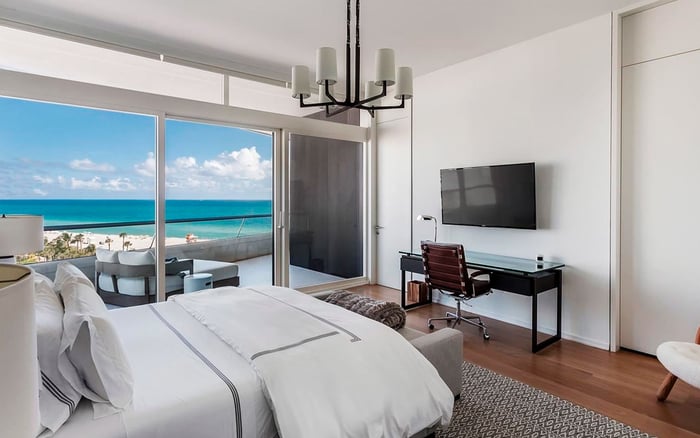
For Miami’s seasonal condo owners, the most consequential purchase questions often begin where the amenity brochure ends. Resale depth, the quality of a particular line, protected views, carrying costs, and the composition of the future buyer pool can shape an exit more decisively than a long roster of shared spaces.

For a seasonal owner, a Miami condominium can serve as both a private retreat and a residence that may eventually return to the resale market. The lobby, spa, pool deck, and dining program can elevate daily life. A future buyer, however, may also compare the residence with other units in the building and competing inventory nearby.
Resale analysis should therefore begin before acquisition. In Brickell, a buyer considering The Residences at 1428 Brickell should examine not only the broader district but also the distinctions that could make one residence more compelling than another when it returns to market.
Resale depth is best approached as a diligence process rather than reduced to a single metric. Review same-building closed sales, marketing periods, pricing outcomes, pending inventory, and competing listings nearby. The goal is to understand how often comparable residences reach the market and how clearly the subject residence stands apart.
The composition of the potential buyer pool also deserves consideration. A seasonal owner should assess which residence attributes are likely to remain persuasive to future buyers without relying on broad market figures to establish the value of a particular floor plan, exposure, or view.
A building name may attract attention, but buyers ultimately purchase a particular residence. Line selection can influence orientation, natural light, privacy, outdoor usability, and the relationship between primary rooms and the view. It can also affect how directly a future buyer compares the home with other listings.
The analysis should ask whether the line is genuinely differentiated and whether that distinction is immediately clear during a showing. At Una Residences Brickell, the relevant exercise is residence-specific: compare exposures, floor position, competing layouts, and features that may be difficult to reproduce.
Elevation alone is not a complete resale thesis. Terrace usability, privacy, layout, outlook, and price positioning should be evaluated together when identifying the likely audience for a residence.
A waterview should not be treated as scarce without closer review. Its resale relevance depends on what is visible, from which rooms, across what distance, and whether the visual corridor may change. Ocean, bay, skyline, and garden perspectives can create different experiences, while scarcity becomes meaningful when the outlook is difficult to replace.
In Miami Beach, a residence at The Perigon Miami Beach should be assessed by its exact exposure and visual corridor rather than by an oceanfront description alone.
When possible, seasonal owners should visit at different times of day and evaluate glare, heat, reflections, neighboring sightlines, and terrace conditions. These details can reveal aspects of the residence that photographs may not fully convey.
Amenities can support the ownership experience, but their costs travel with the residence. Fees, reserves, insurance, assessments, and building rules should be considered alongside the purchase price. Available reserve information, insurance details, governing documents, and known assessments deserve review before a decision is finalized.
For second-home ownership, rules also shape flexibility. A buyer should determine whether the building’s policies align with the intended pattern of use. The objective is not simply to minimize fees, but to assess whether the services, governance, and financial profile support the ownership plan and remain persuasive at resale.
A seasonal owner should avoid basing an exit plan on a presumed listing window. Before listing, review current competing supply, recent same-building activity, and relevant pricing evidence. Pricing supported by comparable sales is generally a more disciplined starting point than expecting branding or amenities to overcome weaker residence-level attributes.
The disciplined seasonal buyer can begin with a simple question: If this residence returned to market, what would make it the clear choice? A credible answer should identify the likely buyer, same-building competition, carrying-cost profile, line advantages, and genuinely scarce features. Amenities can complete the experience, but they should not substitute for an exit thesis.
What does resale depth mean for a Miami condo? It refers to the demonstrated ability of a building or comparable market segment to attract buyers, assessed through relevant sales activity and competing supply.
Why should resale be considered before buying? Working backward from a possible future sale helps a seasonal owner identify the residence attributes that may remain distinctive over time.
Why does the condo line matter? The line can influence exposure, privacy, light, terrace use, room orientation, and how easily buyers compare the residence with alternatives.
Are high floors always better for resale? Not necessarily. Elevation should be considered together with view quality, privacy, layout, outdoor space, and price positioning.
How should a buyer evaluate a view? Consider the outlook from primary rooms, changes throughout the day, neighboring sightlines, and whether the visual corridor may change.
Do amenities improve the resale case? Amenities may support demand, but they should be weighed against fees, governance, building rules, and residence-specific qualities.
Which ownership records deserve review? Review available reserve information, insurance details, known assessments, governing documents, fees, and relevant sales evidence.
How can a seasonal owner assess carrying costs? Examine recurring fees and other known building-related obligations in relation to the intended use and anticipated holding period.
Should listing timing drive the resale plan? Timing can be considered, but current competing inventory and comparable sales should guide the strategy.
What can make a Miami residence difficult to replace? A distinctive combination of view, privacy, layout, outdoor living, architecture, and location can strengthen the residence’s resale story.
If you'd like a private walkthrough and a curated shortlist, connect with MILLION.
If branded residences are on your mind — as a home or as an allocation — we would be glad to share what we are seeing, privately.
Begin a quiet conversation