A practical due-diligence guide for part-time Key Biscayne owners, covering fixture pressure, pump redundancy, maintenance evidence, emergency power, and upper-floor interruption planning.
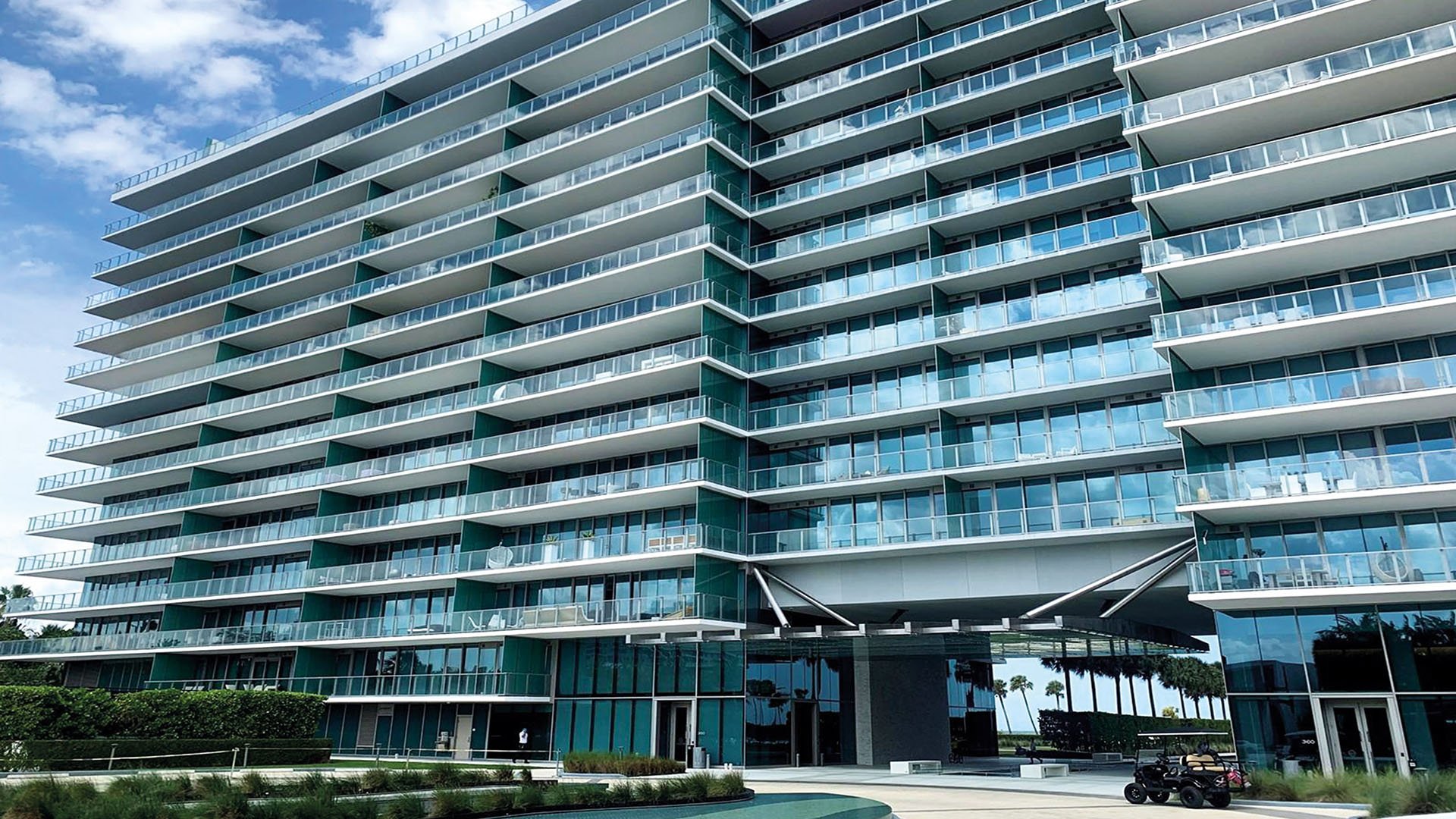
A part-time residence in Key Biscayne should be easy to leave and reassuring to return to. That ease rests on an operational question worth asking before purchase: what happens to the apartment’s water supply when equipment stops, incoming pressure falls, or the owner is away?
For a buyer considering Oceana Key Biscayne, a building-specific review is more useful than assumptions based on location, presentation, or service level. Request evidence connecting the building’s equipment to the exact residence under consideration. None of the questions below establishes a particular condominium’s capabilities; each is a prompt for management and a qualified professional to answer.
Water-pressure resilience is not simply a matter of having a booster pump. The purchase decision should account for fixture performance, equipment dependencies, service arrangements, and the response residents can expect during an interruption.
Florida’s plumbing requirements call for a booster system when street-main or other supply pressure cannot deliver the required flow pressure at fixture outlets. The benchmark is the fixture-outlet flow pressure in Table 604.3-not municipal pressure in isolation. A required booster system must conform to Section 606.5.
For an upper-floor apartment, the first inspection question is straightforward: does the supply system deliver the required pressure where water is actually used?
Ask a qualified professional to compare static pressure with pressure while water is flowing, review hot- and cold-water performance, and evaluate operation during peak demand. Request written findings that identify the fixtures tested and the test conditions. A satisfactory demonstration at one tap should not replace the broader assessment you have requested.
Do not treat 80 psi as a universal condominium threshold. That maximum static-pressure provision belongs to residential requirements within their own scope; its applicability to a high-rise must be assessed, not assumed.
Two pumps are a starting point for discussion, not a complete answer about continuity. Request the pump schedule and an explanation of the duty/standby arrangement: which equipment normally operates, what remains available, and how changeover is initiated.
Ask management to explain lead/lag settings-how pumps are sequenced-and identify shared controllers, electrical feeds, and suction and discharge paths. Have the reviewing professional distinguish spare pumping capacity from components shared by the arrangement.
The objective is to understand what remains operational when one component is unavailable. Ask whether changeover has been demonstrated, which conditions were tested, and whether the remaining arrangement can serve the residence’s pressure zone.
If your search also includes Coconut Grove, apply the same questions when evaluating Park Grove Coconut Grove. This is a comparison framework, not a statement about either property’s installed systems.
Water-pressure booster pumps require a low-pressure cutoff that responds when suction-side pressure falls to 10 psi or less. Its purpose is to protect against vacuum or negative pressure on the suction side-not to ensure uninterrupted water service.
Ask who receives a cutoff alarm, who is authorized to investigate, and which conditions must be satisfied before equipment is restarted. Owners should not treat a protective shutdown as an invitation to reset a pump themselves.
The distinction matters for absentee ownership: a safety function and a continuity plan answer different questions. Request an explanation of how management handles the interruption after the protective device operates, including resident communications and escalation to the service contractor.
Ask specifically whether domestic-water pumps are generator-connected. A general statement that a building has emergency power does not answer that question.
Request evidence of testing under generator load, clarification of which pumps and associated controls are supported, and management’s expected operating duration. Have the professional reviewer explain the conditions and limitations attached to that expectation. Generator connection alone is not proof of uninterrupted fixture service.
For a buyer also weighing Brickell and Una Residences Brickell, the same request provides a consistent basis for review. Compare written answers to the same questions, rather than broad assurances about building infrastructure.
Request recent preventive-maintenance records, alarm history, and emergency-callout records. Review them with a qualified professional to understand what was serviced, what remained unresolved, and whether follow-up work was documented.
Obtain the contractor’s after-hours telephone number and any written response-time commitment. Clarify who places an emergency call, who can authorize work, and how the owner receives updates. Record the contact number separately from any contractual response commitment.
Equipment access also deserves attention. Ask whether technicians can readily reach the potable-water pumps for repairs and whether access arrangements are clear outside normal hours. Where relevant, have the professional confirm that equipment is rated for potable-water use and review contamination-prevention provisions for an individual water-supply system.
The goal is not to audit machinery yourself. It is to establish whether those responsible for service can explain the equipment, reach it, and document their work.
Begin with the residence’s pressure zone and shared risers. Ask management to identify them and explain how an interruption affecting that zone would be communicated.
Request written procedures covering resident notification, authorized equipment resets, restoration updates, and alternative drinking water. Establish which telephone number or message channel to use after hours and whether your local representative can receive the same notices as you.
Ask how management distinguishes a building-wide interruption from a problem confined to the apartment. These are due-diligence recommendations, not a claim that any particular emergency procedure is mandated or already in place.
Before leaving for an extended period, designate a local contact authorized to enter the unit. Leave written access instructions with management and clarify the contact’s authority to coordinate with building staff and service providers.
Confirm any remote leak-alert arrangement: where alerts go, who monitors them, and who can respond locally. Ask a qualified professional whether your absence plan needs unit-specific instructions rather than a generic routine.
Keep the pressure assessment, management contacts, service number, and interruption procedure together. Before returning, request an update on any unresolved water-service issue affecting the residence.
The most useful purchase file connects performance at the fixtures with equipment arrangements, maintenance evidence, and a clear response plan. That is the practical foundation for an apartment that feels as considered behind the walls as it does within them.
Explore South Florida residences with a more informed ownership perspective at MILLION.
If branded residences are on your mind — as a home or as an allocation — we would be glad to share what we are seeing, privately.
Begin a quiet conversationAsk a qualified professional to assess pressure at the residence’s fixtures, including flowing pressure and hot- and cold-water performance. The presence of a booster pump alone does not establish adequate service.
A booster system is required when street-main or other supply pressure cannot deliver the required flow pressure at fixture outlets. The requirement references the fixture-outlet pressures in Table 604.3.
Pump count alone does not establish continuity. Review the duty/standby arrangement, changeover operation, and shared controllers, electrical feeds, and water paths.
The low-pressure cutoff responds when booster-pump suction pressure falls to 10 psi or less. It protects against vacuum or negative pressure on the suction side, rather than guaranteeing uninterrupted service.
No such guarantee follows from the presence of a generator. Ask whether domestic-water pumps and associated controls are connected, tested under generator load, and subject to operating limitations.
Request preventive-maintenance records, alarm history, emergency-callout records, and any written response-time commitment. Also obtain the service contractor’s after-hours contact number.
Request procedures for resident notification, authorized resets, restoration updates, and alternative drinking water. Identify the residence’s pressure zone and shared risers.
Do not assume an owner is authorized to reset building equipment. Ask management who may investigate and restart the system and what conditions must be satisfied first.
No. That maximum static-pressure provision applies within the residential requirements’ scope, so a qualified professional should assess the requirements applicable to the building.
Authorize a local contact to enter the unit, leave written access instructions with management, and confirm who receives and responds to any remote leak alerts. Keep service and interruption contacts readily available.