A provisional five-project shortlist for seasonal buyers, distinguishing construction milestones from genuine view protection and identifying the documents that matter before purchase.
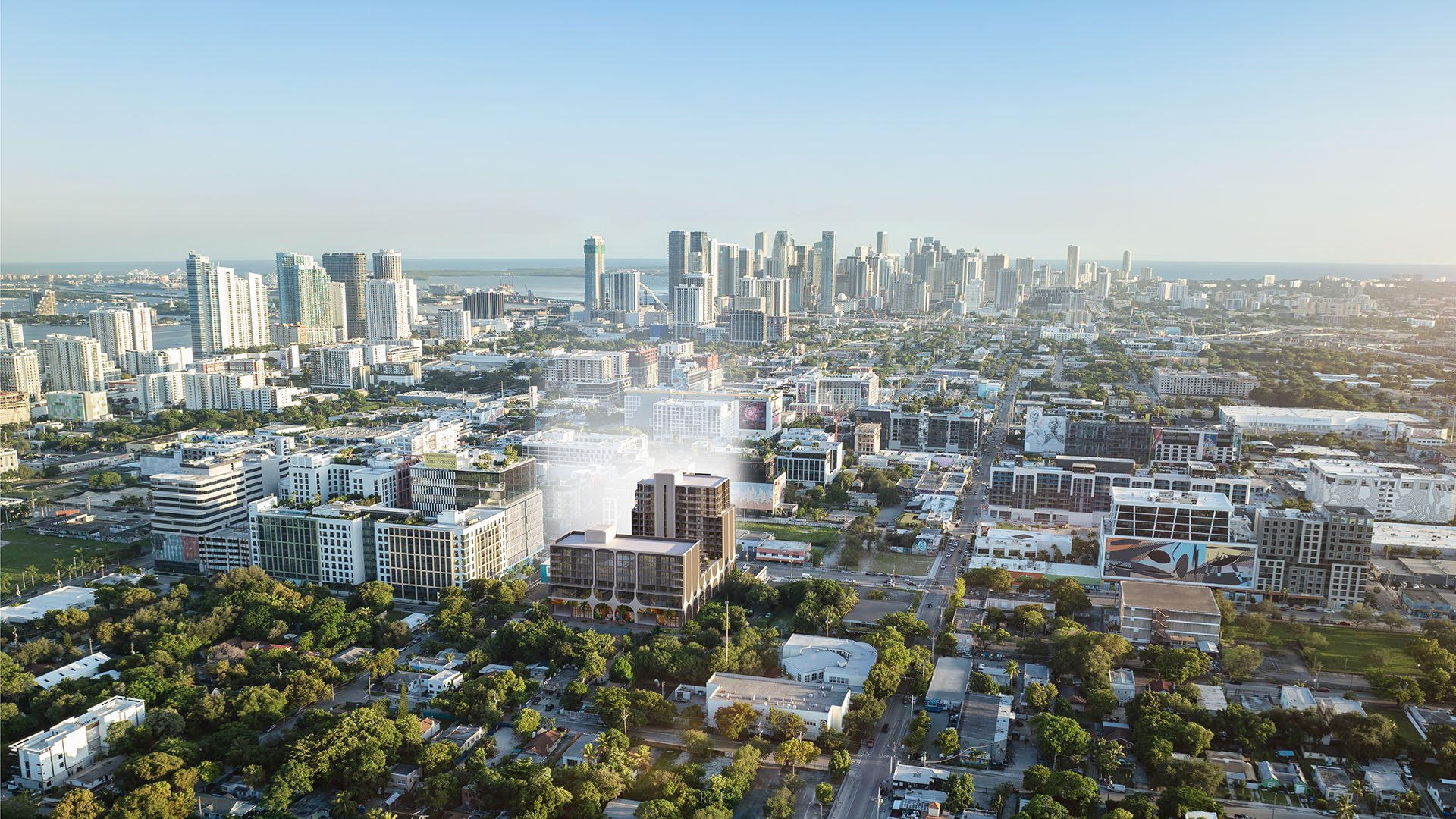
For a seasonal owner, luxury includes arriving to enjoy the residence without an unexpected building site dominating the terrace. In Downtown Miami, Wynwood, and the Design District, future sightlines, neighboring development rights, and construction timing therefore belong at the center of the purchase decision.
The five projects below form a provisional risk-screening shortlist-not a certification of permanent views or quieter surroundings. The available documentation establishes neither enforceable view protection nor recorded neighboring restrictions for any of them. Their differences lie in identifiable construction and planning milestones: useful starting points for diligence, not conclusions.
A beautiful outlook and a protected outlook are different assets. Buyers considering One Thousand Museum Downtown Miami alongside this shortlist should ask the same unit-specific questions, without assuming that any address carries a view guarantee.
1. Paramount Miami Worldcenter - 1010 NE 2nd Avenue, Downtown Miami
Paramount leads this provisional ranking because its approximately 700-foot tower has a documented topping-out milestone and completed vertical construction. For a buyer assessing uncertainty about the building itself, that is a more tangible reference point than a proposed design or early foundation work.
The distinction is narrow: topping out does not establish completed interiors, occupancy approval, or an end to construction disruption. Nor does it resolve questions about neighboring parcels. A seasonal buyer should confirm the residence's current occupancy status and inspect its outlook, then examine adjacent entitlements separately. Paramount's first-place position is a starting point for that review, not a finding that its views are permanently secure.
2. The Rider at Wynwood - 12-story project targeting late 2027
The Rider combines a defined building scale with identifiable financing and construction milestones. Its developers closed a $90 million construction loan in October 2025, and vertical construction reportedly began in March 2026. Delivery is targeted for late 2027-a projection, not a guaranteed seasonal arrival date.
Upper-floor views are marketed toward Edgewater, Biscayne Bay, and Downtown Miami. Those directions identify the exposures a buyer should study; they do not establish legally protected corridors. The Rider merits consideration for purchasers whose ownership horizon accommodates construction. Buyers expecting immediate, uninterrupted use should treat the delivery target and surrounding development activity as separate matters requiring confirmation.
3. Miami Design Residences Designed by Chipperfield - 26-story Design District tower
Designed by Pritzker Prize-winning architect David Chipperfield, Miami Design Residences has an identifiable planning milestone: approval through the city's design-review process. Its proposed 26-story scale provides a basis for examining specific floors and orientations.
Architectural distinction, however, is no substitute for neighboring-rights documentation. Design approval establishes neither restrictions on adjacent development nor permanent sightlines or fewer cranes. For seasonal owners drawn to the Design District, this architectural proposition warrants assessment alongside a parcel-by-parcel development review. The purchase case should distinguish the approved building design from what may eventually rise around it.
4. Twenty Sixth & 2nd Wynwood Residences - Eight stories and 233 residences
Developed by PMG and LNDMRK Development, Twenty Sixth & 2nd secured $126 million in construction financing and broke ground. Its foundation pour was reportedly completed in August 2026, and crane installation is documented. These milestones signal active construction, not a finished, low-disruption setting.
Completion is targeted for the second quarter of 2028, although delivery references also include the first quarter. Buyers should reconcile that timing and the differing address references in the transaction documents. The Airbnb-linked, deeded office-suite concept also warrants operating-document review. For a seasonal purchaser, the questions are both when the residence becomes usable and how the ownership structure functions during periods away.
5. Kempinski Residences Miami Design District - Two planned 23-story towers
Planned at 3801/3883 Biscayne Boulevard, Kempinski Residences comprises two 23-story towers containing 128 residences. Its position on the Design District/Biscayne corridor makes the chosen residence's exposure and the adjacent development envelope important subjects for review.
It ranks fifth provisionally because the available information describes a planned development, not a completed building with demonstrated relief from construction disruption. The tower configuration and residence count establish scale, not view security. Seasonal buyers should evaluate the construction sequence, eventual occupancy timing, and surrounding entitlements before assigning value to an anticipated outlook or assuming a quieter arrival experience.
Wynwood's construction question extends beyond any single condominium. Frida Kahlo Wynwood Residences is planned at 119 NW 29th Street with 244 units across approximately eight- and 14-story towers, targeting completion in 2029. This is relevant neighborhood context, not proof that a particular shortlisted residence will be directly affected.
Mohawk at Wynwood, a 300-unit apartment project at 50 NE 29th Street, has a reported $85.6 million new-construction permit. The Cloud One Hotel & Residences is planned at 2215 NW 1st Place, with completion targeted for late 2027. Together, these projects warrant scrutiny of the surrounding streets as well as the building's own schedule.
For Kempinski Residences Miami Design District, the corresponding exercise is to map the parcels relevant to the chosen residence's outlook. A neighborhood label cannot answer a unit-level sightline question.
The most useful purchase file treats these as three distinct subjects. A sightline study shows the outlook under evaluation. Adjacent zoning and entitlements describe potential development. Recorded easements or covenants, if any, require counsel's assessment of their scope and enforceability.
Waterview:
Request a unit-specific analysis rather than relying on a generalized rendering. Identify the parcels within the outlook and assess both existing buildings and permitted development possibilities.
High-floors:
Treat elevation as a physical characteristic, not legal protection. The Rider's marketed upper-floor outlooks illustrate why a compelling perspective still requires a separate neighboring-rights review.
Second-home:
Compare construction schedules with intended stays, and review condominium operating documents before committing. At Twenty Sixth & 2nd, clarify the deeded office-suite arrangement and applicable rental provisions rather than inferring flexibility from the concept alone.
The shortlist offers five distinct starting points: a topping-out milestone, vertical construction, design approval, foundation and crane activity, and a planned two-tower development. None is equivalent to permanent view protection or freedom from neighboring works.
For seasonal ownership, the stronger choice is the residence whose current condition, surrounding development exposure, and operating terms fit the buyer's calendar after verification. Treat delivery dates as targets and obtain updated documentation before deciding.
For a discreet conversation about your seasonal-home shortlist, connect with MILLION.
If branded residences are on your mind — as a home or as an allocation — we would be glad to share what we are seeing, privately.
Begin a quiet conversationNo. Enforceable permanent-view protection and recorded neighboring restrictions are not established for any of the five projects in the available documentation.
Its completed vertical construction and topping-out milestone provide a tangible basis for initial screening. They do not establish occupancy approval or freedom from neighboring construction.
No. A topping-out milestone does not by itself confirm completed interiors, occupancy approval, or the end of construction disruption.
Delivery is targeted for late 2027. Vertical construction reportedly began in March 2026 following a $90 million construction loan closed in October 2025.
The project markets upper-floor outlooks toward Edgewater, Biscayne Bay, and Downtown Miami. The available documentation does not establish legally protected view corridors.
It establishes an identifiable design-review milestone for the 26-story tower. It does not establish neighboring view restrictions or fewer crane disruptions.
Completion is targeted for Q2 2028, but delivery references also include Q1 2028. Buyers should reconcile the timing in current transaction documents.
Its Airbnb-linked, deeded office-suite concept deserves close review. Seasonal buyers should clarify the ownership arrangement and applicable rental provisions in the operating documents.
The development is planned at 3801/3883 Biscayne Boulevard as two 23-story towers containing 128 residences. These specifications do not establish protected views or construction-disruption relief.
Request unit-specific sightline studies, adjacent-parcel zoning and entitlements, recorded easements or covenants, construction schedules, and condominium operating documents. Have counsel assess any claimed neighboring restrictions.