A buyer-focused guide to Miami Beach neighborhoods where walking and the free trolley can reduce reliance on a car, with practical advice for evaluating individual residences.
The most persuasive version of car-light living in Miami Beach is not a promise never to drive. It is the freedom to run an ordinary errand without making the car the default. For a luxury buyer, that freedom deserves the same attention as a residence’s floor plan or outlook.
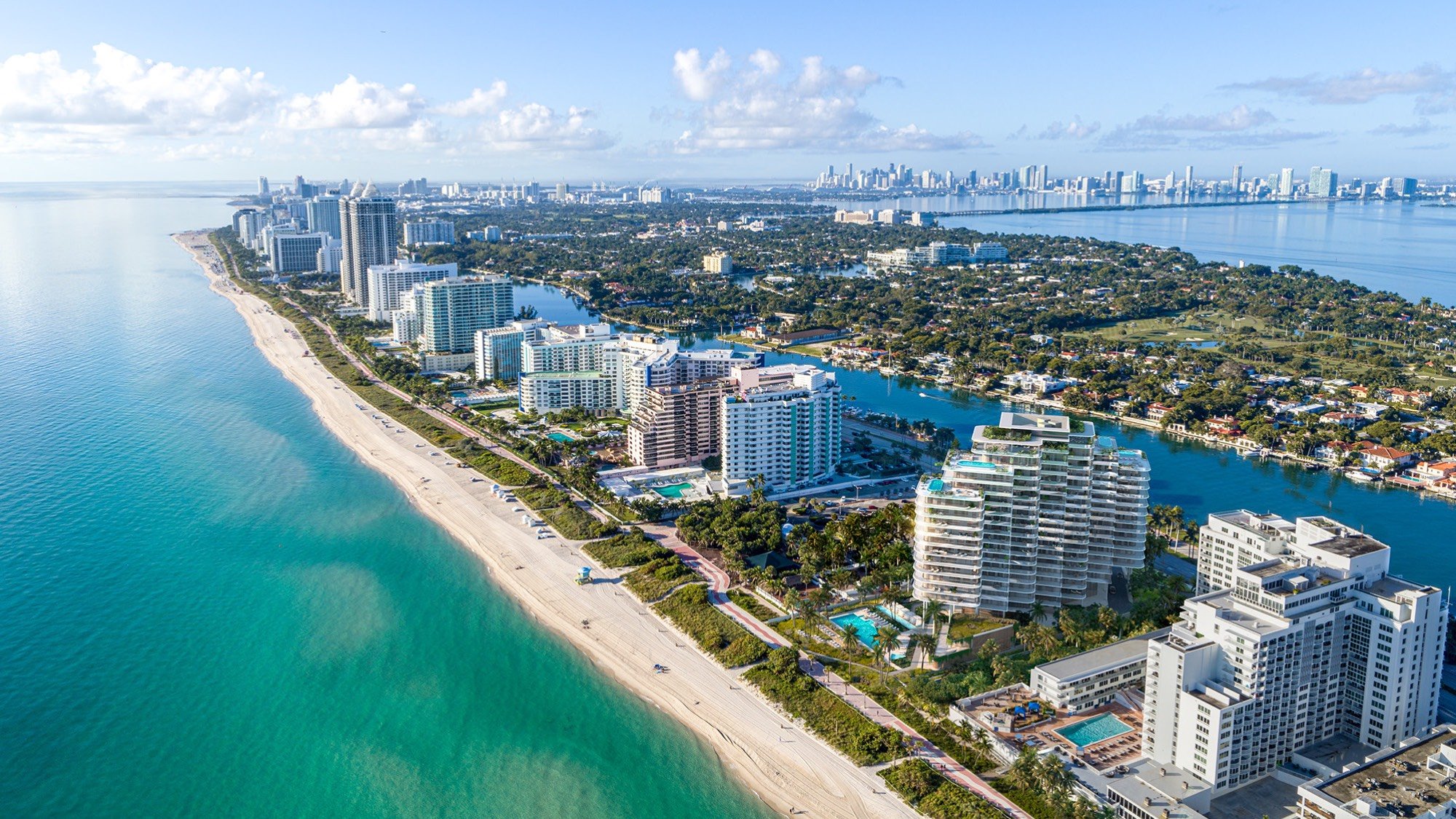
Miami Beach’s average neighborhood walkability score is 76, within the very walkable range. Yet that citywide figure conceals substantial differences. Flamingo-Lummus, South Pointe and West Avenue offer particularly strong starting points, while northern neighborhoods and waterfront settings call for a more selective approach.
The essential distinction is between a neighborhood that looks appealing on a map and an address that supports your week. A meaningful assessment begins at the building entrance and follows the routes to places you actually use: groceries, a pharmacy, a park and a useful transit stop.
Flamingo-Lummus has Miami Beach’s highest listed neighborhood walkability score, at 95. For buyers prioritizing frequent trips on foot, it is a sensible place to begin. The score is a screening tool, however, not a guarantee that every residence puts your preferred destinations within a comfortable walk.
South Pointe follows with a score of 91. Here, the practical question is whether your chosen address supports both a leisurely walk and a necessary errand. When considering Apogee South Beach, make the neighborhood walk part of the viewing appointment rather than leaving it for later.
Apply the same discipline when evaluating Continuum on South Beach. A neighborhood score is not a building-specific credential. Walk from the entrance you would actually use, identify your regular destinations and consider the return journey with shopping in hand.
South Beach’s trolley routes extend that reach, connecting destinations around South Pointe, Washington Avenue, Alton Road, Lincoln Road and the Art Deco District. Their value lies in complementing a workable pedestrian routine, not replacing one.
West Avenue’s walkability score of 90 places it close to South Pointe. Rather than treating the two as interchangeable, compare them against your schedule. The better choice is the one that makes recurring trips easier, not necessarily the one with the marginally higher number.
For a buyer considering Five Park Miami Beach, the useful exercise is to map a week of errands, then test the relevant routes on foot. Separate trips you would happily walk from those you would prefer to make by trolley or car.
This approach also guards against overvaluing a single attractive destination. One easy outing does not establish a complete car-light routine. Look for a combination of everyday needs you can consistently meet from the exact residence under consideration.
North Shore’s walkability score of 82 makes it a credible alternative to the South Beach starting points. Normandy Isle scores 74, also within the very walkable range, but the difference warrants a closer look at street level rather than dismissal or overstatement.
For either neighborhood, begin with the essentials. Identify where you would buy groceries, collect prescriptions and access public transportation. Then check whether those destinations fit into a manageable routine from the building, rather than requiring several unrelated journeys.
The North Beach Loop serves approximately 65th through 88th streets and connects west to Normandy Isles and Normandy Isle Park & Pool. That connection can broaden a buyer’s practical radius, provided the route aligns with actual plans. A useful stop serves the journey you need; proximity on a map is not enough.
Waterfront living and walking-first living are separate purchase criteria. Bayshore scores 73 and Ocean Front scores 69, illustrating why proximity to the water is no substitute for an assessment of everyday access.
When reviewing The Perigon Miami Beach, keep the residence evaluation and the pedestrian evaluation distinct. Test the destinations and routes yourself rather than applying a neighborhood-wide score to an individual property.
The contrast becomes sharper elsewhere. Venetian Islands scores 54, while Normandy Shores scores 43, Biscayne Point 38 and La Gorce 30. These figures do not determine which home is right for a buyer. They indicate where a walking-first search requires more scrutiny and where a car may remain more central to the routine.
Miami Beach’s free municipal trolley operates seven days a week, with service hours of 8 a.m. to 11 p.m. and average intervals of approximately 20 minutes on each route. Those intervals matter: car-light living can accommodate planned connections, but should not depend on an immediate departure.
The network includes South Beach, Middle Beach, North Beach and Collins Express services. South Beach uses Loop A clockwise and Loop B counterclockwise, with access to groceries, pharmacies, restaurants and cultural attractions. Direction is therefore part of the trip calculation, not a minor detail.
The Middle Beach Loop connects the Lincoln Road area with streets around 43rd Street and extends west along 41st Street to Mount Sinai Medical Center. Collins Express provides a limited-stop north-south connection along Collins Avenue between the Lincoln Road area and 88th Street, designed to reduce transfers and travel times between North, Middle and South Beach.
Confirm current routes, stops and operating hours before making a purchase decision. Distinguish the Miami Beach network from the City of Miami trolley, a separate system that does not serve Miami Beach.
Before committing, walk the routes at the times you expect to use them. Assess crossings, shade, the comfort of carrying purchases and the journey back. These are inspection questions that a neighborhood score cannot settle.
Then identify which trips will still involve a car. The objective is not to eliminate every driven journey, but to choose deliberately which ones remain. A residence can support an excellent car-light lifestyle without supporting a fully car-free one.
The strongest purchase is the home whose surroundings make your preferred routine feel natural. Treat walkability as a feature to inspect, not an adjective to accept.
Explore a residence search shaped around your daily life with MILLION.
If branded residences are on your mind — as a home or as an allocation — we would be glad to share what we are seeing, privately.
Begin a quiet conversationYes, selected neighborhoods offer strong starting points for walking, supplemented by the free trolley. The right fit depends on the exact residence and your regular destinations.
Flamingo-Lummus scores 95, South Pointe 91 and West Avenue 90. They are the three highest-scoring neighborhoods identified in the supplied figures.
Miami Beach averages 76, classified as very walkable. Individual neighborhoods vary substantially.
North Shore scores 82, making it a credible starting point. Buyers should still test the actual routes from a prospective residence to everyday destinations.
Normandy Isle scores 74 compared with North Shore’s 82. Both warrant an address-specific assessment rather than a decision based solely on the neighborhood number.
Yes, the municipal trolley is free. Its network includes South Beach, Middle Beach, North Beach and Collins Express services.
Published service hours are 8 a.m. to 11 p.m., seven days a week, with approximately 20-minute average intervals. Confirm current schedules before relying on a particular journey.
Collins Express runs along Collins Avenue between the Lincoln Road area and 88th Street. It is a limited-stop connection between North Beach, Middle Beach and South Beach.
No. Bayshore scores 73 and Ocean Front 69, reinforcing the need to evaluate everyday destinations independently of proximity to the water.
No, the City of Miami trolley does not serve Miami Beach. Miami Beach operates a separate trolley system.