A collector’s guide to evaluating a South Beach residence through artwork-specific lighting, measured UV control, verified installation planning, and carefully framed insurance questions.
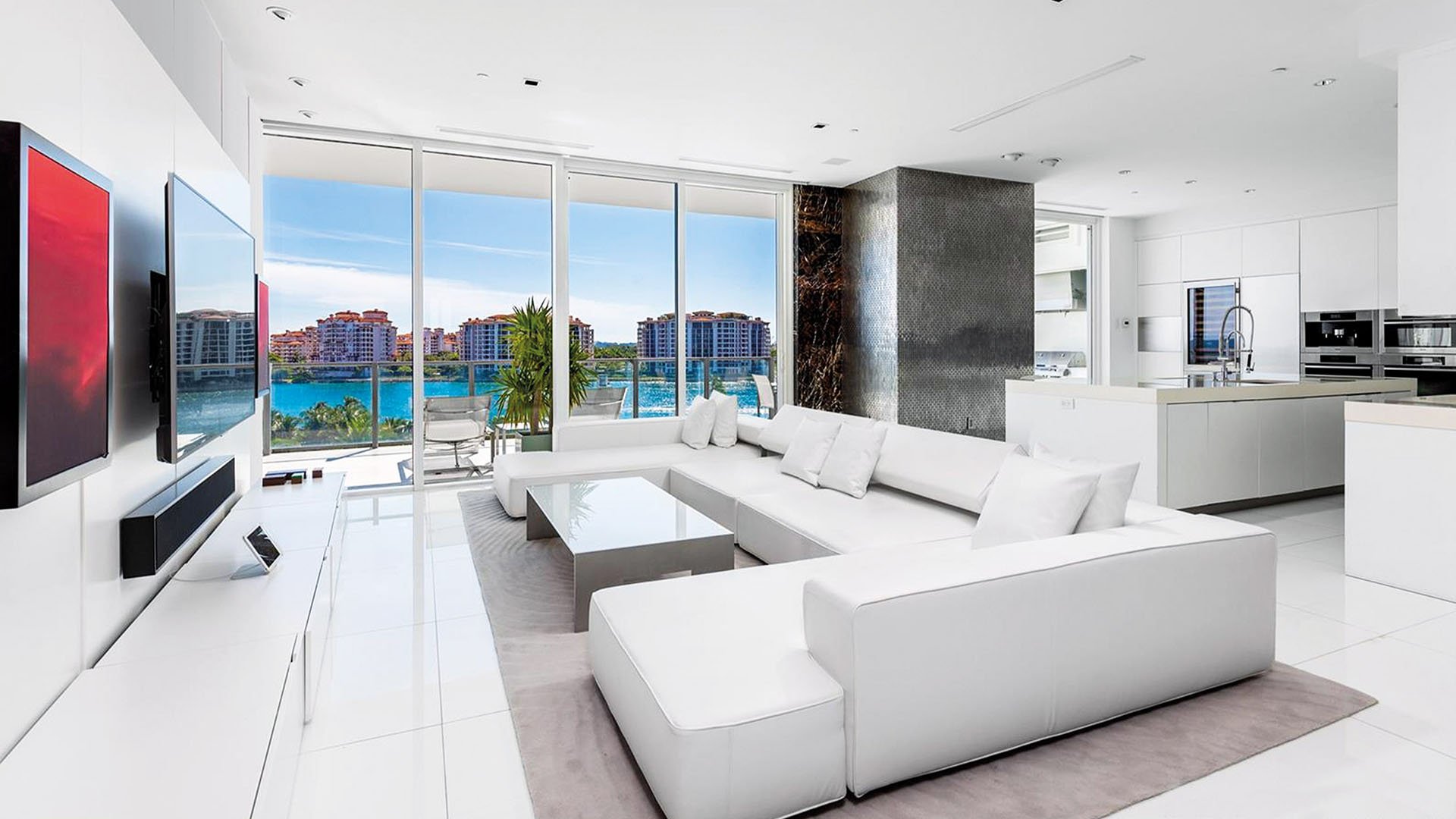
A residence designed around art should feel effortless to inhabit. That ease depends on decisions less visible than the collection itself: how much light reaches a watercolor, what supports a monumental frame, and which insurance questions remain unresolved before delivery. In South Beach, the starting point is not whether an interior looks like a gallery, but whether it suits the objects you intend to live with.
For buyers considering Apogee South Beach, the collection brief should sit beside the furniture plan. Identify prospective display locations, distinguish permanent installations from rotating works, and ask a conservator to assess sensitive pieces. Treat museum-grade lighting as a design brief to be demonstrated through measurement, not a label that settles the matter.
The objective is a home that accommodates both viewing and preservation. That requires separating established conservation principles from decisions that need property-specific engineering or policy-specific insurance advice.
A single brightness setting is an inadequate starting point for a varied collection. Material sensitivity should guide the discussion, using these conventional baselines:
Approximately 50 lux for highly sensitive materials, including textiles, watercolors, photographs, works on paper, and feathers.
Approximately 150 lux for moderately sensitive objects, including ordinary oil and acrylic paintings, painted panels, and furniture.
Up to 300 lux for relatively insensitive materials such as metal, ceramics, stone, and glass.
These are planning guidelines, not guarantees against damage. The highest figure is not a target for every display, and an individual work’s condition may justify lower illumination. A mixed-material object should follow the needs of its most light-sensitive component, not whichever material occupies the greatest surface area.
Ask the lighting designer to distinguish illumination at the artwork from the desired atmosphere elsewhere in the room. For a residence under consideration at Continuum on South Beach, frame the brief around the collection and its proposed positions rather than assuming a decorative lighting scheme will also meet conservation needs.
Visible illumination and ultraviolet content answer different questions. Lux measures illuminance; µW/lm expresses ultraviolet content relative to visible light. A low lux reading does not, by itself, establish low UV exposure.
A maximum UV guideline of 75 µW/lm should not be mistaken for the ideal specification. The ideal range is 0-10 µW/lm. Neither figure establishes the performance of an untested fixture, glazing assembly, or filter.
Ask for light sources that do not emit UV or for appropriate filtration, then request measured results rather than relying solely on product descriptions. Keep direct sunlight off artworks through shading, compatible UV-filtering materials, and placement outside direct solar paths. Filtering UV does not remove the need to control visible light, which can also damage sensitive materials.
Before approving a display position, ask the design team to evaluate when sunlight reaches it and how the proposed shading will operate. For buyers comparing homes in Miami Beach, this is more useful than judging a wall during a single viewing.
Light damage is cumulative and irreversible. Lower illumination over a longer period can produce exposure comparable to brighter illumination over a shorter period. A lux limit without a display schedule is therefore only part of the plan.
Automatic switching can reduce unnecessary exposure by keeping artwork lighting off when viewing is not required. Ask for separate viewing and unoccupied settings, supported by an operating routine that household staff and guests can understand.
Especially fugitive materials may warrant schedules as restrictive as roughly three months of exhibition over five years. This illustrates the need for individual assessment, not a universal rule for residential collections. Works in poor condition may require lower light levels or shorter display periods.
Record display duration for sensitive works and use that history to inform rotation. Keep collection storage dark except when access requires lighting, with UV filtration and minimized exposure time. A display plan should identify not just where a work hangs, but where it rests between appearances.
Wall loading remains an unresolved technical question until the proposed installation has been assessed. Appearance alone is no basis for selecting anchors or approving a heavy work.
Ask the architect, installer, and appropriately qualified engineer what information they need about the wall assembly, artwork weight, frame, mounting system, and intended position. Request a written installation proposal identifying the support approach and any conditions to be resolved before work begins. Do not substitute a generic weight allowance for advice about the specific installation.
For a buyer considering Five Park Miami Beach, the practical question is whether the intended art arrangement can be evaluated before finishes and furniture decisions become fixed. Ask which building permissions, documentation, or specialist reviews would apply to the proposed work, without assuming that any particular approval process or wall capacity has been established.
The deliverable should be an agreed installation plan, not an unsupported assurance that a wall is suitable for art.
Keep collection insurance separate from assumptions about the residence’s general coverage. Before transport or installation, ask a qualified insurance adviser to explain in writing how the proposed policy would respond to the collection and its intended use.
Resolve how values would be documented, whether individual works would be scheduled, and what terms would apply during transit, installation, storage, or temporary removal. Ask specifically about exclusions, deductibles, valuation provisions, and any care or security conditions. These are matters to confirm in the actual policy, not presumed features of coverage.
For a prospective residence at The Ritz-Carlton Residences® South Beach, ask the adviser to review the intended collection arrangements rather than infer protection from the property’s name. Confirm whether condition records, installation documentation, or changes in display location should be supplied or updated.
Before the collection arrives, assemble a practical handover file: artwork-specific lighting settings, measured lux and UV readings, display-duration records, installation documentation, and the insurance adviser’s written responses. Assign responsibility for maintaining those records and arranging reassessment when works move or lighting changes.
The most considered residence is not necessarily the brightest or the most gallery-like. It is one in which the collection can be enjoyed within understood limits, with technical questions resolved before they become daily compromises.
Explore residences with your collection’s requirements in mind through MILLION.
If branded residences are on your mind — as a home or as an allocation — we would be glad to share what we are seeing, privately.
Begin a quiet conversationApproximately 50 lux is a conventional baseline for highly sensitive works, including watercolors, photographs, and works on paper. Individual condition and material sensitivity may call for a more restrictive plan.
Approximately 150 lux is a conventional baseline for ordinary oil and acrylic paintings. It is not a guarantee against damage or a substitute for artwork-specific assessment.
No. Up to 300 lux is a conventional guideline for relatively insensitive materials such as metal, stone, ceramics, and glass, not a target for every object.
Follow the requirements of the most light-sensitive component. The dominant material does not necessarily determine the appropriate illumination.
Lux measures visible illuminance, while µW/lm expresses ultraviolet content relative to visible light. They should be measured separately.
No. It is a maximum guideline; 0–10 µW/lm is an ideal range in the cited conservation framework, not guaranteed product performance.
No. Direct sunlight should be kept off artworks, and visible light still needs to be controlled even when UV is filtered.
Light damage is cumulative and irreversible, so exposure duration matters alongside intensity. Display records can help inform rotation into dark storage.
Request an installation-specific assessment addressing the wall assembly, artwork weight, frame, and mounting system. Obtain qualified technical advice rather than relying on appearance or a generic weight allowance.
Ask the adviser to confirm valuation terms, exclusions, deductibles, and how the policy would respond during transport, installation, display, and storage. The answers must come from the actual policy rather than assumptions about the residence.