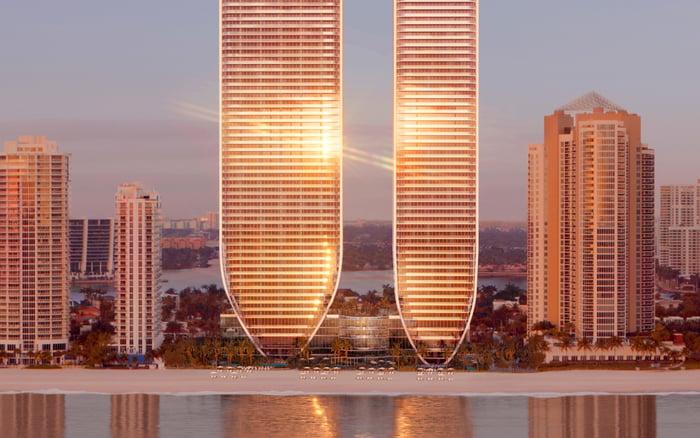
A private rooftop pool is not a legal classification. For Miami condominium buyers and owners, responsibility begins with the declaration, then extends to maintenance, guest conduct, common expenses and the actual insurance terms.
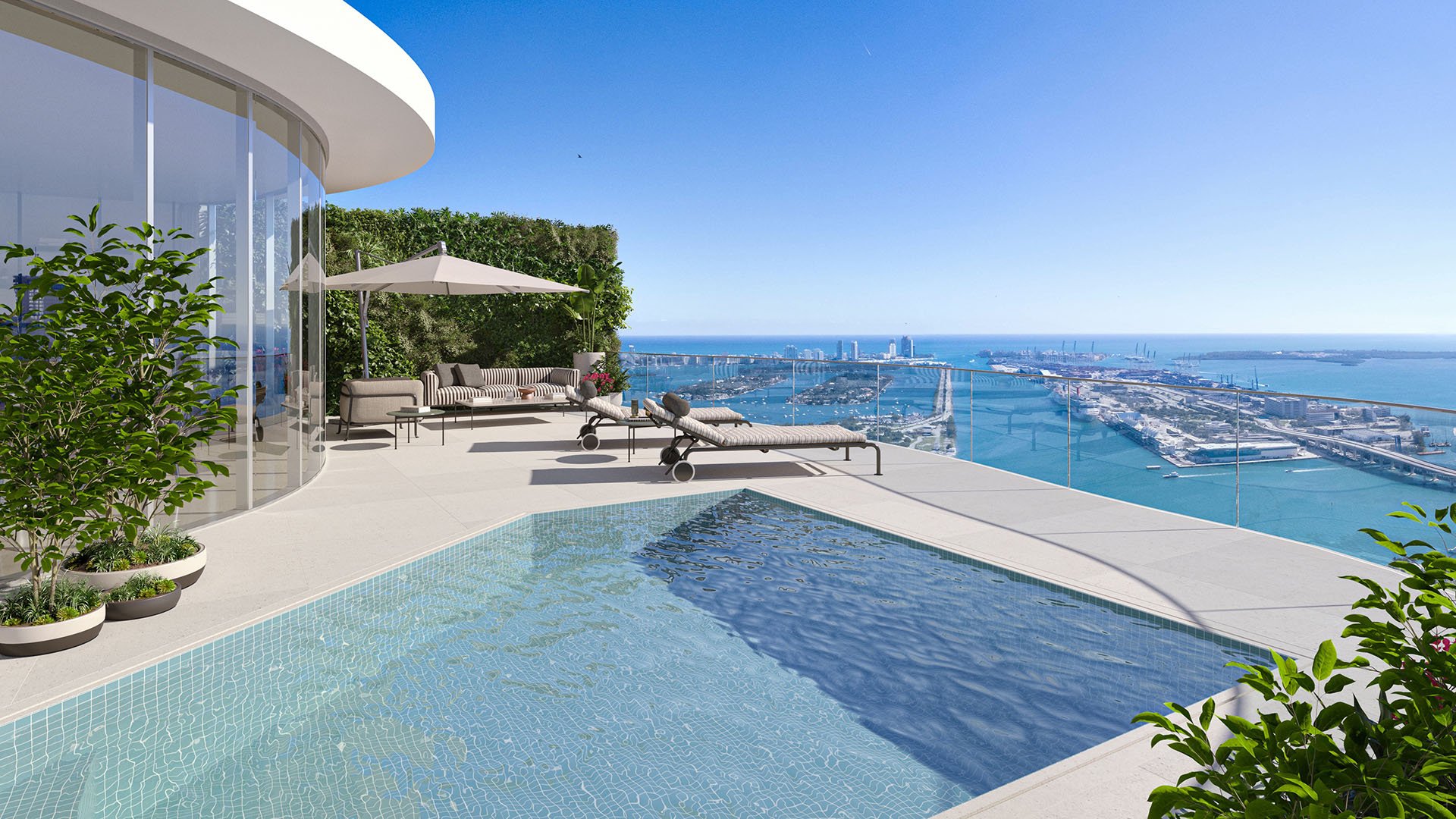
A rooftop pool can feel like the most personal room in a Miami residence: open sky, quiet water and separation from the city below. Yet “private” does not determine who must maintain it, who pays for repairs or who may bear responsibility after an accident. In a Florida condominium, those questions begin with legal classification, not the atmosphere of exclusivity.
First, establish whether the pool and surrounding areas are common elements, limited common elements or part of the unit itself. Then examine how the declaration allocates maintenance responsibilities. Exclusive access alone does not establish an owner’s maintenance obligation for a limited common element.
For buyers considering The Residences at 1428 Brickell, this is a due-diligence principle, not a statement about that project’s pool arrangements. Any residence-specific amenity should be evaluated through its governing documents, rather than assumptions drawn from its presentation.
Florida condominium law generally places maintenance of common elements with the association, except where the declaration assigns maintenance of limited common elements to a unit owner. That distinction matters when an amenity serves one residence but remains legally outside the unit.
Consider a hypothetical rooftop pool reserved for one owner. Restricted use does not, by itself, answer who maintains it. Examine the declaration’s classification and maintenance provisions for the pool, deck and equipment. Do not assume every component carries the same obligations simply because the space functions as one terrace.
If the pool is part of the unit, the analysis must address that classification rather than apply the common-element maintenance rule. In every case, governing documents must be read alongside mandatory statutory requirements; contractual language does not automatically displace them.
Where pool structures, decks and equipment are designated as common elements, they fall within the association’s common-element maintenance responsibility, subject to applicable statutory exceptions. Associations also have statutory authority to levy assessments and maintain, repair and replace common elements or association property.
Expenses for operating, maintaining, repairing, replacing or protecting common elements and association property are generally common expenses. Costs incurred in carrying out the association’s statutory powers and duties also fall within that category. These principles provide a framework, not a property-specific answer about every charge.
For a buyer comparing Miami Beach residences, including The Perigon Miami Beach, the practical question is how the applicable documents allocate responsibilities and expenses. Do not infer those allocations from the project name, an amenity’s privacy or the identity of its principal user. Ask counsel to distinguish the maintenance duty from the mechanism used to fund it.
A maintenance obligation matters, but it does not resolve every question arising from an injury. Identifying who must service or repair a pool is not the same as determining negligence, causation or responsibility for a particular event.
An association’s maintenance role is therefore not an automatic finding of liability whenever an accident occurs. Nor should an owner assume that association maintenance eliminates exposure arising from the owner’s own actions. The relevant conduct and circumstances still require examination.
When reviewing potential personal liability, ask counsel how statutory limits concerning association acts or omissions connected with common-element use apply. Such limits should not be treated as blanket immunity for an owner’s behavior at the pool. Keep that distinction separate from the question of who receives a maintenance invoice.
Owners, tenants, guests and invitees must comply with applicable condominium governing documents and association rules. The social character of a private rooftop does not remove those obligations. Before hosting, owners should understand the rules governing their use and their guests’ access.
An association may suspend common-facility access for a reasonable period because of governing-document or rule violations, subject to statutory procedures and exceptions. That authority can extend to use by an owner’s tenant, guest or invitee, not only the owner personally. It is not unrestricted authority to deny access in every situation.
Alterations require equal care. A unit owner may not undertake work or actions that adversely affect the safety or soundness of common elements or association property. Before changing a rooftop area, clarify the applicable approval requirements and the elements the work could affect. Exclusive enjoyment is not permission to compromise shared property.
Florida condominium law authorizes associations to obtain liability insurance. That authority does not establish whether a particular pool-related claim is covered. Coverage depends on the actual policy terms.
Request the association’s applicable insurance documents and have a qualified adviser review them alongside the owner’s coverage. Ask how the policies address the particular pool arrangement and the circumstances of a potential claim. Neither a maintenance assignment nor a general assurance that the building is insured supplies that answer.
For buyers considering Sunny Isles Beach residences such as Bentley Residences Sunny Isles, the same discipline applies, without implying any specific policy or amenity arrangement at that project. Assess privacy and design separately from contractual protection.
A focused review should connect the physical space to the legal documents. Ask counsel to identify the boundaries and classifications of the pool, surrounding deck and equipment, then locate the provisions assigning maintenance and expenses. Request the rules governing use, guests and alterations, together with the applicable insurance materials.
Have any ambiguity explained before relying on the amenity in a purchase decision. A useful written analysis separates four questions: who may use the space, who maintains it, how costs are allocated and how an incident would be evaluated. Those answers need not be identical.
Confirm the law applicable to the relevant transaction or incident. Miami-specific pool, building, barrier and public-health requirements also require separate review. This discussion addresses Florida condominium responsibilities; it does not determine local compliance, vendor liability, waiver enforceability or the outcome of a particular claim, and it is not individualized legal advice.
The most valuable form of privacy is one supported by clear responsibilities. A rooftop pool deserves the same scrutiny as the residence beneath it: defined boundaries, understood obligations and coverage reviewed on its actual terms. That clarity lets buyers evaluate the pleasure of the amenity without confusing exclusive use with exclusive responsibility.
For a considered approach to South Florida luxury real estate, explore MILLION.
If branded residences are on your mind — as a home or as an allocation — we would be glad to share what we are seeing, privately.
Begin a quiet conversationNo. Private use does not establish whether the pool is part of a unit, a common element or a limited common element.
The association generally maintains common elements. The declaration may assign maintenance of limited common elements to a unit owner, subject to applicable law.
No. Exclusive use alone does not establish a limited-common-element maintenance obligation; the declaration’s assignment matters.
Expenses for operating, maintaining, repairing, replacing or protecting common elements and association property are generally common expenses. The applicable documents and law require review for a particular allocation.
No. Maintenance responsibility does not by itself resolve negligence, causation or responsibility for a specific incident.
No. Ask counsel how limits concerning association acts or omissions connected with common-element use apply, separately from the owner’s own conduct.
Yes. Owners, tenants, guests and invitees must comply with applicable governing documents and association rules.
An association may suspend common-facility access for a reasonable period, subject to statutory procedures and exceptions. The authority can extend to tenants, guests and invitees.
No. An owner may not undertake work or actions that adversely affect the safety or soundness of common elements or association property.
No. Coverage must be evaluated under the actual policy terms and the circumstances of the claim.