Regalia’s full-floor privacy can suit multigenerational ownership, but a lasting family residence depends on explicit rules for access, stewardship, decision-making, succession, and eventual resale.

For families considering Regalia Sunny Isles Beach as a legacy residence, the central question is not simply whether the home impresses. It is whether the property can remain useful, well governed, and desirable as family circumstances evolve.
Regalia is a boutique ultra-luxury condominium directly on the ocean in Sunny Isles Beach, set along Miami’s northern barrier-island coastline between Bal Harbour and Aventura. Its low-density plan centers on essentially one primary residence per floor. This full-floor occupancy limits immediate lateral neighbors and residential-level traffic, creating privacy more akin to a private home than a conventional apartment.
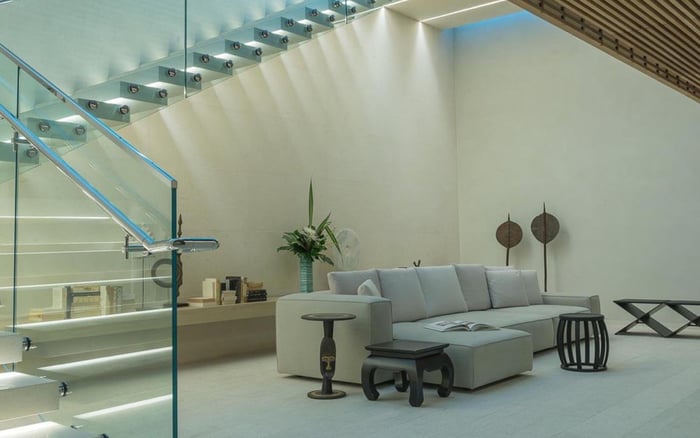
Expansive interiors and nearly continuous wraparound terraces reinforce that autonomy. Deep outdoor areas can accommodate distinct seating and activity zones, while multiple exposures open broad views of the Atlantic Ocean, bay, and city. Wave-like glass balconies define the tower’s architectural identity. For a family, however, the enduring value lies in how these spaces support shared time without requiring everyone to occupy the same room or terrace zone.
Second-home ownership often begins informally. Parents purchase, adult children visit, grandchildren arrive, and expectations accumulate without being documented. A stronger approach is to establish a family use policy while relationships are harmonious.
The policy can address reservation priority, peak-season allocation, guest permissions, minimum staffing expectations, private storage, pets, events, and rules for changing plans. It should also distinguish personal use from any permitted rental or third-party occupancy. Current condominium documents must be reviewed before assumptions are made about guests, leasing, transfers, renovations, or access.
Regalia combines private full-floor living with the services and security of a staffed luxury condominium. That balance can simplify arrivals and departures, but it does not replace a family operating plan. Someone still needs the authority to coordinate maintenance, approve household spending, communicate with building management, and resolve calendar conflicts.
A durable governance framework should answer five questions: who may use the residence, who makes routine decisions, which actions require broader consent, how costs are allocated, and what happens when family members disagree.
Routine matters might be delegated to a family representative or professional manager. Larger choices-such as substantial interior work, a change in ownership structure, long-term occupancy, or a sale-may warrant a defined approval threshold. Families should also determine how assessments, repairs, furnishings, insurance, staffing, and discretionary improvements will be funded.
The ownership entity and succession structure require individualized legal, tax, estate-planning, and insurance advice. Families should confirm every arrangement with qualified advisers and against current condominium documents. The objective is not complexity for its own sake, but continuity when a principal owner is unavailable, incapacitated, or no longer wishes to manage the property.
A concise annual meeting can keep the plan current. Review the coming year’s calendar, anticipated property work, budget, authorized contacts, insurance, and changes in family circumstances. Written records provide clarity without turning the home into a corporate exercise.
Oceanfront ownership rewards disciplined care. A family plan should assign responsibility for scheduled inspections, climate control, terrace furniture, interior systems, housekeeping, and post-storm review. Specific procedures should be coordinated with building management and relevant professionals rather than improvised.
Full-floor privacy also makes consistency essential. Because the residence functions as a complete private domain, deferred decisions can affect numerous rooms and outdoor zones at once. Maintain an organized digital file containing approved plans, warranties, service records, inventories, insurance materials, and association correspondence. Access should be secure yet available to those empowered to act.
Legacy ownership should allow for an eventual sale without treating it as the presumed outcome. Family needs can shift because of geography, health, liquidity, or generational preference. Resale readiness begins with clean records, coherent interiors, documented maintenance, and governance rules that identify who can authorize a listing and accept terms.
Prospective owners should evaluate Regalia within a relevant local comparison set. Armani Casa Sunny Isles Beach, Muse Residences Sunny Isles Beach, and The Ritz-Carlton Residences® Sunny Isles can help families frame questions about privacy, service, scale, residence configuration, and long-term fit. The point is not to reduce distinctive homes to a checklist, but to understand which attributes future buyers may compare.
At Regalia, the essential proposition is unusually clear: broad indoor-outdoor living, near-total floor privacy, varied water and city outlooks, and staffed condominium services. Preserving those qualities should guide renovation and furnishing decisions. Highly personal design can be meaningful, but families should consider whether permanent alterations support the architecture and remain legible to a future buyer.
Before a purchase, transfer, or succession, families can organize their discussion around four tests.
First, the use test: will the residence serve the family’s actual travel patterns and privacy needs? Second, the authority test: can someone make timely decisions without ambiguity? Third, the funding test: are recurring and exceptional costs allocated in advance? Fourth, the exit test: is there a fair process if one branch wants liquidity while another wants continued use?
The answers should be documented, reviewed by qualified advisers, and reconciled with current condominium requirements. A legacy residence succeeds when emotional significance is supported by operational clarity. At Regalia, the physical setting can provide privacy and ceremony; governance allows both to endure.
Why can Regalia appeal to multigenerational families? Its essentially one-residence-per-floor format offers separation, expansive interiors, and broad terraces within a staffed condominium.
What should a family use policy cover? It can address scheduling, guests, storage, events, staffing, cost responsibility, and decision authority, subject to current condominium rules.
Who should manage routine residence decisions? Families can appoint a representative or professional manager and clearly define the limits of that authority.
Should every family decision require unanimous approval? Not necessarily. Routine and major decisions can carry different thresholds, as reviewed by legal advisers.
How should ownership structure be selected? Qualified legal, tax, estate-planning, and insurance advisers should tailor the structure to the family and current documents.
What records should be retained? Keep plans, warranties, inventories, service histories, insurance materials, approvals, and association correspondence in a secure file.
How can families reduce scheduling disputes? Establish advance booking windows, peak-period priorities, cancellation rules, and a process for resolving conflicts.
What supports future resale readiness? Consistent maintenance, organized documentation, coherent design, and clearly assigned sale authority can preserve optionality.
Should buyers compare other Sunny Isles properties? Yes. Comparison can clarify preferences concerning scale, privacy, services, layouts, and indoor-outdoor living.
What is the most important legacy-ownership principle? Align emotional ambition with written rules for use, funding, stewardship, succession, and exit.
To compare the best-fit options with clarity, connect with MILLION.
If branded residences are on your mind — as a home or as an allocation — we would be glad to share what we are seeing, privately.
Begin a quiet conversation