A buyer-focused comparison of Kempinski Residences Miami Design District and EDITION Edgewater for penthouse entertaining, chef visibility, catering flow, private dining, and house-like living in Miami.
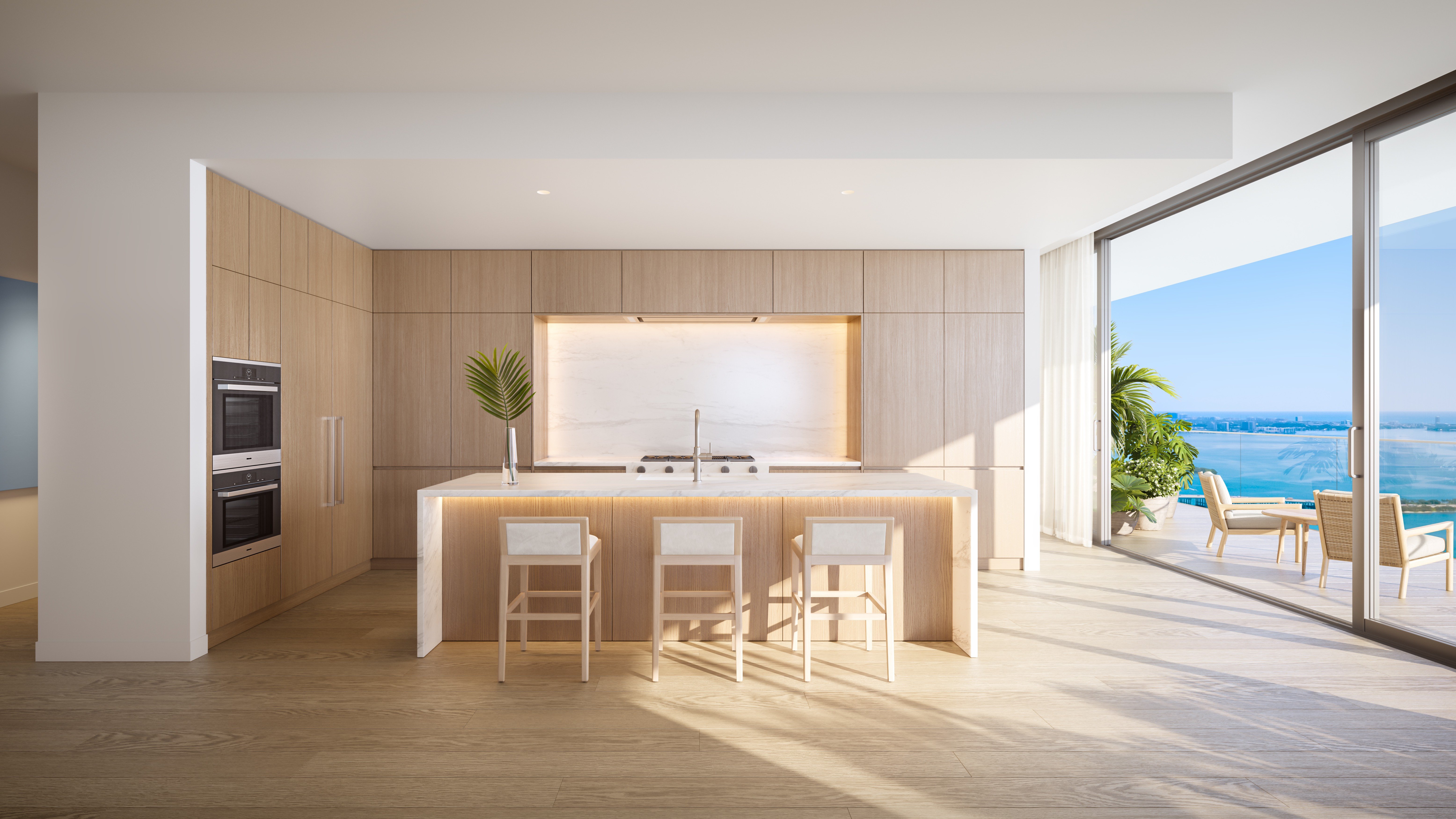
For buyers weighing Kempinski Residences Miami Design District against EDITION Edgewater, the culinary comparison should begin with a sharper question: should the penthouse entertain like a polished city residence, or operate more like a private house with a discreet service layer?
That distinction matters in Miami. A chef-ready kitchen is not simply a room with attractive finishes and premium-feeling presentation. At the penthouse level, it becomes an operating system for seated dinners, cocktail parties, family breakfasts, caterers, wine service, floral deliveries, and the choreography of cleanup after guests have moved to the terrace. The best layouts make hospitality feel effortless while keeping the owner in control of privacy, sound, staff movement, and guest sightlines.
The comparison should stay grounded in confirmed plans and buyer walk-throughs. EDITION Edgewater should be tested for how openly the kitchen connects to living, dining, and outdoor entertaining. Kempinski should be tested for whether its residence layouts provide the separation, staging, and private dining sequence a buyer expects from a house-like penthouse. In both cases, brand perception is not a substitute for studying the plan.
EDITION Edgewater is the natural side of this comparison for buyers who are drawn to visible, social entertaining. If a floor plan places the kitchen in direct conversation with the living room, dining area, and terrace-oriented gathering space, the result can feel relaxed and highly Miami: guests circulate, the host remains part of the room, and the cooking environment contributes to the evening rather than disappearing behind a service wall.
That arrangement reflects the way many South Florida penthouse buyers like to host. Guests may move between the kitchen island, dining area, living room, and view-facing outdoor space. The chef may be visible, the owner may pour wine from the kitchen, and the room itself can become part of the atmosphere.
The tradeoff is just as important. When the kitchen is visually connected to the primary living area, prep, plating, sound, aroma, and cleanup can become part of the guest experience. Some buyers welcome that transparency. Others, especially those who host seated dinners with outside culinary teams, may prefer stronger separation between guest space and work space.
The Kempinski name may lead buyers to expect composed private hospitality, but the kitchen question should not be answered from brand association alone. For a penthouse buyer focused specifically on chef-ready kitchens, catering flow, and private dining rooms, the right approach is to confirm operational details through current sales materials and floor plans.
Before assigning an advantage to Kempinski Residences Miami Design District, buyers should ask for architectural evidence. Is there a meaningful secondary prep zone? Can catering staff enter, stage, plate, and clear without crossing the principal living room? Is there separation between a show kitchen and any working kitchen? How does service move from elevator to pantry to dining room? Are trash, storage, wine, and refrigeration placed for real entertaining rather than brochure photography?
Those questions are not skeptical. They are the questions sophisticated buyers ask when a penthouse is expected to live like a house. In a single-family home, staff movement, pantry depth, storage, dish return, and acoustic separation are often easier to solve. In a vertical residence, the floor plan must work harder.
The best test is to walk through a dinner scenario in real time. Imagine a chef arriving with two assistants, floral arrangements, rented service pieces, and wine. Where do they enter? Where are boxes hidden? Where does one person plate while another clears? If ten guests are seated and four more are standing with cocktails, can the owner move freely without crossing the staff path?
For EDITION Edgewater, buyers should test whether the kitchen’s relationship to living, dining, and outdoor entertaining supports the type of hosting they actually do. A plan that feels open and dramatic can be ideal for informal dinners, cocktail parties, and indoor-outdoor gatherings. It may require more careful planning for formal staffed service.
For buyers comparing Edgewater projects more broadly, nearby luxury options such as Villa Miami and Aria Reserve Miami can also be useful reference points for thinking about how waterfront towers balance open entertaining with privacy. The point is not that every building solves the same culinary problem. It is that Edgewater buyers often evaluate residences by how view, kitchen, dining, and outdoor life connect.
The private dining room is where many floor plans reveal their true priorities. A beautiful table is not enough. Buyers should study whether the room feels ceremonial, whether it preserves views, whether the kitchen is too exposed during service, and whether guests can move to the terrace without compressing circulation around the chef.
In an open-concept penthouse, the dining room often becomes a bridge rather than a closed chamber. This can be elegant when the evening is casual and the table belongs to a larger social field. It can be less ideal when the owner wants a restaurant-level dinner with quiet transitions, hidden clearing, and the sense that the work is happening elsewhere.
This is why the Kempinski versus EDITION Edgewater question is not a simple brand comparison. It is a lifestyle distinction. EDITION Edgewater may suit buyers who appreciate casual luxury, visual drama, and entertaining that moves naturally from kitchen to living room to outdoor space. Kempinski may appeal to buyers seeking a more formal, house-like experience, but the exact culinary advantage should be verified in the plans.
Across Miami’s upper tier, branded and design-forward residences are increasingly judged not only by amenity language but by how well the private home performs during real use. A buyer cross-shopping Edgewater, the Design District area, and Brickell may also look at hospitality-influenced projects such as 619 Residences by Foster + Partners + Nobu Hospitality to compare how brand identity, food culture, and residential planning intersect.
Brickell buyers may prioritize skyline energy and proximity to dining and business districts. Design District and Edgewater buyers may weigh design culture, water views, art proximity, and quieter residential moments differently. None of those preferences automatically answers the kitchen question. The answer lies in circulation, separation, storage, appliance planning, staff access, and whether the dining room feels like an event space or simply an extension of the living room.
For the right owner, an open entertaining plan is not a compromise. It is the point. For another owner, especially one who hosts staffed dinners frequently, the same openness may require more operational planning.
If your idea of entertaining is a chef at the island, music in the living room, doors open to the terrace, and guests moving easily between spaces, EDITION Edgewater may align with that preference. Its culinary environment should be evaluated as a social zone rather than assumed to be an isolated professional catering suite.
If your priority is a penthouse that behaves more like a private house, with clearer service hierarchy and less visible culinary work, Kempinski deserves a closer technical review. Ask for plans, walk the service route, test the dining sequence, and confirm how the residence handles the unglamorous parts of entertaining. The best penthouse is the one that preserves the owner’s preferred rhythm, whether that rhythm is theatrical, discreet, or somewhere in between.
Which project is better for open entertaining? EDITION Edgewater is the clearer fit for buyers who want the kitchen, dining, living, and outdoor areas to feel visually connected, subject to confirming the specific floor plan.
Is EDITION Edgewater designed around a hidden catering kitchen? Buyers should not assume that without reviewing the current plans. The key is to verify whether the residence provides true service separation or a more visible entertaining layout.
Should buyers assume Kempinski has a more formal service layout? No. Buyers should confirm that through official floor plans, sales gallery materials, and project disclosures.
What matters most for chef-led events? Prep visibility, plating space, cleanup routes, sound control, storage, and staff circulation matter as much as finishes.
Why does kitchen visibility matter in a penthouse? In an open plan, guests may see and hear more of the cooking, clearing, and reset process during the evening.
Is an open kitchen a disadvantage? Not necessarily. It can be ideal for social cooking, cocktail parties, informal dinners, and relaxed indoor-outdoor entertaining.
What should buyers ask about the private dining room? Ask how guests enter, how food is served, how dishes are cleared, and whether views or circulation are interrupted.
Does a terrace change the entertaining equation? Yes. Outdoor flow can make an open kitchen more compelling, but it also increases the need for clear staging and service paths.
How does Edgewater influence this comparison? Edgewater comparisons often focus on view-driven vertical living, so buyers should study how each plan connects interiors, water views, and hosting zones.
What is the simplest way to choose between the two? Choose the residence that matches how you actually host, then verify the service route, storage, dining sequence, and kitchen visibility before relying on brand identity.
When you're ready to tour or underwrite the options, connect with MILLION.
If branded residences are on your mind — as a home or as an allocation — we would be glad to share what we are seeing, privately.
Begin a quiet conversation