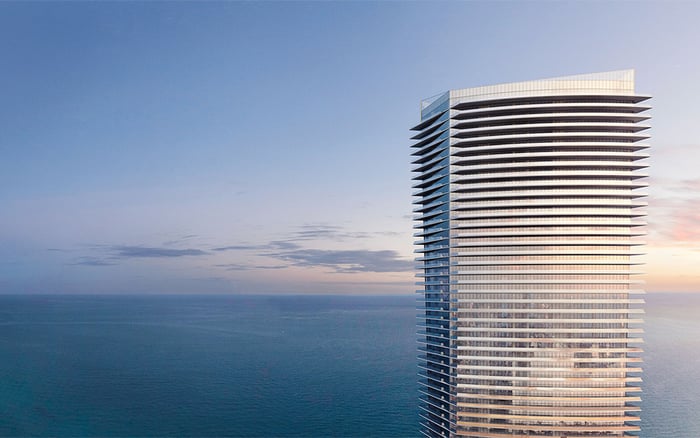
At Jade Ocean, the practical luxury of ownership depends partly on parking rights, self-parking procedures, vehicle eligibility, and a workable charging routine. Buyers should treat each point as unit-specific due diligence rather than a building-wide assumption.
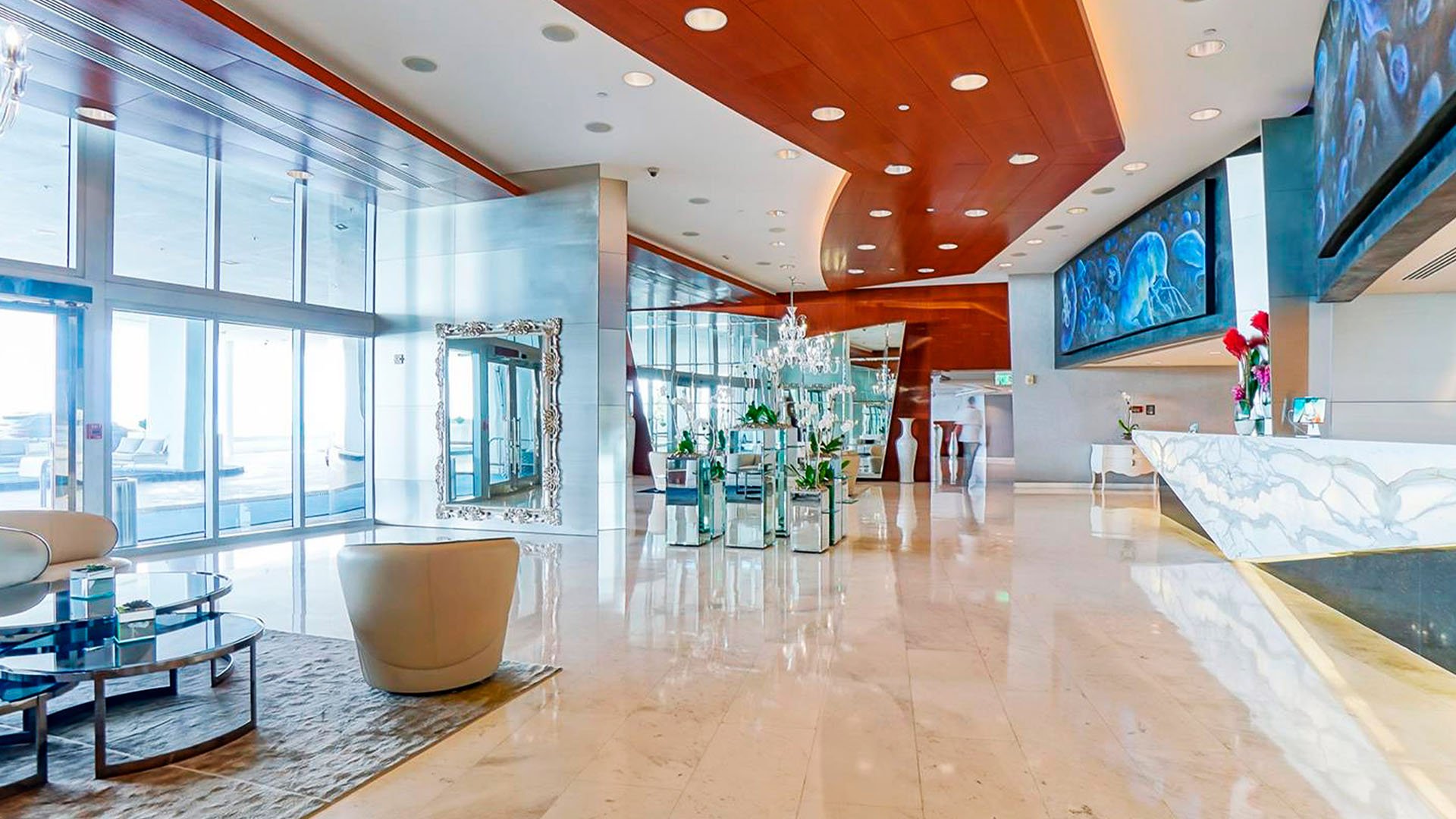
At Jade Ocean Sunny Isles Beach, the ownership proposition extends beyond views, interiors, and beachfront access. For anyone who drives daily, keeps more than one vehicle, owns an unusually proportioned automobile, or is moving to an electric model, the garage can shape the rhythm of the residence as much as the floor plan.
The building at 17121 Collins Avenue advertises 24-hour valet or self-parking, along with 24-hour security and a manned gatehouse. That combination suggests flexibility, but it does not establish identical parking privileges for every owner. In a luxury condominium, the meaningful questions are more precise: which space belongs with the unit, who may self-park, where the car is kept, and which procedures apply at a particular time.
The garage can shape the rhythm of a residence as much as the floor plan.
For a resale buyer, verbal shorthand such as “parking included” is not enough. Before closing, parking rights and operating rules should be reconciled across the purchase contract, unit records, current association materials, and written confirmation from management.
Valet service can make an oceanfront arrival feel seamless, particularly when returning with guests or luggage. Dependence is a different matter. Owners who leave at predictable peak periods, make frequent short trips, or prefer to handle a collectible car personally should understand whether self-parking is a routine right, a limited privilege, or a procedure subject to operational controls.
The “valet or self-parking” description warrants direct confirmation of current eligibility. Ask who may enter the garage, whether residents use access credentials, whether every assigned space is accessible to its owner, and whether management may revise the procedure. Owners should also understand key custody, vehicle retrieval, damage documentation, and applicable insurance protocols.
This is especially relevant for low-clearance sports cars, vehicles with delicate finishes, or automobiles that should not be moved without specific instructions. The service may be polished, but a buyer's comfort depends on the written operating framework, not the amenity label alone.
Residences are not uniformly described with respect to parking. Unit 1005 has been presented with valet parking, assigned parking, one covered space, and a one-car garage allocation. Unit 1707 has been presented with one assigned, covered garage space that is not attached directly to the residence. Unit 1207 has been described more simply as valet.
These variations do not necessarily conflict. They demonstrate why buyers should not translate a listing field into a legal conclusion. For at least some residences, planning around one primary space is prudent until additional-car rights are documented. Confirm whether the space is deeded, assigned, licensed, or controlled through valet operations. Also establish whether its number or location can change.
A two-driver household should obtain written terms covering the maximum number of registered vehicles, second-car availability, recurring fees, guest procedures, overnight rules, and any waiting-list arrangement. Buyers comparing Jade Signature Sunny Isles Beach, Turnberry Ocean Club Sunny Isles, and Jade Ocean should apply the same unit-level test rather than assume nearby towers follow equivalent policies.
Community restrictions against recreational vehicles, boats, trucks, and trailers have been specified for one Jade Ocean unit. Coupled with a single assigned covered space, that language matters to owners of pickups, high-roof vans, vehicles with commercial markings, or cars carrying roof-mounted equipment.
Physical fit is only one part of eligibility. A vehicle might clear the entrance yet still fall within a restricted category. Before committing, obtain the garage's exact clearance and the current written treatment of pickups, lifted suspensions, roof boxes, wide-body vehicles, high-roof vans, commercial identification, and temporary accessories. Check dimensions at ramps, turns, gates, and the assigned bay-not merely at the main entrance.
This point also belongs in a broader lifestyle review. If boating, cycling, seasonal travel, or business use requires specialized transport, the buyer should confirm where related equipment may be kept and whether the vehicle itself can be registered. Do not rely on an informal assurance when an association rule can control daily access.
The building advertises parking and security but does not explicitly list on-site EV charging. An assigned space therefore should not be assumed to include a charger, electrical capacity, or installation rights. EV buyers should ask whether shared chargers exist, whether a dedicated charger may be installed, who approves the work, and how electricity is metered and billed.
The practical inquiry should cover electrical capacity, permitted equipment, contractor requirements, insurance, conduit routing, load management, access during charging, and responsibility for removal or repair. If the space is valet-controlled, owners should also determine who connects and disconnects the car and whether charging can be requested on a reliable schedule.
Public infrastructure offers a useful fallback. Municipal charging is available at the Government Center at 18070 Collins Avenue, Heritage Park at 19200 Collins Avenue, and the municipal lot behind Walgreens at 175 Terrace. Charging at these city-operated locations is free, while parking generally carries a charge except at the Government Center. The Government Center site is public, available 24 hours, and supports app, RFID, Visa, and Mastercard access.
Within 15 kilometers of Sunny Isles Beach, there are 61 public ports, all Level 2, with about 36 percent offering free charging. Within the city, there are 13 stations, including two free stations. The difference reflects geography and database coverage, so availability should be checked in real time rather than treated as guaranteed capacity.
Additional nearby charging is available at 210 NE 175th Terrace and 17875 Collins Avenue, as well as at the Government Center and Heritage Park addresses. Sole on the Ocean at 17315 Collins Avenue has three Tesla Destination Charging outlets rated up to 16 kW, but access is limited to patrons and managed through valet.
That network can make occasional charging manageable, but it is not equivalent to arriving home and connecting in a dedicated bay. Public Level 2 charging introduces travel, parking duration, availability, and retrieval into the ownership routine. A high-mileage driver should model a normal week, not merely identify pins on a map.
Prospective owners also comparing Bentley Residences Sunny Isles or The Ritz-Carlton Residences® Sunny Isles should request current written charging and parking terms for the exact residence under consideration. Building category, price point, and geography do not establish identical operating rights.
The cleanest approach is to assemble a dedicated parking file. It should identify the legal nature and location of the space, self-parking eligibility, valet procedures, registered-vehicle limits, guest and second-car terms, fees, clearance, restricted vehicle classes, and EV provisions.
Users of the beach access at 17121 Collins Avenue are directed to the municipal lot behind Walgreens at 175 Terrace rather than the condominium garage. That distinction reinforces an important boundary: nearby public parking and charging are neighborhood resources, not extensions of the private garage.
The central ownership question is therefore not whether Jade Ocean “has parking.” It is whether the specific residence, vehicle collection, and charging pattern fit the current rules without recurring friction. Written answers transform an attractive amenity description into a dependable daily plan.
For discreet guidance on evaluating Jade Ocean parking rights and ownership logistics, connect with MILLION.
If branded residences are on your mind — as a home or as an allocation — we would be glad to share what we are seeing, privately.
Begin a quiet conversationThe building advertises 24-hour valet or self-parking. Buyers should confirm current eligibility, access procedures, and whether those procedures can change.
Some marketed units identify one assigned covered space, while parking descriptions vary by residence. The allocation and legal nature of any space require unit-specific verification.
Additional-car rights are not established uniformly by the reviewed information. Confirm registration limits, fees, guest rules, availability, and any waiting-list procedure in writing.
One unit listing reports restrictions against trucks, recreational vehicles, boats, and trailers. Current association rules and the classification of the specific vehicle should be reviewed before purchase.
Verify exact clearance as well as rules for pickups, lifted vehicles, roof boxes, commercial markings, wide bodies, and high-roof vans. Physical fit alone may not establish eligibility.
The reviewed building profile does not explicitly list on-site EV charging. Buyers should not assume that a charger is included with an assigned parking space.
Installation rights are not established by the available information. Request written details on approvals, electrical capacity, metering, contractors, insurance, and load management.
Municipal charging is listed at the Government Center, Heritage Park, and the lot behind Walgreens at 175 Terrace. Other nearby charging locations have also been identified along Collins Avenue and NE 175th Terrace.
Use of city-operated chargers is free, but parking generally must be paid except at the Government Center. Real-time access and availability should still be checked.
Request records defining the space, self-parking rights, valet procedures, vehicle limits, restrictions, fees, guest terms, garage clearance, and EV charging policies.