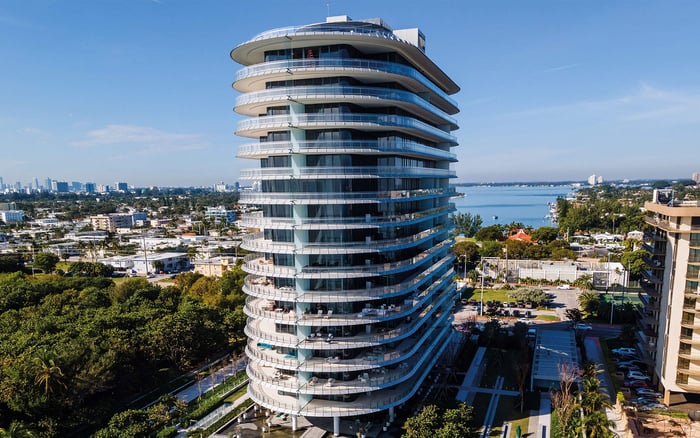
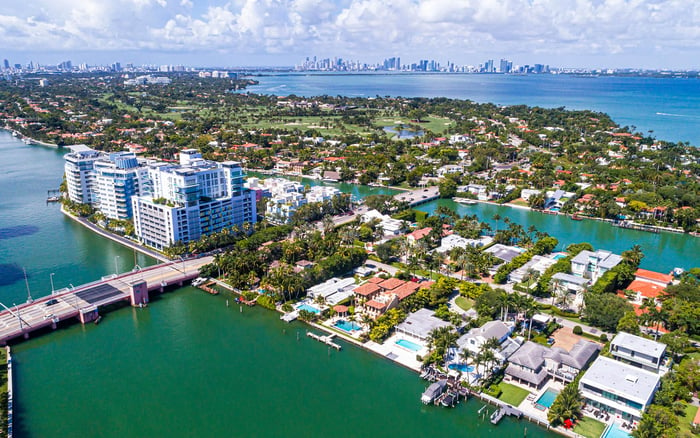
For cash buyers, new construction can simplify acquisition without eliminating condominium reserve risk. The sharper approach is to compare projects through budgets, governance, insurance, warranties, contracts, and the timing of owner control.

A cash acquisition can make a South Florida condominium purchase feel exceptionally clean. There is no lender approval to coordinate, appraisal contingency to negotiate or financing timetable to shape the closing. Yet cash does not insulate an owner from the condominium association’s economics after delivery.
Reserve exposure belongs in the same conversation as architecture, views and service. The central question is not simply whether a residence is new, but whether the building’s opening budget, reserve assumptions, insurance program, warranties and contracts provide a credible foundation for long-term ownership.
This distinction matters when comparing highly differentiated markets. A Brickell tower, a Miami Beach oceanfront address, a Sunny Isles Beach residence and a boutique building farther north may have distinctly different operating profiles. The discerning cash buyer looks beyond the absence of an immediate repair history to assess how each property is designed to fund, govern and maintain itself over time.
The following projects offer a useful cross-section for a reserve-conscious search. They are not substitutes for document review. Rather, each presents a different setting in which to apply the same disciplined questions.
In Brickell, The Residences at 1428 Brickell can be evaluated through the lens of a major urban condominium: What does the proposed operating budget include, which expenses fall outside it and how are future capital needs contemplated? The project should be compared on total ownership obligations, not purchase price alone.
As a coastal alternative, The Perigon Miami Beach invites an equally exacting review of insurance, maintenance scope and the assumptions underlying its opening assessments. It also demonstrates why an oceanfront buyer should separate the residence’s visual appeal from the association’s financial architecture.
Farther north, Bentley Residences Sunny Isles belongs in a comparison centered on amenity operations, service commitments and the contracts that may shape recurring expenses. It should be assessed through its governing and disclosure documents, not its branding alone.
In Boca Raton, Glass House Boca Raton provides a reference point beyond Miami-Dade’s core coastal corridor. It can help a buyer compare how scale, staffing and shared-property obligations translate into an association budget.
For buyers considering West Palm Beach, The Ritz-Carlton Residences® West Palm Beach brings a branded-residential context to the review. The essential task remains the same: determine which services belong to the association, how contracts may evolve and which financial responsibilities continue beyond the developer’s initial period of control.
A sophisticated review begins with the proposed budget and reserve schedule, then extends to the declaration, bylaws, purchase agreement, insurance materials, management arrangements and material service contracts. These documents should be read together. A modest assessment is not inherently preferable if it relies on optimistic assumptions or excludes meaningful costs.
Ask counsel and financial advisers to distinguish recurring operations from capital expenditures. Clarify how shared components are allocated, what the association must maintain and whether separate entities govern any facilities or services. Establish how warranties are treated, how claims are made and which parties are responsible for documenting construction conditions before control changes hands.
The phrase new construction should never be treated as shorthand for zero near-term risk. A new association has limited operating history, and its first budgets reflect assumptions rather than a long record. That can be attractive, but it requires judgment. Reserve-conscious buyer’s guides should therefore focus on the quality and transparency of those assumptions.
First, request a plain-language explanation of everything included in the stated assessment. Staffing, security, utilities, insurance, landscaping, amenity upkeep and professional management may be treated differently from one property to another. Buyers should also ask whether introductory pricing or temporary support affects the opening budget.
Second, study the transition from developer control to owner control. The relevant documents should explain voting rights, board composition and the transfer of association responsibilities. A buyer should understand who can approve contracts and budgets at each stage, along with the process available to owners when governance changes.
Third, examine the physical handover. Inspection procedures, warranty administration and record retention warrant attention before closing, even when the residence appears pristine. Cash creates speed, but that speed should not compress legal, financial or technical diligence.
Create a consistent ownership worksheet for every candidate. Include purchase price, deposits, estimated closing costs, regular assessments, reserve contributions, insurance responsibilities and separately billed services. Then identify which figures are fixed, estimated or subject to future approval.
This framework makes an investment comparison more useful without reducing the residence to a spreadsheet. It also distinguishes a genuinely efficient ownership structure from one that merely appears inexpensive at launch. For a waterfront home, the inquiry should be equally rigorous, with particular attention to every component the association is expected to maintain.
Finally, model several holding periods while allowing for variability. The objective is not to predict every future expense, but to determine whether the buyer is comfortable with the building’s allocation of obligations, its governance structure and the possibility that assessments or reserve contributions may change.
The most compelling new residence is not necessarily the one with the lowest opening carrying cost. For a cash buyer, quality is better understood as a combination of design, privacy, service and financial durability. The strongest position comes from reviewing the complete ownership structure before a contract becomes emotionally difficult to reconsider.
A reserve-aware purchaser can still move decisively. The difference is that decisiveness follows document review, professional advice and a clear comparison of obligations. In the upper tier of South Florida real estate, that discipline is not caution for its own sake. It is integral to buying well.
Does paying cash eliminate condominium reserve exposure? No. Cash changes the financing structure; association obligations remain part of ownership.
Is a new building automatically better funded than an older one? Not automatically. Review the proposed budget, reserve assumptions and governing documents for the specific property.
Why can a low opening assessment require extra scrutiny? It may reflect a different scope of services or assumptions that warrant clarification before purchase.
Which documents should be reviewed first? Begin with the purchase agreement, proposed budget, reserve materials, declaration, bylaws, insurance information and material contracts.
Should cash buyers still retain legal counsel? Yes. Independent counsel can interpret the obligations, deadlines, remedies and governance provisions in the transaction documents.
What should buyers ask about developer control? Ask how budgets, contracts, board rights and records are handled before and during the transition to owner control.
Do branded residences require a different review? The same fundamentals apply, with additional attention to brand, management and service agreements that may affect ownership.
How should buyers compare properties in different cities? Use a consistent worksheet that separates recurring operations, reserve contributions, insurance responsibilities and separately billed services.
Can reserves and assessments change after closing? They may change through the association’s budgeting and governance processes, subject to the applicable documents and requirements.
What is the best final step before committing? Coordinate legal, financial and technical review so the residence and its ownership structure are considered together.
If you'd like a private walkthrough and a curated shortlist, connect with MILLION.
If branded residences are on your mind — as a home or as an allocation — we would be glad to share what we are seeing, privately.
Begin a quiet conversation