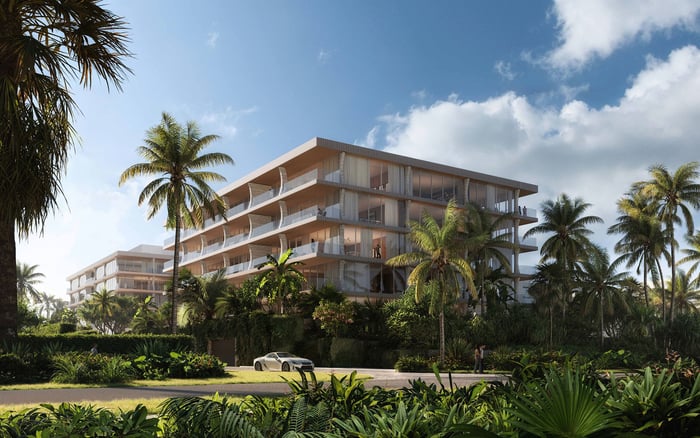
A buyer-oriented framework for examining privacy, service operations, waterfront circulation, and the complete arrival sequence when evaluating this Palm Beach Gardens branded residence.

A review of The Ritz-Carlton Residences® Palm Beach Gardens should begin with the operating model rather than the brand name alone. Buyers should confirm how the property is structured, which spaces residents and guests may use, and how the governing documents address access, rentals, events, deliveries, and services.
Residential-only positioning should be evaluated through written policies and practical circulation. The key question is whether the planned systems support a discreet residential experience during ordinary days, busy periods, and private events.
Privacy is a sequence of controlled transitions. Buyers should follow the route from the property entrance to the residence and note where drivers are identified, visitors wait, credentials are checked, and elevator access is authorized.
Resident, guest, delivery, contractor, and service movements also deserve separate review. Ask which routes overlap, how exceptions are handled, and whether a visitor can proceed beyond reception without resident approval. Effective controls should protect residents without making routine access unnecessarily cumbersome.
Written rules are only part of the analysis. Buyers should request an explanation of how guest authorization, package handling, contractor entry, domestic staff access, and after-hours arrivals are expected to work in practice.
Assess the arrival as one continuous experience: entrance, drive, vehicle handoff, lobby, elevator, corridor, and residence door. Each transition should be clear, orderly, and compatible with the desired level of discretion.
Consider how resident vehicles, guest cars, ride services, luggage, and deliveries would be managed when several demands overlap. Buyers should also examine whether elevator controls balance security with convenient resident movement.
A scheduled presentation may not reveal operational pressure points. When possible, compare more than one visit and consider surrounding traffic conditions as part of the broader arrival experience.
Branded service should be underwritten through procedures, staffing plans, responsibilities, and costs. Buyers should request the condominium documents, proposed operating materials, access-control information, service-charge schedules, and rules governing guests, rentals, events, and any relevant amenities.
Questions should cover request prioritization, overnight escalation, maintenance coordination, luggage handling, security responsibilities, and continuity during periods of heavier demand. The objective is to understand who performs each function, how residents request assistance, and which costs are recurring or separately charged.
A brand promise is most useful when buyers can connect it to specific operating practices. Any material representation should be confirmed in the applicable documents before a purchase decision.
If waterfront access, marina use, or waterside amenities form part of the buyer's evaluation, review how those areas relate to residential privacy. Determine who may enter, how guests are received, whether service routes intersect with resident paths, and which rules govern access.
Comparison can help buyers identify different approaches without assuming that projects are equivalent. Relevant Palm Beach County options to examine include The Ritz-Carlton Residences® West Palm Beach, Palm Beach Residences, and Mandarin Oriental Residences, West Palm Beach. Compare documented access rules, service structures, arrival planning, and recurring obligations rather than relying on brand familiarity alone.
Before committing, conduct both resident-facing and service-circulation reviews. Examine the governing documents, operating assumptions, access rules, recurring charges, and any provisions that could affect privacy or lobby activity.
The final decision should reflect how well the proposed systems align with the buyer's routines. Consider everyday arrivals, invited guests, deliveries, household staff, extended absences, and periods of heavier use. Legal and financial professionals can help evaluate the applicable documents and obligations.
What should buyers verify about the residential-only positioning? Confirm the property's structure, permitted uses, access rules, and operating model in the applicable documents.
How should buyers evaluate privacy? Trace every threshold from the entrance to the residence and ask how resident, guest, delivery, contractor, and staff access is controlled.
What belongs in an arrival-sequence review? Examine the entrance, drive, vehicle handoff, lobby, elevator controls, residential corridor, and front door as one connected experience.
Why should buyers visit more than once? Multiple visits can provide a broader view of circulation and surrounding traffic than a single scheduled presentation.
Which access-control questions matter most? Ask who authorizes visitors, where guests wait, how credentials are checked, and how after-hours or exceptional access is handled.
What service materials should buyers request? Request available operating documents, staffing information, service-charge schedules, access-control details, and relevant rules.
How should vehicle handling be assessed? Consider how resident cars, guest vehicles, ride services, luggage, and deliveries would be organized when demands overlap.
Why does back-of-house circulation matter? Its relationship to resident routes can affect privacy, convenience, and the efficiency of deliveries and services.
What should buyers examine about waterfront or marina access? If applicable, review authorized users, guest procedures, route intersections, operating rules, and related obligations.
How can buyers compare branded residences responsibly? Compare documented service structures, access policies, circulation plans, and recurring costs rather than assuming similar brands deliver identical experiences.
When you're ready to tour or underwrite the options, connect with MILLION.
If branded residences are on your mind — as a home or as an allocation — we would be glad to share what we are seeing, privately.
Begin a quiet conversation