A buyer-focused look at how The Residences at Mandarin Oriental Boca Raton are designed to handle multi-week guests, from arrival and access to privacy, services, domestic scale, and condominium governance.

For a luxury condominium, the most revealing moment is not the first tour. It is the second week of a guest’s stay, when luggage has become daily life, restaurant reservations have become routine, and the residence must feel less like an accommodation than a calm private home. That is the lens through which serious buyers should evaluate The Residences at Mandarin Oriental Boca Raton.
Set within Via Mizner in Downtown Boca Raton, the project is conceived as an ultra-luxury urban-resort enclave combining private residences, a Mandarin Oriental hotel, retail, and amenities. Its proposition is not branding alone. It is the operational marriage of condominium privacy and hospitality service, with a long-stay use case that suits Boca Raton’s seasonal rhythm.
A multi-week arrival is different from a weekend visit. The building is not simply receiving a guest. It is absorbing another household pattern into the residential ecosystem. Registration, access control, concierge coordination, valet procedures, housekeeping expectations, and building-service communication all matter.
For owners, family members, or owner-approved guests, the best experience is usually the least theatrical one. Access should be clear. Elevators and residential paths should protect privacy. The concierge should understand who is staying, what permissions apply, and how service requests should move through the building. The point is not to blur the residence into the hotel. The point is to let hospitality support a private residential stay without making the home feel public.
This is where branded residences differ from a conventional short-stay hotel format. Guests arriving for several weeks may need grocery coordination, housekeeping scheduling, valet familiarity, maintenance support, and amenity access that feels consistent rather than transactional. The owner’s home remains the center of gravity.
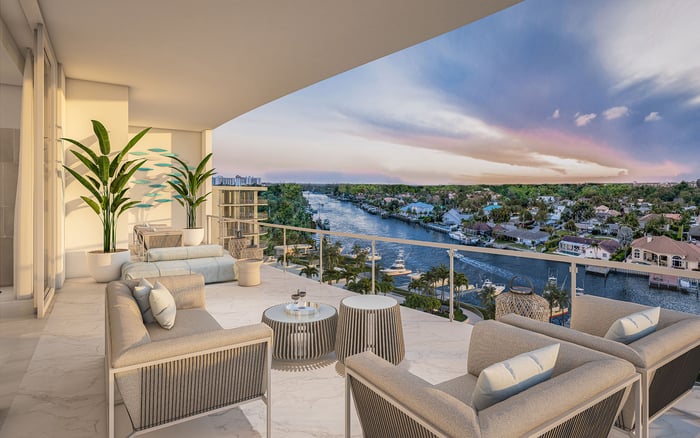
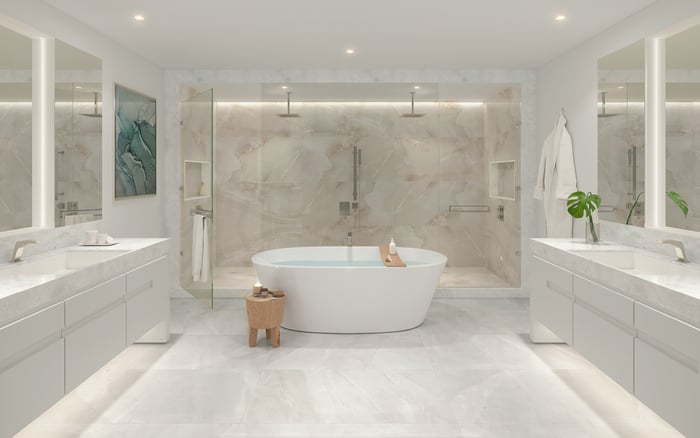
The residences are meant to function as domestic-scale homes, with living areas, kitchens, bedrooms, and private entertaining space suited to longer occupancy. That distinction matters. A hotel suite can be beautiful for a night. A residence must handle laundry rhythms, quiet mornings, guests for dinner, family privacy, and the inevitable small service request that appears after ten days.
Buyers comparing Boca Raton options often look beyond architecture alone. Alina Residences Boca Raton and Glass House Boca Raton may enter the same conversation because they speak to the demand for refined residential living in the market. The Mandarin Oriental proposition is more specific: a private condominium environment connected to a hospitality platform within a mixed-use downtown setting.
That connection has value only if the daily mechanics are refined. For multi-week stays, buyers should consider where guests enter, how packages are handled, how housekeeping is requested, whether service preferences can be communicated efficiently, and how residential privacy is protected from hotel circulation.
The strongest branded-residence experiences are restrained. Service should be present when needed and invisible when not. At Via Mizner, the concept pairs private residences with Mandarin Oriental-style hospitality, but the operating logic remains residential. Owners are not buying a room key. They are buying a home with a service layer.
That distinction becomes essential when guests stay for weeks. A transient hotel guest usually lives through the front desk, room service, and daily turnover. A residence guest needs the opposite: continuity, discretion, predictable access, and a sense that the building recognizes the stay as residential in nature.
Privacy and separation between residential users and hotel guests are therefore key operating considerations. The goal is a composed environment where a visiting family member can come and go without feeling processed, while the building still knows exactly who is authorized, what services are appropriate, and where boundaries sit.
For South Florida buyers also considering branded or service-led models elsewhere, The Residences at Mandarin Oriental, Miami underscores how much the category now depends on operations, not just finishes. The question is increasingly simple: can the residence live beautifully for a month, not merely photograph beautifully for a brochure?
Condominium governance is not a footnote. It is part of the ownership reality. Guest access, leasing, occupancy, common-area use, fees, and amenity privileges are shaped by condominium documents and property management procedures. For multi-week guests, those details can define the experience.
A discreet buyer should verify how owner-approved guests are registered, whether family use is treated differently from other arrangements, what notices are required, and which services are available or separately charged. The article-worthy idea is hospitality. The contract-worthy reality is rules.
That is not a negative. In a high-value building, rules protect privacy, service quality, and the residential atmosphere. They prevent ambiguity at arrival, reduce friction at the valet, and help staff distinguish between an owner, a guest, a vendor, and a hotel patron.
The practical value proposition at The Residences at Mandarin Oriental Boca Raton depends on how smoothly the building handles multi-week stays, service requests, privacy, maintenance, and amenity access. New-construction buyers should look past the brand halo and ask how the home will function during the most common Boca Raton pattern: seasonal residence, family visit, or extended owner-approved stay.
For a second-home owner, the ideal outcome is confidence. Guests arrive, the building understands the permissions, the residence operates without drama, and the owner does not become the property manager from afar. That is the quiet luxury of the model.
Where are The Residences at Mandarin Oriental Boca Raton located? They are described here as part of Via Mizner in Downtown Boca Raton.
Are the residences designed for short hotel stays? No. The model blends condominium ownership with resort-level hospitality rather than functioning as a conventional short-stay hotel format.
Who might stay in a residence for several weeks? Multi-week occupants may include owners, family guests, or guests using the residence through an owner-approved arrangement.
What shapes the guest arrival experience? Registration, access control, concierge coordination, housekeeping, valet, and building-service procedures all shape the arrival.
Does Mandarin Oriental hospitality replace condominium rules? No. Condominium governance still governs guest access, leasing, occupancy, common-area use, and related procedures.
Why is privacy such an important issue? The building concept depends on separating residential users from hotel guests while still allowing service to function smoothly.
What should buyers verify before relying on guest use? Buyers should review guest registration, leasing rules, occupancy limits, amenity access, fees, and management procedures.
Why do domestic-scale layouts matter for long stays? Living areas, kitchens, bedrooms, and private entertaining space help the residence function like a real home over time.
Is this mainly about the Mandarin Oriental brand? The brand matters, but the deeper value is how effectively hospitality, privacy, service, and ownership work together.
What is the main buyer takeaway? The residence should be judged by how calmly it handles extended stays, not only by its design language or amenity promise.
If you'd like a private walkthrough and a curated shortlist, connect with MILLION.
If branded residences are on your mind — as a home or as an allocation — we would be glad to share what we are seeing, privately.
Begin a quiet conversation