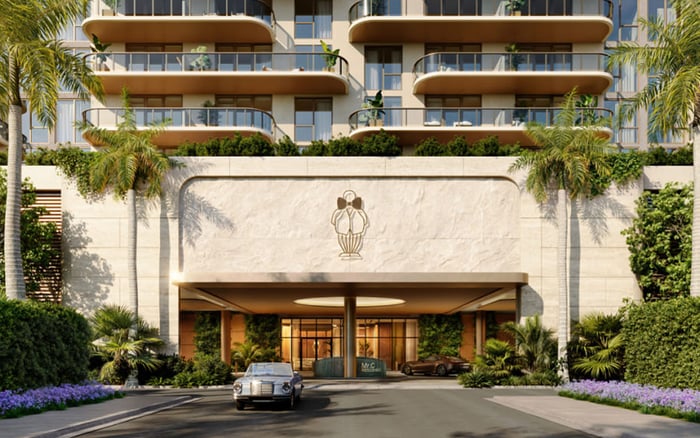
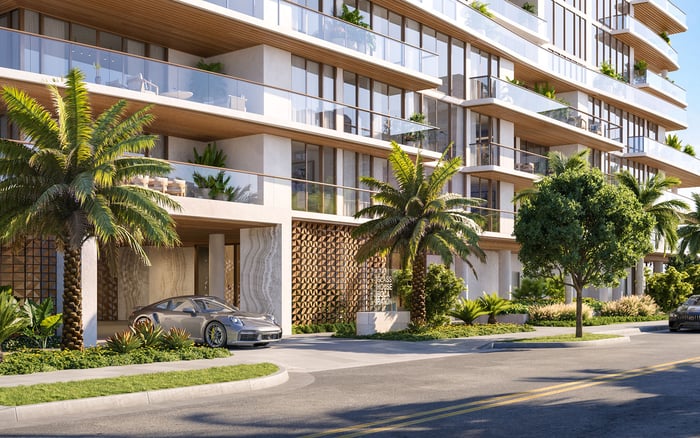
A buyer-focused examination of how privacy, circulation, service boundaries and shared-space planning can shape the ownership experience at branded residences in Boca Raton.

In Boca Raton, the idea of low-density privacy is most useful when treated as an ownership experience rather than a marketing label. Buyers can examine the entire sequence of daily life: arrival, entry, elevator use, guest access, deliveries, service visits and time spent in shared spaces.
That framework is especially relevant when comparing branded properties such as The Residences at Mandarin Oriental Boca Raton and Mr. C Residences Boca Raton. A hospitality name may shape expectations, but privacy ultimately depends on the residential plan and the procedures governing everyday operations.
Residence count is only one part of the analysis. The relationship among homes, elevators, corridors, amenity areas and service routes can be equally important. A building may feel private when circulation is intuitive, guest movement is controlled and residents can reach key spaces without repeatedly passing through active public areas.
Buyers should therefore ask how many residences share an elevator bank, whether residential and service movement intersect, and how visitors are admitted. The answers can clarify whether privacy is embedded in the building’s operation or expressed mainly through finishes and branding.
Branded living often presents service as a central benefit. For privacy-minded owners, the key question is how that service reaches the residence. Concierge support, deliveries, maintenance and other forms of assistance are most effective when access procedures are clear and discretion is built into staff routines.
This balance is particularly important for second-home owners, who may value coordinated care while away. Buyers should confirm who can enter a residence, how authorization is documented and what communication process applies before, during and after a service visit. These are due-diligence questions rather than assumptions about any specific property.
Generous interiors and outdoor areas can support private entertaining, but dimensions alone do not determine discretion. Adjacency, sightlines, acoustics and the path between a residence and shared facilities can affect how secluded a home feels in regular use.
Amenity planning deserves the same scrutiny. A buyer can ask whether spaces require reservations, how guests are handled and whether different activities can occur without creating avoidable congestion. Current offering documents and project representatives should be used to verify the applicable design and operating details.
A broader Boca Raton comparison can include Alina Residences Boca Raton and Glass House Boca Raton. The purpose is not to assume that every property defines privacy in the same way. It is to compare how each address approaches arrival, circulation, shared facilities, staffing and residential scale.
A useful review keeps brand identity separate from operational evidence. Buyers can request current plans, ask for the procedures that apply to residents and guests, and study how the proposed experience would work during both busy and quiet periods.
Before choosing a residence, buyers should verify the current residence configuration, elevator-sharing plan, guest-entry process, delivery route and service-access protocol. They should also review the rules governing shared spaces and determine which details are fixed, proposed or subject to change.
Privacy preferences are personal. One owner may prioritize discreet service, while another may care more about quiet amenity access or separation between residents and visitors. Defining those priorities before reviewing plans makes comparisons more precise and reduces reliance on broad luxury language.
What does low-density privacy mean in a Boca Raton residence? It describes how residential scale, circulation and operating procedures combine to support discretion in daily life.
Is residence count enough to determine privacy? No. Elevator sharing, corridor design, guest access and service movement can be just as important.
Why should buyers examine arrival routes? Arrival routes reveal how residents, visitors, deliveries and service personnel may interact before reaching a home.
How can branded service affect privacy? Service can add convenience, but buyers should verify authorization, access and communication procedures to understand how discretion is maintained.
What should buyers ask about elevators? They should ask which homes share each elevator bank and whether residential, guest and service circulation overlap.
Why do amenity procedures matter? Reservation rules, guest policies and capacity management can influence how calm or active a shared space feels.
Should buyers rely on renderings to assess privacy? No. Renderings can illustrate design intent, but current plans and offering documents are more useful for verification.
How should Mandarin Oriental and Mr. C be compared? Buyers can compare circulation, access procedures, service boundaries, shared spaces and the fit with their own priorities.
Why include other Boca Raton projects in the review? A wider comparison helps buyers distinguish project-specific approaches from general luxury branding.
What should a buyer verify before making a decision? The buyer should confirm current plans, residence details, guest procedures, service access and the rules governing shared amenities.
For a tailored shortlist and next-step guidance, connect with MILLION.
If branded residences are on your mind — as a home or as an allocation — we would be glad to share what we are seeing, privately.
Begin a quiet conversation