The Delmore’s publicly visible sponsor structure, construction progress and concentrated sales profile give buyers a framework for evaluating delivery risk without assuming undisclosed financing terms.
At the rarest end of South Florida real estate, architecture is only part of the purchase decision. Capital structure, sponsor commitment and construction controls can be equally consequential, particularly when delivery remains several years away.
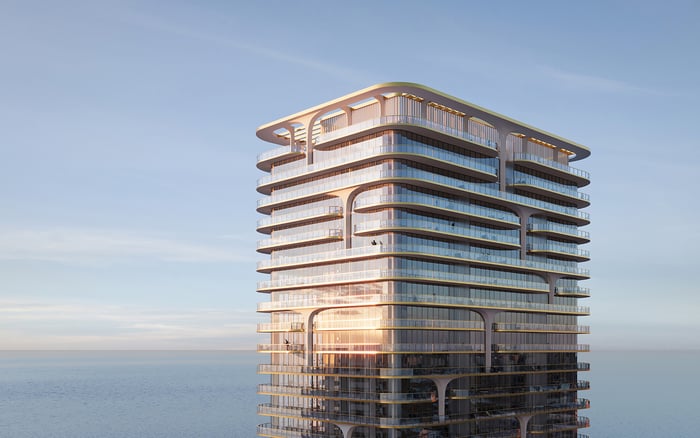
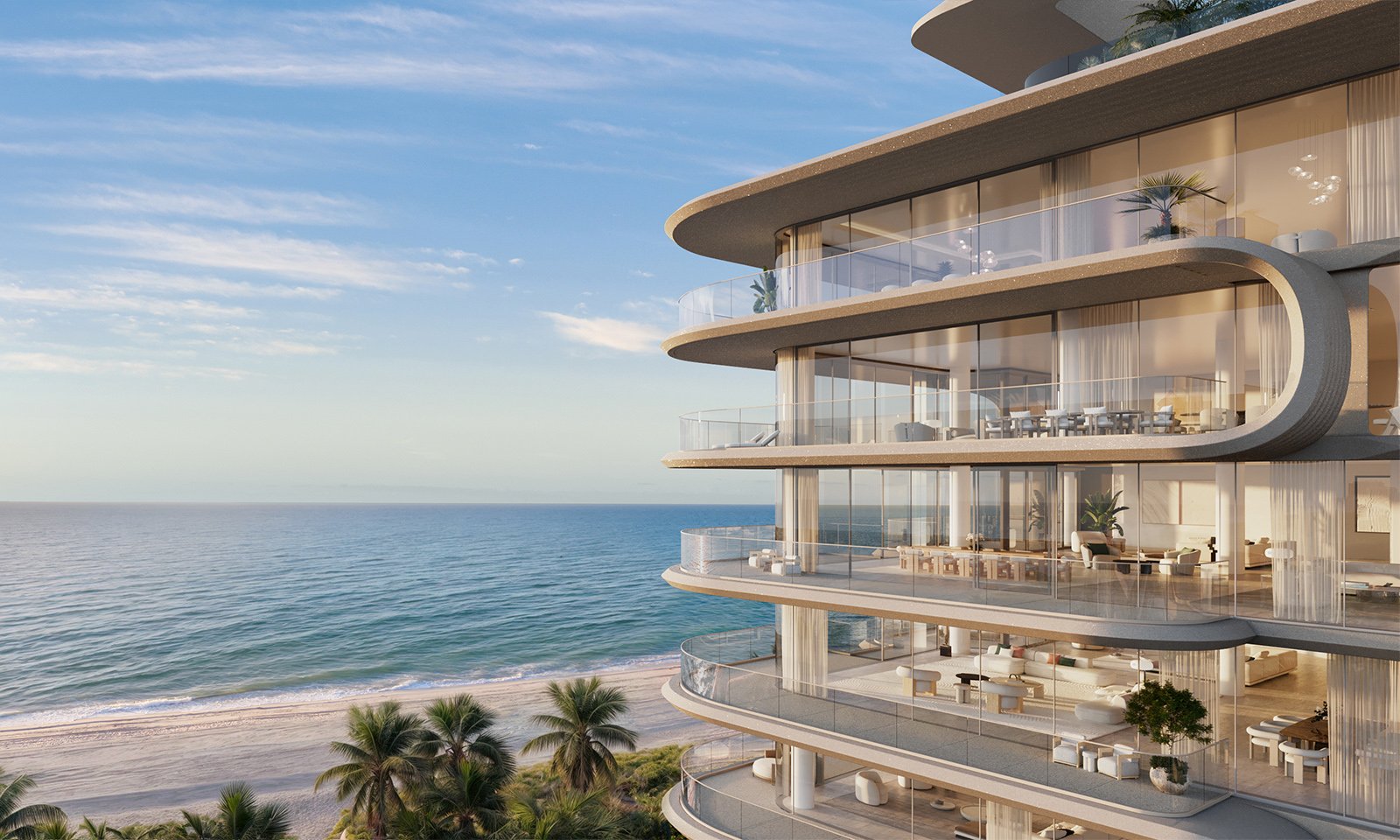
The Delmore Surfside is planned as a 12-story, 37-residence condominium at 8777 Collins Avenue. DAMAC International is developing the property through East Oceanside Development, its U.S. subsidiary, after acquiring the former Champlain Towers South site for approximately $120 million in a court-supervised sale in 2022.
The project is DAMAC’s first real-estate development in the United States. That distinction may heighten its strategic and reputational importance, but it is no substitute for documented funding capacity. Within MILLION’s editorial taxonomy, the project sits at the intersection of Surfside, Oceanfront, New-construction, Pre-Construction and Investment.
Publicly disclosed project information identifies DAMAC International and East Oceanside Development as the sponsor entities, with no third-party equity joint-venture partner named. That structure supports a developer-led interpretation, although it does not establish that every dollar of development capital comes directly from the sponsor.
The distinction matters. A sponsor-heavy capital stack could provide flexibility if construction costs rise, presale timing shifts or a design decision requires additional funding. It could also limit exposure to lender covenants or the withdrawal of a construction loan. Conversely, greater reliance on developer capital places more weight on the sponsor’s balance sheet, internal allocation decisions and sustained commitment through completion.
None of these outcomes should be assumed. Buyers should seek the legal and financial documents needed to turn a plausible ownership narrative into a verifiable capital picture.
No bank, debt fund, syndicate or other institutional construction lender has been publicly identified for The Delmore. Financing terms and counterparties have not been publicly detailed either. It would therefore be premature to characterize the development as fully self-financed, debt-free or insulated from conventional lending risk.
A lender can introduce independent underwriting, draw controls, inspections and completion tests. Yet leverage also brings interest costs, covenants, maturity dates and default remedies. The proper buyer question is not simply whether debt exists, but whether committed capital, contingency funding and contractual controls are sufficient to carry the project through vertical construction and delivery.
That inquiry is particularly relevant in a boutique coastal market where nearby properties such as Arte Surfside and Fendi Château Residences Surfside help frame expectations for privacy, design and service-but do not establish another project’s financing strength.
The development has cleared meaningful early hurdles. Surfside issued a foundation permit in 2025, and deep and trench soil mixing was completed to stabilize the site. This ground-improvement work cleared a path toward the master building permit and planned vertical construction, targeted to begin in 2026. Completion has been targeted for 2029.
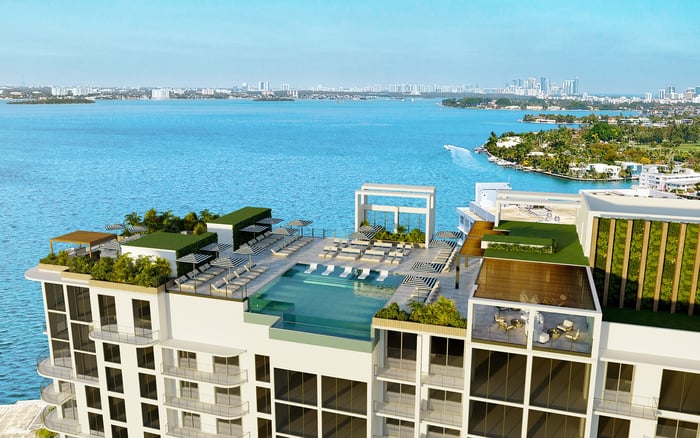
These milestones reduce elements of entitlement and geotechnical uncertainty. They do not eliminate schedule, procurement, cost-overrun or vertical-construction risk. The design itself adds complexity: a 75-foot transparent acrylic pool is intended to span the building’s two wings approximately 125 feet above grade. Bespoke engineering can produce an exceptional signature, but buyers should expect rigorous scrutiny of its testing, coordination and installation.
The architectural roster is similarly ambitious. Zaha Hadid Architects designed the building, ODP Architects serves as architect of record, and HBA Residential is responsible for the interiors.
The Delmore’s 37 residences average approximately 7,000 square feet, while its penthouses exceed 10,000 square feet. Sales launched in January 2025 with asking prices beginning around $15 million, and a penthouse has been marketed at up to $145 million.
That scale concentrates project revenue among a small collection of exceptionally expensive homes and a narrow buyer pool. As of April 2026, no unit sales had been recorded more than a year after the project entered the market. Recorded closings, however, are not a reliable proxy for presales in an unfinished condominium. Signed contracts and deposits generally do not appear in deed records before completion.
A sophisticated review should therefore examine executed contracts, deposit percentages, cancellation rights, refund provisions and any presale thresholds tied to financing or construction. The established oceanfront context of Eighty Seven Park Surfside and The Surf Club Four Seasons Surfside may illuminate buyer expectations, but absorption at The Delmore must be evaluated on its own terms.
Prospective purchasers should request a clear organizational chart identifying the landowner, developer, guarantors and affiliated entities. They should also determine whether a construction mortgage exists, whether capital is committed or contributed in stages, and which party is responsible for overruns and contingencies.
Construction diligence should confirm the current master-permit status, inspection history, contractor arrangements, payment procedures and schedule for major structural milestones. The purchase agreement warrants equal scrutiny, particularly its outside completion date, permitted extensions, force-majeure language, buyer termination rights, delay remedies and deposit escrow protections.
The central conclusion is measured. Sponsor visibility, a significant land acquisition, completed ground stabilization and an issued foundation permit demonstrate tangible commitment. At the same time, an undisclosed financing structure, ambitious engineering, concentrated absorption and a 2029 delivery target leave material questions that only documentation can resolve.
Who is developing The Delmore? DAMAC International is developing the project through East Oceanside Development, its U.S. subsidiary.
Has a construction lender been publicly identified? No institutional construction lender has been publicly identified.
Does that mean The Delmore is debt-free? No. The absence of a named lender does not confirm that the project is self-financed or debt-free.
Why does sponsor capital matter to a buyer? It can signal flexibility and commitment while concentrating reliance on the sponsor’s balance sheet and capital-allocation decisions.
What construction milestones have been completed? A foundation permit was issued in 2025, and deep and trench soil mixing was completed to stabilize the site.
When is completion targeted? Completion has been targeted for 2029, subject to construction progress and the governing contract terms.
How many residences are planned? The 12-story building is planned with 37 residences averaging approximately 7,000 square feet.
Do zero recorded closings mean there are no presales? No. Presale contracts and deposits generally are not visible in public deed records before condominium completion.
What design feature may add execution complexity? The planned 75-foot transparent acrylic pool, suspended between two wings roughly 125 feet above grade, requires specialized coordination.
What documents should a buyer prioritize? Review the ownership chart, financing and guarantee documents, permit status, construction schedule, escrow terms and contractual delay remedies.
To compare the best-fit options with clarity, connect with MILLION.
If branded residences are on your mind — as a home or as an allocation — we would be glad to share what we are seeing, privately.
Begin a quiet conversation