At Setai Residences Miami Beach, outdoor living deserves a residence-specific assessment. Balcony dimensions, exposure, furniture placement and association rules should inform the purchase as carefully as the view.
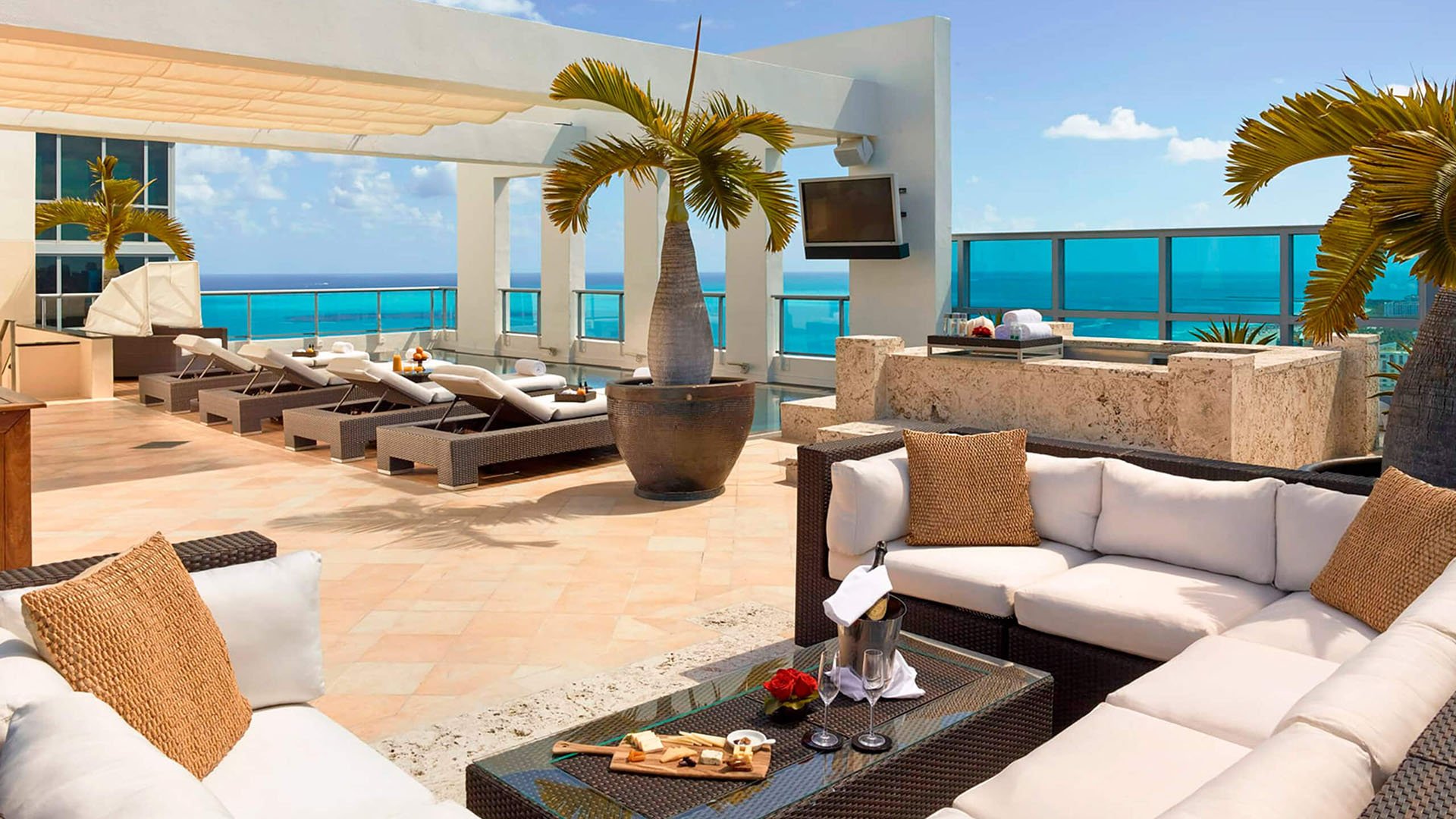
A balcony can frame an extraordinary view without functioning as an outdoor room. At Setai Residences Miami Beach, that distinction deserves particular attention. The 40-story residential tower at 101 20th Street offers layouts ranging from one- through four-bedroom residences to two-story townhomes and penthouses. Outdoor space warrants a residence-by-residence assessment, not treatment as a uniform building amenity.
The central buying question is not simply whether a balcony exists. It is whether the space accommodates your furniture, remains comfortable when you intend to use it, and can be maintained within the applicable ownership rules. A compelling panorama answers none of those questions.
Begin with a precise brief: breakfast for two, dinner with guests, a reading chair or separate dining and lounging areas. That brief turns the balcony from an emotional selling point into a feature you can assess before committing.
Descriptions of expansive and wraparound balconies convey an architectural impression, not a furniture plan. Neither term establishes a clear depth. A long balcony may offer several outlooks while still requiring a choice between a dining arrangement and generous circulation.
Ask for a measured plan of the actual outdoor space. Record the clear distance between the façade and railing at each intended furniture position, along with door openings, corners and fixed obstructions. For a wraparound configuration, assess each section separately rather than treating the entire perimeter as interchangeable.
Then overlay the exact furniture dimensions. Include chairs in their occupied and pulled-back positions, not just tucked beneath the table. Check whether someone can pass behind a seated guest and whether doors remain accessible. A sofa may fit yet leave the balcony feeling more like a passage than a place to linger.
For a buyer also considering Faena House Miami Beach, the same measured-furniture exercise provides a useful comparison without assuming equivalent outdoor dimensions or rules. Compare the intended activity, not the adjective used to describe the space.
Setai's range of residences makes unit-level distinctions consequential. Townhome THB is described with three balconies, double-vaulted ceilings, an open floor plan, and ocean and sunset views. Three separate balconies call for a different planning exercise than one continuous outdoor area: determine which space serves each activity and how conveniently it connects to the interior.
Unit 2706 has an open balcony and floor-to-ceiling windows, with ocean, South Beach, Downtown Miami skyline and bay views. Unit 3208 is described as a two-bedroom, two-bath residence with an open balcony, high-impact doors, and Atlantic Ocean, skyline and coastline views. These details establish what to inspect, not equivalent furniture capacity or comfort.
Floor-to-ceiling impact glass is identified as a residence feature, but glazing is not proof of comfortable conditions outside. Likewise, the hotel's balcony descriptions are no substitute for examining a residential unit. Keep every outdoor-living conclusion tied to the specific home under consideration.
There is no established stack-specific comfort ranking here, nor a basis for treating any floor as a reliable dividing line between usable and unusable outdoor space. A west-facing balcony should not automatically be considered calmer. Elevation and orientation belong in the assessment, but neither replaces an on-site experience.
Visit the target residence under different weather conditions and, where practical, at the times you expect to use the balcony. Sit at the proposed dining position rather than judging conditions from the doorway. Spend time at the corner, along the outer edge and beside the façade. Note whether conversation and reading remain comfortable.
Ask whether a qualified assessment of the residence's exposure is available, particularly if outdoor entertaining is central to the purchase. Do not turn one pleasant showing into a promise of year-round use. Establish which conditions suit your preferred activities and which practical limitations you are willing to accept.
The ownership model matters because physical access does not establish unrestricted control. Before purchase, have counsel review the condominium declaration and applicable association documents to determine how the balcony or terrace is classified and which responsibilities attach to the owner.
Request written clarification of maintenance and repair duties, furniture restrictions, alteration approvals and storm-storage requirements. Ask who is responsible for surfaces, waterproofing, doors and railings rather than assuming every element follows the same allocation. The governing documents-not a furnished showing-must answer these questions.
If renting the residence is part of the plan, separately confirm any applicable rental-program obligations and responsibility for preparing outdoor furniture before adverse weather. Do not assume a service arrangement includes that work.
One residence at the address is described with a south-facing terrace and private hot tub. That existing installation establishes neither permission nor structural capacity for another spa, heavy planters or built-ins. Treat proposed additions as separate approval and engineering questions.
Once dimensions and permissions are established, develop the outdoor scheme around the activity that matters most. If dining is the priority, test seating and circulation first. If quiet lounging takes precedence, assess the preferred chair position and its relationship to the view before adding secondary pieces.
For buyers weighing The Perigon Miami Beach alongside Setai, apply the same design brief to both evaluations. A consistent set of questions is more useful than assuming different residences deliver the same outdoor experience.
Do not try to resolve uncertain exposure simply by specifying heavier furniture. Confirm permitted furnishings and any proposed securing method with management, and obtain appropriate professional advice where needed. The design should work within the residence's documented conditions, not depend on unapproved modifications.
For an intermittently occupied residence, test the departure routine as carefully as the entertaining layout. Ask where outdoor pieces can be stored, who is authorized to move them, and whether the planned arrangement remains manageable when the owner is away. Confirm these arrangements rather than treating them as implicit services.
Before committing, assemble four decision points: measured outdoor dimensions, a tested furniture layout, observations under different weather conditions, and written confirmation of rights and responsibilities. Together, they offer a stronger basis for evaluating outdoor living than balcony count or view alone.
The right Setai residence is the one whose outdoor space supports your actual habits, with limitations understood before the furniture arrives.
For a discreet perspective on selecting a South Florida residence around the way you live, explore MILLION.
If branded residences are on your mind — as a home or as an allocation — we would be glad to share what we are seeing, privately.
Begin a quiet conversationThe 40-story residential tower is at 101 20th Street, Miami Beach.
Residential layouts include one- through four-bedroom units, two-story townhomes and penthouses. Evaluate outdoor space for the specific residence rather than assuming a standard configuration.
A specific measured depth is not established here. Obtain a measured plan of the target balcony and verify clear dimensions at each intended furniture position.
Not necessarily. Test both arrangements against the actual clear dimensions, including occupied chairs, door access and circulation.
No reliable floor-based comfort threshold is established. Assess the target balcony under different weather conditions instead of relying on elevation alone.
A consistently calmer west-facing exposure is not established. Visit the specific outdoor space and assess conditions where you intend to sit.
Townhome THB is described with three balconies and ocean and sunset views. Those features do not establish the outdoor configuration of other residences.
Have counsel review the condominium declaration and applicable association documents for balcony classification, maintenance duties, furniture restrictions, alteration approvals and storm-storage requirements.
No. An existing hot tub does not establish approval or structural capacity for additional spas, heavy planters or built-ins.
No. Repeated visits, a tested furniture plan and clear operating arrangements provide a better basis for judging whether outdoor space suits the buyer's intended use.