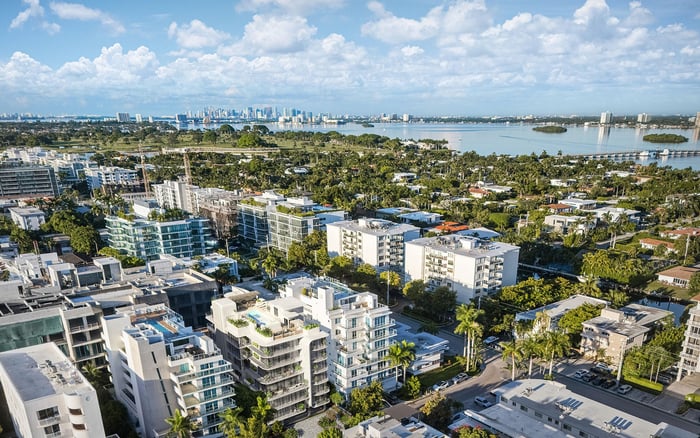
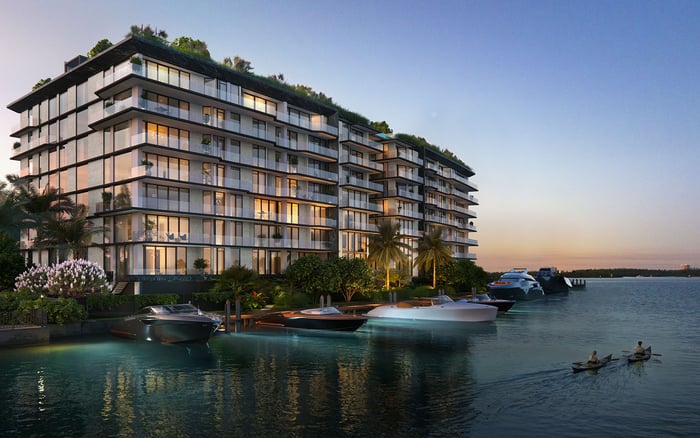
For Bay Harbor Islands buyers, rental flexibility is only one part of resale planning. A disciplined review connects guest access, owner-use rights, management obligations, replacement reserves, and financing to the needs of a future purchaser.

In Bay Harbor Islands, the purchase decision extends beyond views and finishes. Before comparing interiors, establish whether each residence under consideration operates within a hospitality environment, permits short stays, or follows a residential-only leasing model. For a buyer focused on the eventual exit, those distinctions deserve early attention.
Rental flexibility is not the same as resale liquidity. A future purchaser must be comfortable with the building’s financing options, occupancy restrictions, ongoing expenses, and everyday privacy. Neither condo-hotels nor residential-only condominiums can be assumed to sell faster. The more useful question is whether the ownership proposition can be clearly documented and matched to a future buyer.
Apply that test across your search, including Alana Bay Harbor Islands, rather than assuming properties in the same neighborhood share rental rights or access arrangements.
Begin with the documents, not a rental-income projection. Request the declaration, amendments, current leasing rules, and any applicable management agreement. Have counsel reconcile those documents with your proposed use, including whether independent rentals are permitted.
Ask for written confirmation of minimum lease terms, permitted rental frequency, approval procedures, and any requirement to participate in an operator-managed program. If short stays are part of your plan, have counsel verify the applicable legal requirements as well as the building’s rules. A short-stay listing alone does not establish lawful rental status or participation in an authorized program.
Keep unresolved permissions out of your income assumptions. A comparison between residences becomes more useful when each proposed use is tied to a governing provision rather than a verbal assurance.
Where a building includes hotel operations, dining, or other hospitality amenities, investigate who may use those spaces. An amenity description does not establish whether outside visitors are admitted or whether owners have separate circulation.
Walk the route from arrival through the lobby, elevators, corridors, and amenities. Ask management to identify access permissions for owners, registered hotel guests, dining patrons, visitors, and service personnel. Clarify whether any areas are resident-only and how those boundaries are enforced.
Request an explanation of guest registration, key-card permissions, quiet hours, and complaint handling. Visit during a busy period if possible. An attractive lobby during a quiet viewing cannot establish the experience when arrivals and amenity use overlap.
A residential-only designation should not replace an access review. For Bay Harbor Towers, request its own access rules and an explanation of circulation rather than transferring assumptions from another address.
If rental materials promise flexible personal use or no blackout dates, ask counsel to identify the binding owner-use limits in the purchase and rental-management agreements. Clarify reservation procedures, advance notice, consecutive-stay limits, and how existing guest bookings affect personal use. If your plans may evolve from occasional visits to extended residence, resolve that possibility before committing.
Optional participation also needs a precise definition. Ask whether withdrawal requires notice, triggers charges, or leaves obligations attached to existing reservations. Confirm what happens when the residence is sold and whether a purchaser must sign a new agreement. These are contract questions, not assumed terms at any particular Bay Harbor Islands property.
The answers help distinguish a flexible second home from an arrangement that only appears flexible in marketing.
Review the rental-management agreement alongside its complete fee schedule. Determine who controls rates, reservations, booking channels, housekeeping, and commissions. Establish who collects and remits transient taxes and whether the owner retains responsibilities when the operator performs that function.
Request several months of comparable-unit statements covering different seasonal conditions. Reconcile gross room revenue with operator deductions, booking fees, housekeeping, furniture reserves, taxes, and actual distributions. Then account for association fees, insurance, and debt service to estimate owner cash flow without double-counting expenses.
Model personal-use periods explicitly. Nights reserved for the owner cannot also be counted as available to paying guests. Test lower occupancy and rates, and ask whether proposed expenses reflect the current agreement rather than an illustrative sales projection.
For each Bay Harbor Islands residence, evaluate the actual ownership obligations rather than simply the appeal of the address.
Furniture, fixtures, and equipment, commonly abbreviated FF&E, deserve a separate review wherever a rental program imposes furnishing or replacement obligations. Ask whether contributions are revenue-based, fixed, or calculated through another method; do not assume a charge applies without reviewing the agreement.
Request the applicable contribution schedule, current balance, refurbishment history, and anticipated replacement requirements. Ask who sets furnishing standards, approves expenditures, and funds a shortfall. Clarify whether replacement obligations continue during personal use or after leaving the rental program.
Keep this review separate from association structural and capital reserves. Funding replacement furniture does not establish that the building has adequately funded its other obligations. Review the annual budget, financial statements, reserve studies, declaration, bylaws, and applicable structural inspection documents.
If Onda Bay Harbor is also on your shortlist, obtain its own financial and reserve documents. A useful comparison separates residence-level costs from association obligations at each property.
Even a cash buyer should investigate financing availability, because a future purchaser may require a loan. Ask lenders to assess the specific building, operating model, and unit rather than relying on a general prequalification. Request clarity on any financing constraints that could affect the next buyer.
For resale analysis, request recent individual-unit transactions, marketing times, price reductions, and sale-to-list outcomes for genuinely comparable ownership structures. Do not substitute a historical bulk per-key transaction for a current residence-level comparable.
Before proceeding, assemble a concise decision file: verified use rights, guest-access arrangements, operator obligations, demonstrated net income where available, separate reserve reviews, and building-specific financing feedback. Unresolved questions should remain visible in the purchase decision, not disappear beneath an appealing nightly rate.
The objective is not to eliminate hospitality from the ownership experience. It is to understand precisely what you are buying-and what a future purchaser will need to accept.
For a discreet conversation about your Bay Harbor Islands purchase priorities, connect with MILLION.
If branded residences are on your mind — as a home or as an allocation — we would be glad to share what we are seeing, privately.
Begin a quiet conversationNo. Rental flexibility alone does not establish marketing time, buyer demand, or resale pricing; financing, expenses, and ownership restrictions also require review.
Review the declaration, amendments, current leasing rules, and any applicable management agreement. Have counsel reconcile those documents with your proposed use and applicable legal requirements.
Do not treat that phrase as proof of unrestricted occupancy. Check the agreements for owner-use limits, reservation procedures, and the treatment of existing guest bookings.
Confirm minimum stay requirements, rental frequency, approval procedures, and whether independent rentals are permitted. Have counsel verify lawful rental status rather than relying on a listing.
Yes. Ask for the building’s own access rules and inspect circulation rather than assuming a residential-only designation establishes privacy.
Walk the lobby, elevator, corridor, and amenity routes, and ask who can access each area. Verify guest registration, key-card permissions, resident-only spaces, and conditions during busy periods.
Review control over reservations, rates, booking channels, housekeeping, commissions, and tax responsibilities. Also clarify owner-use procedures, withdrawal conditions, and obligations upon a sale.
Request the applicable contribution schedule, balance, refurbishment history, and replacement requirements for furniture, fixtures, and equipment. Clarify who sets standards, approves spending, and funds shortfalls.
No. Furniture replacement funding is distinct from association structural and capital reserves, which require a separate financial and document review.
A future purchaser may need a loan. Building-specific lender feedback can help identify financing constraints relevant to the eventual resale.