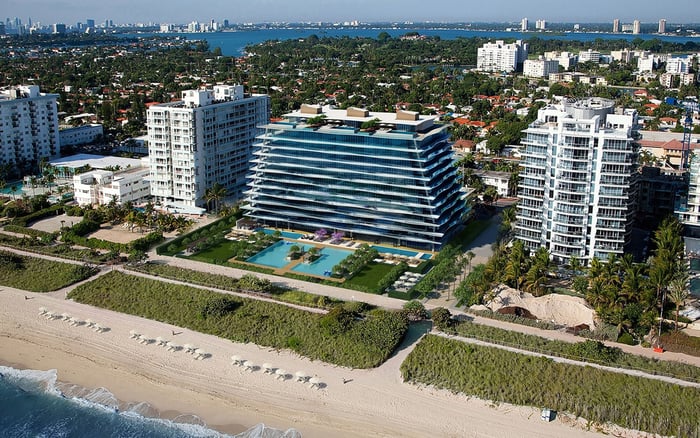
Ocean House Surfside pairs a highly limited residential format with ambitious service expectations. For prospective owners, the decisive protections will be found not in lifestyle language, but in the purchase agreement, condominium documents, initial budget, warranties and governance provisions.
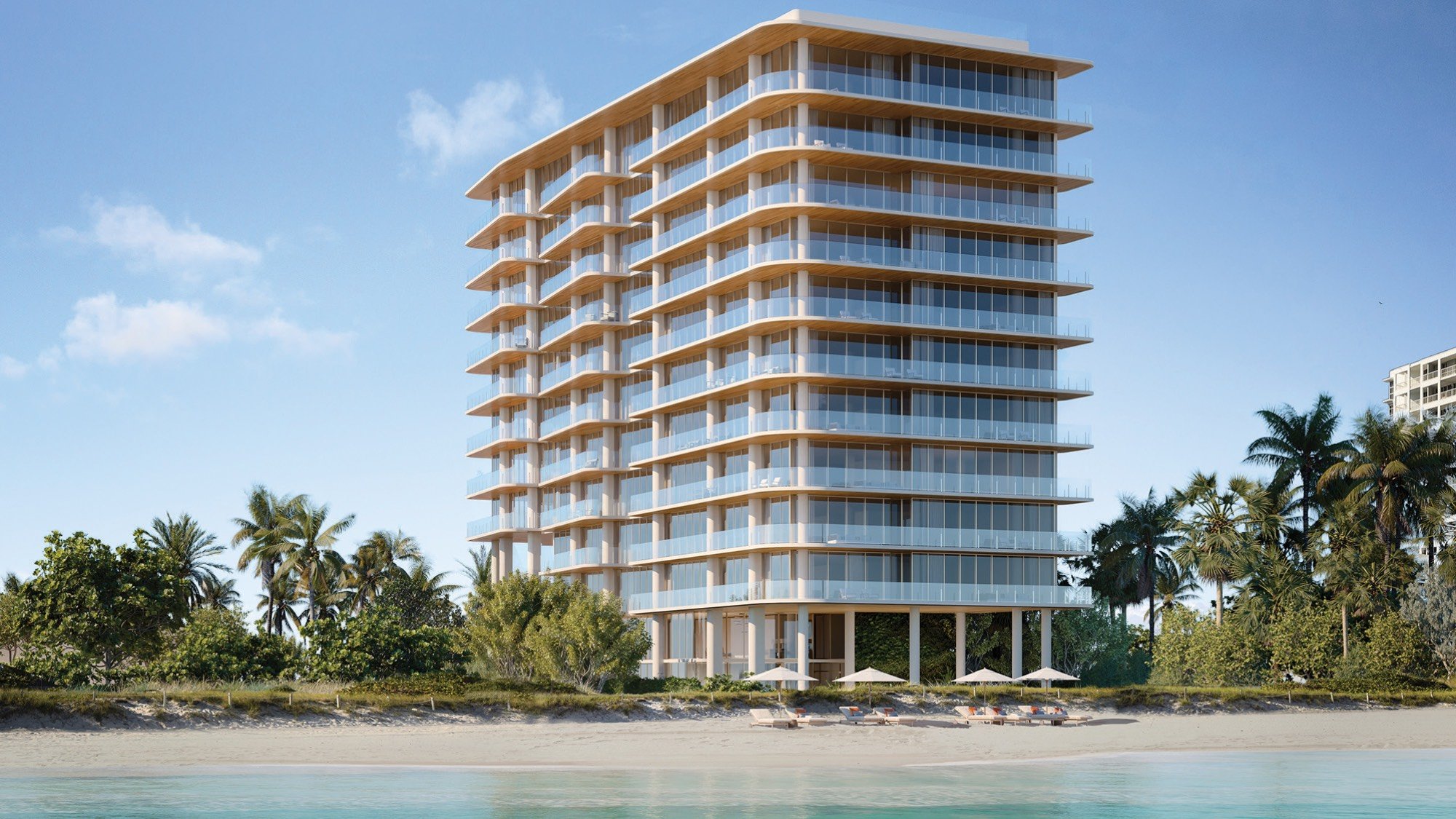
Ocean House Surfside is planned as a 12-story, 25-residence condominium at 9309-9317 Collins Avenue. Residences are expected to offer two to five bedrooms and approximately 2,093 to 6,279 square feet of interior space. Early pricing placed two-bedroom homes at about $5 million and four-bedroom homes at about $7.7 million; a two-level, full-floor penthouse was later marketed for $70 million.
Those figures establish an exacting luxury context. Yet for buyers assessing service recourse, the more consequential detail is structural: Ocean House is being marketed as an ultra-luxury residential condominium, not a hotel or branded condo-hotel. Fully furnished, turnkey positioning may shape delivery and lifestyle expectations, but it does not itself place a hospitality flag, hotel operator or third-party brand guarantee behind future service performance.
The project launched sales in August 2024 and broke ground in February 2025. With completion targeted for around 2027, the consistency of its concierge service, amenity operations, vendor management and long-term upkeep cannot yet be measured against an established operating record.
At Ocean House, the strongest service promise is the one translated into an enforceable document.
A 25-residence building offers privacy and a distinctly boutique scale. It can also make every budget assumption unusually visible. Payroll, management fees, maintenance contracts, insurance, reserves and specialist vendors must be supported across a limited ownership base. A staffing decision that feels modest in a larger tower may have a more pronounced effect on both monthly costs and the daily experience here.
That does not make a smaller association inherently less resilient. It means purchasers should closely examine how the proposed service level will be funded. A sophisticated amenity program requires more than compelling spaces; it demands realistic staffing, maintenance cycles, vendor scope, replacement planning and a clear allocation of expenses.
Comparisons can be useful without being treated as direct equivalents. Buyers considering Surfside may review the documents and operating identities of Arte Surfside and Fendi Château Residences Surfside, then ask how Ocean House differs in governance, personnel, management and cost responsibility. The objective is not to rank properties, but to understand what each ownership model commits to deliver.
Ocean House promotes sophisticated, wellness-driven living. That positioning naturally creates expectations around readiness, privacy, upkeep and attentive resident service. In a pre-construction purchase, however, expectations should be separated into three categories: what is illustrated, what is budgeted and what is legally promised.
The purchase agreement, declaration, bylaws, rules, initial budget and warranty provisions should be read together. A service described in presentation materials may not carry the same remedy as an obligation expressly incorporated into the contract or condominium documents. Buyers should also determine whether the developer may modify amenities, staffing concepts, finishes or service arrangements-and under what conditions.
For MILLION readers, this is fundamentally a buyer’s-guide issue of precision. Counsel should examine definitions, disclaimers, amendment rights, default provisions, cure periods and limitations on remedies. The review should also establish whether disputes must proceed through negotiation, mediation, arbitration or court, and whether fee-shifting or notice requirements could affect a practical claim.
There is no universal remedy for disappointing service. The available path depends on who made the obligation, what the controlling documents require, when the issue arises and whether the problem constitutes a contractual breach, governance failure, warranty matter or vendor-performance issue.
Before turnover, a buyer’s most direct rights are likely to arise from the purchase agreement and incorporated documents. If a represented feature, delivery obligation or warranty commitment is not met, the contract will determine notice procedures, opportunities to cure and available remedies. Promotional dissatisfaction alone may be more difficult to translate into a claim if the relevant language is discretionary or expressly nonbinding.
After owners assume association control, service quality becomes partly a matter of governance. Owners can scrutinize budgets, participate in elections, review proposed vendor arrangements and use the mechanisms provided in the condominium documents to address management priorities. The association, rather than an individual owner, may be positioned to enforce certain common-area contracts or pursue a vendor whose work affects the building collectively.
If a dispute concerns established ownership rights or an allegedly unlawful action, judicial relief may be relevant. A separate Surfside dispute at Surf House Condominium ended with a Miami-Dade judge ruling that a proposed condominium dissolution and forced-buyout structure was unlawful. The result demonstrates that local condominium owners can seek court intervention when they contend that a controlling party’s proposal violates their ownership rights. It does not predict the outcome of any future Ocean House service dispute, which would turn on different facts and documents.
A careful buyer should ask who will employ front-of-house and operational personnel, who may replace the manager and whether any minimum staffing level is documented. The proposed budget should reveal whether the promoted experience is adequately funded, while the declaration and bylaws should define voting power, assessment authority and the transition from developer control.
The same diligence should extend to warranties, punch-list procedures, common-element maintenance and responsibility for furnished interiors. Buyers should determine which services are included in common charges, which may carry separate fees and whether the association can materially reduce or discontinue an offering. Any cap on liability, waiver of consequential damages or shortened claim period deserves particular scrutiny from Florida condominium counsel.
A broader local comparison may include The Surf Club Four Seasons Surfside and The Delmore Surfside. Their inclusion in a diligence review should not imply identical operations. Instead, comparing governing documents, budgets and service responsibility can help a purchaser distinguish a branded hospitality framework from a purely residential condominium proposition.
Ocean House’s appeal is closely tied to scarcity: only 25 residences, expansive floor plans and an oceanfront setting. That intimacy also magnifies the importance of every operating decision. Service quality will ultimately depend on the documents, budget, board oversight, management execution and vendor accountability supporting the lifestyle.
The prudent approach is neither skeptical nor credulous. It is exacting. Buyers should ensure that important representations appear in enforceable language, test whether projected expenses support the promised experience and understand who has the authority to correct underperformance. At this stage, the quality of legal and financial diligence is the clearest available proxy for future recourse.
For discreet guidance on Ocean House and South Florida's ultra-premium condominium market, connect with MILLION.
If branded residences are on your mind — as a home or as an allocation — we would be glad to share what we are seeing, privately.
Begin a quiet conversationNo. It is marketed as an ultra-luxury residential condominium rather than a hotel or branded condo-hotel.
Ocean House is planned with 25 residences across 12 stories.
With only 25 residences, staffing, vendor costs and association budget decisions can have a pronounced effect on each owner's expenses and experience.
No. With completion targeted around 2027, actual concierge performance, staffing consistency and long-term upkeep remain prospective.
No. Turnkey positioning concerns delivery and lifestyle, and does not itself create a hospitality brand guarantee.
Buyers should review the purchase agreement, declaration, bylaws, rules, initial budget and warranty provisions with Florida condominium counsel.
Potential recourse is likely to depend on the purchase agreement, incorporated representations, warranties, notice requirements and contractual cure provisions.
Owners may use association governance, elections, budget oversight and document-based enforcement mechanisms to address management and vendor performance.
Judicial relief may be available when established rights are allegedly violated, but the appropriate forum and remedy depend on the documents and facts.
No. It provides local context for judicial intervention, but any Ocean House matter would be decided on its own facts and governing documents.