Muse offers controlled circulation and a low-density residential setting, but ownership privacy remains layered. Deeds, entity names, marketing exposure, internal directories, access systems, and smart-home governance each reveal different information and require separate buyer review.

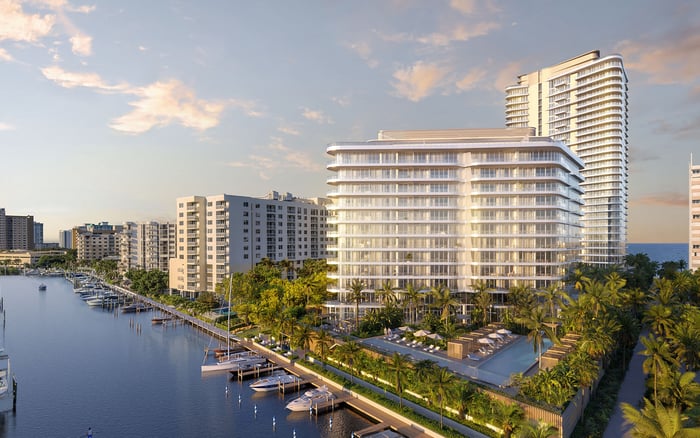
At Muse Residences Sunny Isles Beach, privacy is best understood as a series of overlapping protections, not a promise of anonymity. The oceanfront condominium stands at 17141 Collins Avenue and was developed by Property Markets Group with S2 Development. Completed in 2018, the tower was designed by Carlos Ott and Sieger Suárez Architects.
Muse is a 50-story building rising nearly 650 feet above the beach. Its 62 residences represent a comparatively limited inventory that can support a more intimate ownership environment. Yet low density, controlled entry, entity ownership, and digital security address different dimensions of privacy. None eliminates the property records attached to condominium ownership.
For buyers evaluating Sunny Isles Beach, the essential distinction is between discretion in daily life and visibility in recorded documents. A residence can feel exceptionally private while its legal description, unit number, ownership entity, and prior marketing remain discoverable through separate channels.
Muse’s legal condominium name appears as “MUSE CONDO.” The legal description for Unit 4501/4601, for example, identifies a 3.32% undivided interest in the common elements and references Official Records Book 30989, page 4242. That connection illustrates how an individual residence fits within Miami-Dade’s recorded condominium framework.
The practical lesson is not that every record presents the same information, but that title, condominium interests, and transaction history can create a durable paper trail. Resale marketing may add another layer by displaying an exact unit number, legal description, interiors, terraces, and views. Even after a listing is no longer active, buyers should consider how broadly its details may have circulated.
This issue extends across the local luxury market, including for buyers comparing Muse with Jade Signature Sunny Isles Beach. The architecture and service proposition may differ, but the privacy review should still distinguish legal ownership visibility from the lived experience inside the building.
An entity can replace an individual’s name in the most visible ownership field, but it does not erase the recorded chain. At the project level, PMG-S2 Sunny Isles, LLC appears as the applicant and owner in a request involving development rights and additional dwelling units. The filing also includes the entity’s Aventura mailing address, demonstrating that an LLC creates its own public-facing trail.
That project-level example should not be read as evidence that every Muse residence uses an entity. Unit-level ownership structures must be reviewed individually. A buyer considering an LLC should coordinate title, tax, estate-planning, lending, insurance, and legal advice before selecting a structure. The objective may be discretion, liability planning, succession, or administrative convenience, but each purpose carries distinct implications.
An entity name can reduce casual identification. It cannot make a deed disappear, prevent a unit from appearing in marketing, or substitute for disciplined management of contact information and digital access.
Muse’s publicly visible profile includes its address, developers, architecture, inventory, and available listings, but no resident-name directory is presented. That absence says nothing definitive about internal owner rosters, management records, delivery systems, guest interfaces, emergency contacts, or resident-facing applications.
Muse is a high-rise condominium with elevator access and doorman service-features that indicate controlled circulation rather than open public entry. Buyers should still ask how staff confirm guests, whether names or unit numbers appear on lobby interfaces, who can view delivery information, and how move-in vendors are credentialed.
The same questions belong in a comparison with The Ritz-Carlton Residences® Sunny Isles or another service-intensive tower. A polished arrival sequence is not, by itself, a complete privacy policy. Operational details determine what staff, contractors, guests, and technology providers can access.
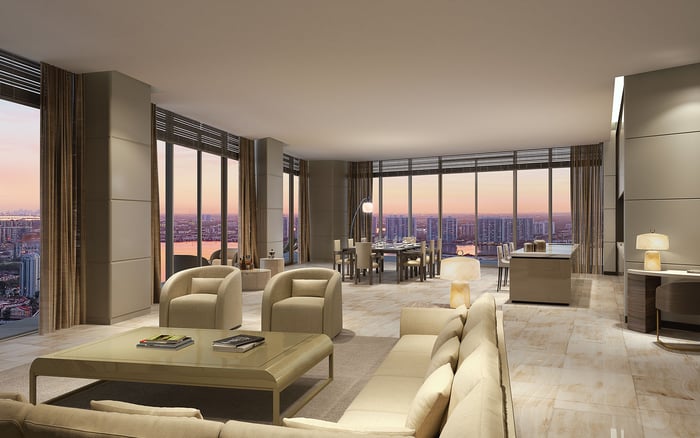
Muse residences feature smart-home technology, home automation, security, and privacy features. These systems may enhance control inside the residence, but their administration matters as much as their capabilities. Buyers should distinguish promotional language from the association’s actual access protocols, retention practices, account controls, and vendor arrangements.
A focused review should identify who administers building-linked systems, how credentials transfer after closing, what happens when household staff change, and whether access records are retained. Detailed policies governing guest procedures, surveillance, access logs, and data retention are not publicly established and therefore warrant direct verification.
For second-home owners in particular, privacy depends on routine account maintenance. Closing should trigger a reset of passwords, permissions, authorized users, remote access, and vendor credentials.
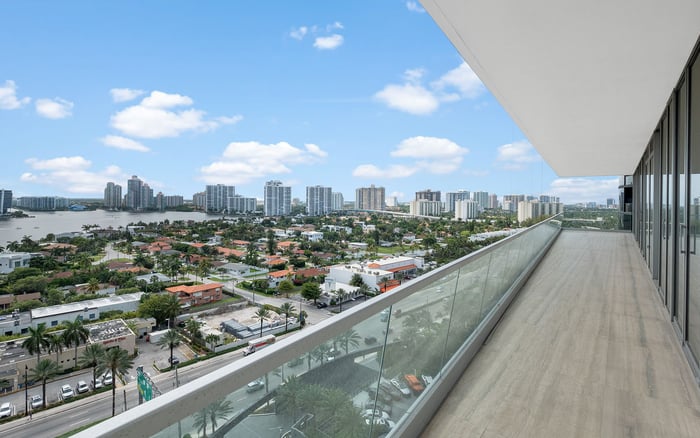
Muse’s glass façade and staggered terraces are signature elements, but visual privacy can vary by orientation, elevation, terrace position, and surrounding sightlines. Here, Design & Architecture becomes part of due diligence rather than a purely aesthetic consideration.
An in-person inspection should assess views into living spaces during daylight and after dark, neighboring terrace angles, reflective glass, window treatments, and exposure from the beach or adjacent towers. Oceanfront living can feel expansive without being visually uniform from one residence to another.
Buyers comparing Turnberry Ocean Club Sunny Isles should apply the same unit-specific analysis. Privacy is not merely a building-level characteristic. It changes with the precise floor plan, outlook, furnishings, glazing, and patterns of use.
Viewed through the lens of MILLION Buyer's Guides, the strongest approach is to review four files separately: the recorded ownership trail, association rules and records, building-access procedures, and smart-home governance. Add a fifth review for any past or planned Resale exposure, including photography, floor plans, legal descriptions, and unit identifiers.
Request current policies rather than relying solely on amenity descriptions. Confirm how owner names are used internally, what appears in directories, who receives access data, how long records are retained, and how vendor permissions are revoked. A carefully chosen ownership entity can complement these controls, but it cannot replace them.
Is ownership at Muse Residences anonymous? No. An entity may place its name in the public-facing ownership field, but the recorded chain and condominium documents remain relevant.
Does Muse have a public resident-name directory? No public resident-name directory is presented. Buyers should separately confirm what internal directories or rosters the association maintains.
Can every Muse residence be assumed to be LLC-owned? No. The documented project-level LLC does not establish the ownership structure of each individual unit.
What does the legal name MUSE CONDO signify? It is the condominium name used in the legal description connecting a residence to recorded condominium documents.
Can a resale listing reduce owner privacy? Yes. Marketing can reveal the unit number, interiors, legal description, terraces, and views even when an entity holds title.
Does doorman service guarantee privacy? No. It signals controlled circulation, while actual privacy depends on guest verification, staffing procedures, directories, and access policies.
Why should buyers review smart-home governance? Digital systems may involve credentials, administrators, vendors, and retained access data. Their management affects privacy alongside physical security.
Is privacy identical throughout the tower? No. Orientation, elevation, terrace placement, glazing, and neighboring sightlines can change visual exposure by residence.
Which association policies deserve close attention? Review directory practices, guest access, surveillance, record retention, vendor permissions, deliveries, and credential-transfer procedures.
What should happen to digital access after closing? Passwords, authorized users, remote permissions, and vendor credentials should be reviewed and reset where appropriate.
For a confidential assessment and a building-by-building shortlist, connect with MILLION.
If branded residences are on your mind — as a home or as an allocation — we would be glad to share what we are seeing, privately.
Begin a quiet conversation