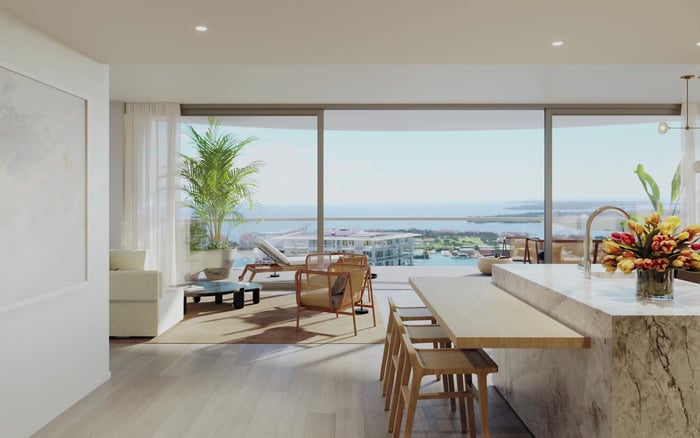
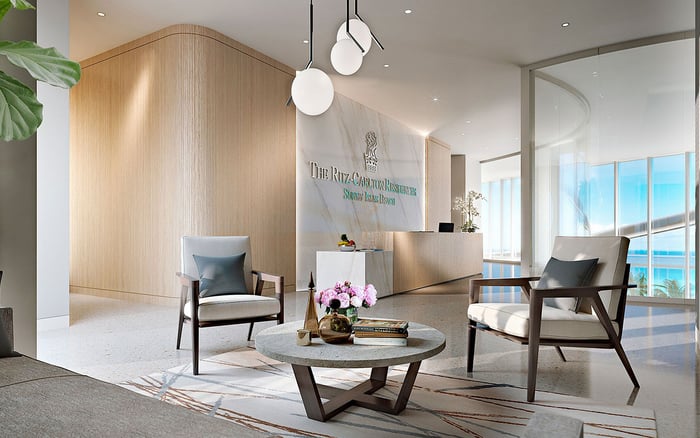
Avenia Aventura pairs FENDI Casa interiors with specified luxury finishes, but fully furnished delivery is not publicly confirmed. Buyers should distinguish design authorship from a contractual inventory of furniture and accessories.
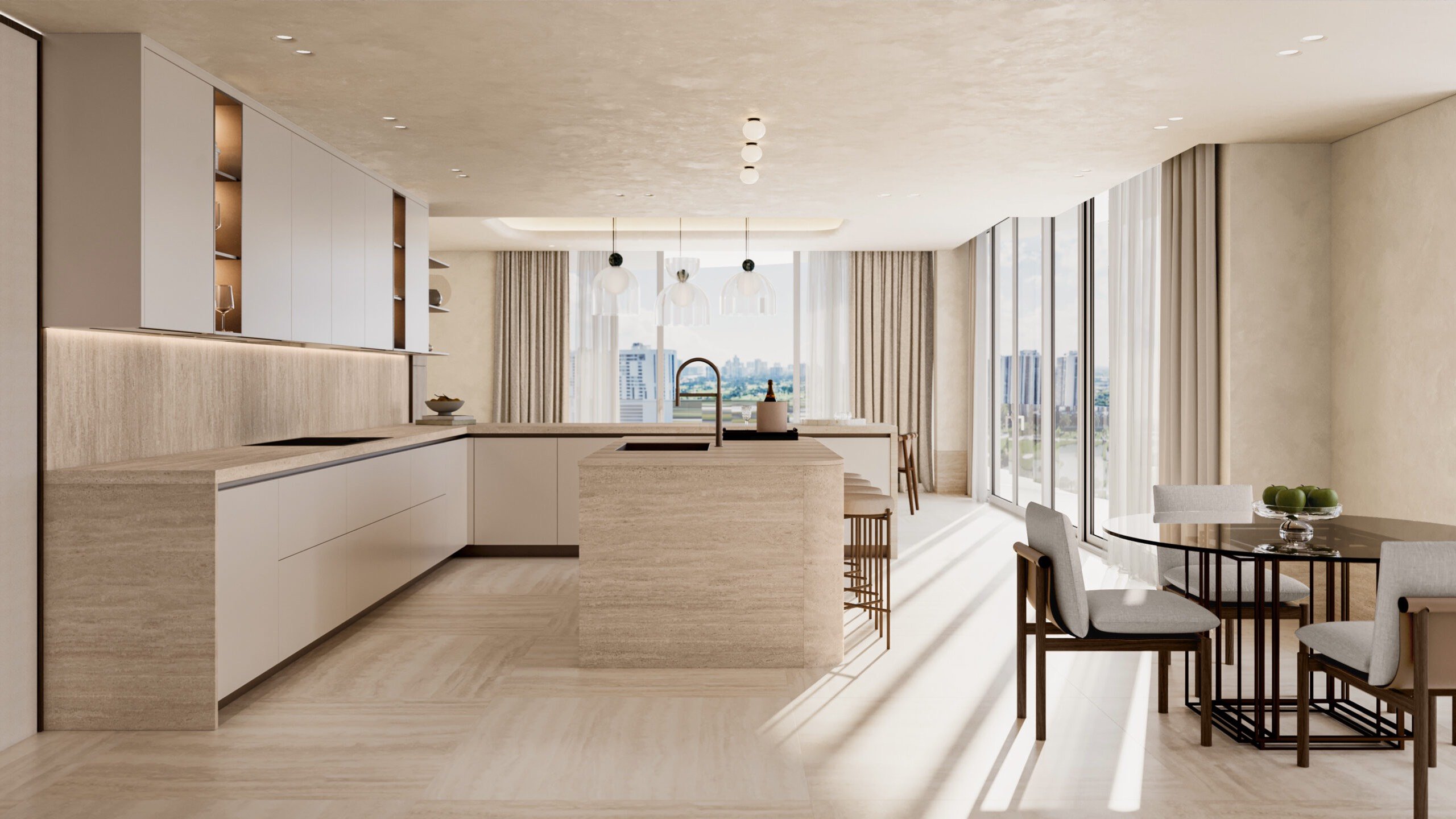
A beautifully composed interior can communicate an entire way of living. It cannot, on its own, establish what a buyer receives at closing. That distinction is central to Avenia Aventura, marketed as a collection of 22 waterfront residences with interiors by FENDI Casa. The design association is explicit. Fully furnished delivery is not established by the public materials reviewed.
The precise reading is neither that every residence comes furnished nor that residences are necessarily delivered unfurnished. Avenia is marketed with interiors by FENDI Casa and specified luxury finishes, but a complete turnkey furniture package remains unconfirmed. Maintaining that distinction protects both the project's design proposition and the buyer's expectations.
The practical question is not simply who shaped the interiors. It is which elements are included in the purchase, which require separate selection, and which, if any, involve an additional agreement or cost.
Located at 20605 NE 34th Avenue in Aventura, the project is described as offering three- and four-bedroom residences of approximately 3,500 square feet. Those parameters help buyers evaluate a home. They do not establish whether living room seating, bedroom furniture or terrace furnishings accompany the sale.
The phrase “bespoke interiors by FENDI Casa” establishes the marketed design identity. It should not become an unstated promise that every object in an illustrated room will be delivered. A coherent palette, carefully proportioned furnishings and decorative accessories can convey the intended atmosphere without constituting an itemized purchase specification.
For a buyer planning a second home or coordinating a relocation, that distinction has practical consequences. Planning around a residence's architectural and installed elements is one exercise; furnishing it for daily life is another. Until both are documented, a finished-looking presentation should not be treated as confirmation that the home will be ready for immediate occupancy as pictured.
Avenia's advertised residence specifications include custom Italian kitchens, quartz countertops, and Sub-Zero and Wolf appliances. Private elevator lobbies, designer plumbing fixtures and smart-home infrastructure also appear among the advertised features. These details describe tangible aspects of the proposed residence, not simply an aesthetic.
A built-in walk-in closet in the primary suite is also identified among the FENDI Casa-related design elements. Yet a built-in closet does not establish the inclusion of movable furnishings, just as a specified kitchen does not establish that dining chairs, tableware or countertop accessories are included.
The useful dividing line is between installed components and loose furniture. Sofas, beds, dining tables, rugs, artwork and accessories require separate confirmation. Decorative lighting, window treatments and outdoor furniture deserve particular attention: their appearance in a room can make them seem integral even when their inclusion has not been established.
Buyers should therefore treat the advertised specifications as a starting point for contractual clarification. They identify what to ask about; they do not replace confirmation of the exact scope for a particular residence.
Interior decorations, finishes, appliances and furnishings shown are designated as illustrative only. That qualification extends beyond decorative objects. Even where an appliance brand or finish category is advertised elsewhere, the image itself is not the contractual inventory.
An illustrated dining room may communicate scale, circulation and design intent. Without supporting documentation, it does not establish the quantity, model, material or inclusion of the dining furniture. The same distinction applies to a bedroom's bed, lamps, rug and artwork.
The public residence materials reviewed do not provide a room-by-room inventory of included movable furniture. The conclusion is therefore limited but important: fully furnished delivery remains unconfirmed. The absence of that inventory is not proof that furnishings are excluded and should not be presented as such.
Rather than debating what a rendering appears to promise, buyers can direct the conversation toward a written schedule tied to their residence and purchase agreement.
For buyers also considering Casa Bella by B&B Italia Downtown Miami, the same purchasing discipline applies: separate design identity from the inventory attached to a specific transaction. This is a framework for comparison, not a statement that the projects share delivery terms.
A brand's involvement raises several distinct questions. Does its contractual role concern branding, design consultation, product supply or a complete furnishing service? Which spaces and objects fall within that role? At Avenia, buyers should seek those answers rather than infer obligations from the FENDI Casa designation.
Likewise, someone evaluating Armani Casa Sunny Isles Beach alongside Avenia should request property-specific documentation rather than carry assumptions from one name to another. An effective comparison distinguishes what is included in the base purchase, what may be optional, and what remains the buyer's responsibility. None of those categories should be filled in by inference.
The most useful next step is a contractual inclusions schedule organized room by room. Ask for loose furniture, decorative lighting, rugs, artwork, window treatments, outdoor furniture, kitchenware and accessories to be addressed explicitly. For included items, request enough detail to identify them and understand any permitted substitutions.
The conversation should also address any displayed FENDI Casa furniture. Ask whether it is included, available through an optional package, offered as a separately priced upgrade, or obtainable through a post-closing procurement service. These are questions to resolve, not confirmed arrangements at Avenia.
Keep financial and timing questions equally specific. If a separate furnishing arrangement is proposed, clarify its price, payment obligations, installation scope and relationship to closing. Have those commitments documented rather than relying on a general description such as turnkey.
Ultimately, Avenia's FENDI Casa interiors and furnished delivery are related but separate considerations. The first describes the marketed design proposition. The second requires an agreed inventory. A buyer can value the former while insisting on clarity about the latter, bringing aesthetic confidence and purchasing precision to the same decision.
For a considered approach to Avenia and South Florida residential comparisons, connect with MILLION.
If branded residences are on your mind — as a home or as an allocation — we would be glad to share what we are seeing, privately.
Begin a quiet conversationThe public materials reviewed do not confirm fully furnished delivery. They establish interiors by FENDI Casa and advertised luxury specifications, not a complete furniture inventory.
No. Unconfirmed furnished delivery does not establish that residences are delivered unfurnished either.
Avenia is marketed as a collection of 22 waterfront residences in Aventura.
The residences are described as three- and four-bedroom homes of approximately 3,500 square feet.
Advertised specifications include custom Italian kitchens, quartz countertops, and Sub-Zero and Wolf appliances. Buyers should confirm the contractual specifications for their residence.
A built-in walk-in closet in the primary suite is identified among the FENDI Casa-related design elements. That does not establish inclusion of loose furniture elsewhere.
No. The advertising disclaimer identifies depicted decorations, finishes, appliances and furnishings as illustrative.
No optional package, separately priced upgrade or post-closing procurement service is confirmed by the supplied information. Buyers should ask whether any such arrangement is available.
Request explicit treatment of loose furniture, decorative lighting, rugs, artwork, window treatments, outdoor furniture, kitchenware and accessories.
Not by itself. Buyers should clarify the contractual role and obtain an agreed inventory rather than infer delivery obligations from the designation.