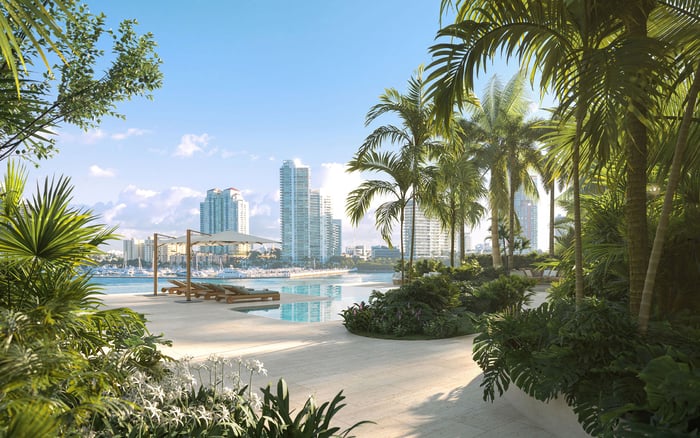
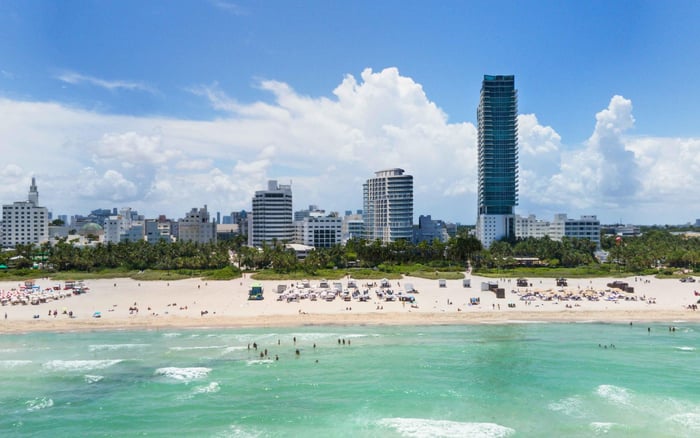
A buyer-focused examination of the documents, component classifications, reserves, warranties, and marina rights that may determine waterfront ownership costs at Avenia Aventura.
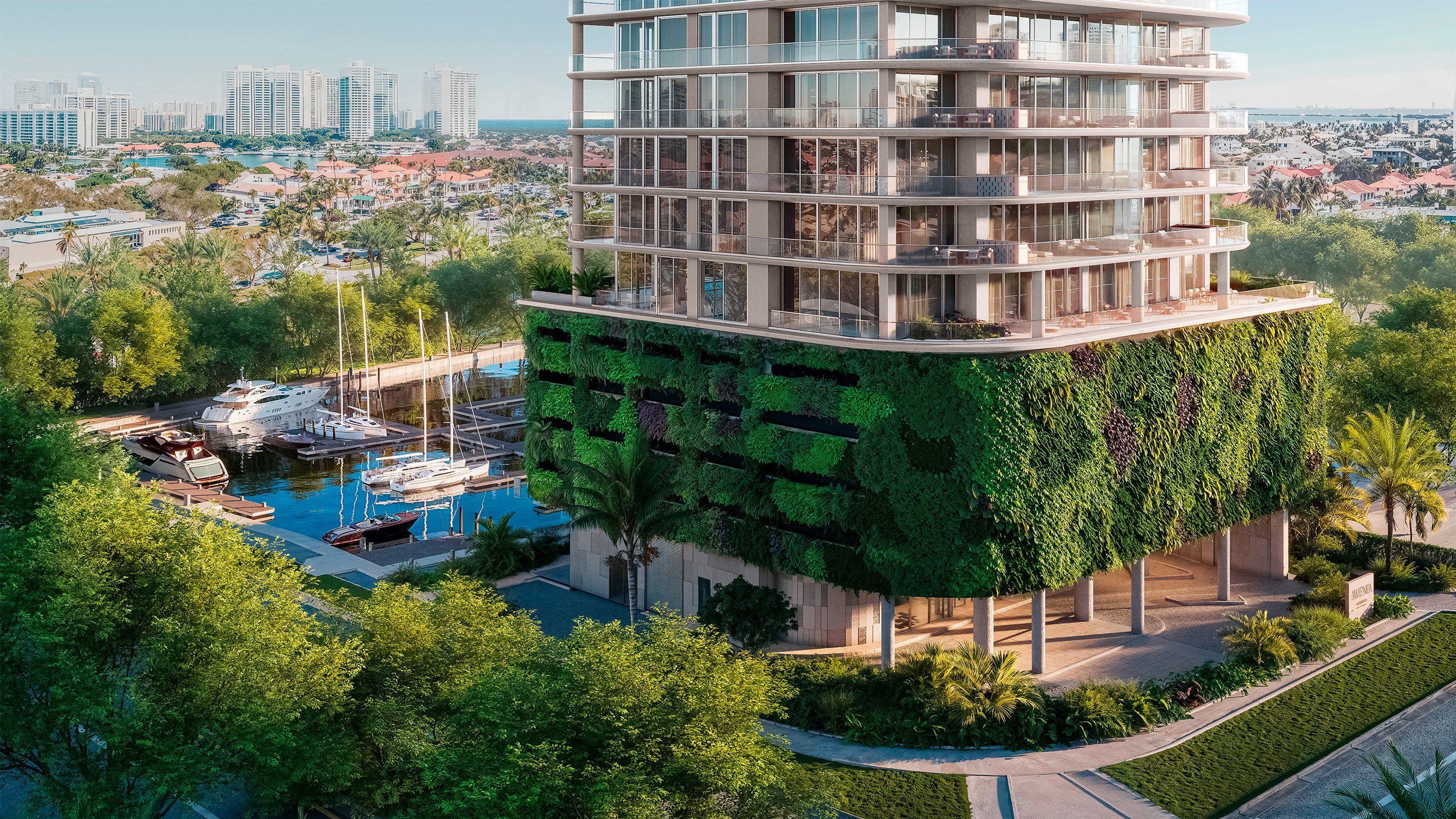
Avenia Aventura is planned as a boutique development of 22 three- and four-bedroom residences, with only two homes per floor. Its setting on a serene Aventura waterway is central to the proposition, framing city, water, and golf-course views while adding a consequential layer to the ownership analysis.
The amenity program includes a private marina with 14 slips, along with rooftop swimming, dining and lounge spaces, wellness facilities, and social areas. The rooftop plan centers on a resort-style pool and spa with water, skyline, and golf-course views. Yet for a waterfront buyer, the marina is not simply another amenity. It introduces docks, pilings, shoreline protection, basin depth, and navigational access-each with a distinct potential maintenance scope and cost profile.
At a waterfront condominium, the most consequential amenity may also be a separate infrastructure system.
The central question is not whether waterfront infrastructure requires care, but how each component is legally classified and who must pay when work becomes necessary. The marina is confirmed, but the available details do not establish whether the docks, pilings, basin, seawall, or related repairs will be common elements, limited common elements, or separately maintained property.
That distinction can shape the practical economics of ownership. If the seawall is a common element, its upkeep may be funded through association assessments or reserves, subject to the final governing documents. If a dock is assigned for exclusive use, its surface, utilities, pilings, or hardware could receive different treatment. Boat-slip rights may likewise arise through ownership, assignment, license, lease, or another structure. Each form can affect transferability, access, repair authority, insurance, and cost allocation.
This is why a sophisticated buyer’s guide should treat the declaration and marina documents as essential financial reading rather than closing formalities. The relevant language should identify each physical component, the party authorized to inspect or alter it, and the mechanism for collecting funds when routine care or major work becomes necessary.
A seawall protects the site edge, but its maintenance should not be conflated with dock work. Routine preservation can include removing marine growth, pressure washing, resealing, and patching concrete, mortar, or hydraulic-cement areas. More substantial intervention may require a separate engineering, permitting, and construction scope.
Before purchase, buyers should request available surveys, permits, engineering materials, warranties, inspection records, and reserve documents addressing the shoreline. The key inquiry is whether the projected budget recognizes both recurring upkeep and less frequent capital work. A visually finished waterfront edge does not, by itself, answer questions about structural condition, remaining service expectations, or future funding.
Warranty terms also warrant component-by-component review. Seawalls and docks may be covered by different warranty periods or remedies. Buyers should not assume that one warranty applies across the entire waterfront system.
Water depth determines whether a marina functions as intended. Dredging and underwater debris removal are distinct marine scopes used to improve depth and clear obstacles around waterfront facilities. The buyer’s task is to determine who monitors the basin, who decides when work is necessary, which permits or approvals may be required, and how costs are allocated.
Responsibility should never be inferred from the mere presence of a canal. Canal maintenance and optional dockside dredging costs may be divided in different ways, so an approach used elsewhere does not establish the rule for Aventura or Avenia. The analysis should address the marina basin, the area beside individual slips, and any route needed to reach broader waterways.
Aventura’s eastern waterfront connects with the Intracoastal Waterway, making access and shoreline infrastructure particularly relevant to local ownership. Buyers considering other boating-oriented residences, including Onda Bay Harbor and The Ritz-Carlton Residences® Miami Beach, should apply the same project-specific discipline rather than assume neighboring jurisdictions or developments allocate dredging identically.
A dock is not a single maintenance line. Dock repair, piling work, deck construction, seawall work, dredging, and underwater debris removal are distinct marine scopes. Utilities, access controls, hardware, and other installed features may raise further questions, but their presence and treatment at Avenia must be established in the final documents.
Buyers should ask whether the association maintains all 14 slips uniformly or whether individual users bear some expenses. They should also clarify whether a slip assignment follows the residence upon resale, whether non-slip owners contribute to marina costs, and whether exclusive users can authorize repairs. In a boutique building, the allocation formula matters because a major common expense would be distributed across a community of only 22 residences.
The same inquiry applies across South Florida’s luxury market. At boating-oriented properties such as Vita at Grove Isle, waterfront due diligence should distinguish the lifestyle privilege from the legal and financial machinery supporting it. Similar architecture or water access does not imply similar ownership terms.
A disciplined review should begin with the condominium declaration, exhibits, surveys, plats, marina agreements, permits, insurance materials, warranties, engineering reports, proposed budgets, and reserve materials. Buyers should reconcile defined terms across documents. A component presented as an amenity in marketing may have a more precise legal status in the offering instruments.
The budget review should then separate routine operations from capital exposure. Cleaning, minor patching, inspections, and ordinary dock care may recur on different schedules than seawall construction, piling replacement, or dredging. Insurance should be examined for covered property, exclusions, deductibles, and the party responsible for uncovered work. Each reserve line should be matched to the component it is intended to fund.
Timing also matters. The preconstruction plan calls for a 15-story canal-front tower, residences of approximately 3,500 square feet, pricing from about $5 million, and projected delivery in 2027. These remain preconstruction details, while plans, features, and amenities are preliminary and may change as provided in the offering documents. Buyers should therefore rely on executed contracts and final disclosures when determining obligations.
Avenia’s low-density plan, private marina, and elevated amenity program create an appealing proposition. A more refined ownership analysis, however, looks beyond the presence of 14 slips to the rules that sustain them. Classification, inspection authority, reserve treatment, insurance, warranties, and dredging responsibility collectively determine whether waterfront costs are broadly shared, assigned to slip users, or divided by component.
For buyers evaluating Avenia Aventura and comparable Aventura residences, the prudent objective is not to predict an unsupported future expense. It is to secure a clear documentary map of who owns, controls, maintains, insures, and funds every element between the building and navigable water.
For discreet guidance on South Florida luxury real estate, connect with MILLION.
If branded residences are on your mind — as a home or as an allocation — we would be glad to share what we are seeing, privately.
Begin a quiet conversationAvenia Aventura is planned with 22 three- and four-bedroom residences and two homes per floor.
The amenity program includes a private marina with 14 slips.
No. The available information does not establish whether the seawall or its repair costs are common, limited-common, or separately maintained obligations.
Classification may determine who controls, maintains, insures, and funds docks, pilings, the seawall, and other marina infrastructure.
No. Dredging, underwater debris removal, dock repair, piling work, and seawall work are distinct marine scopes.
No. Local responsibility must be verified through applicable documents, permits, agreements, and municipal requirements.
It can include marine-growth removal, pressure washing, resealing, and patching concrete, mortar, or hydraulic-cement areas.
Buyers should request the declaration, surveys, plats, permits, marina agreements, reserve materials, insurance documents, warranties, and engineering reports.
Plans, features, and amenities are preliminary and may change as provided in the offering documents.
Reserve treatment shows whether money is being set aside for defined waterfront components. If a major item is common, its cost may be distributed across a relatively small ownership base.