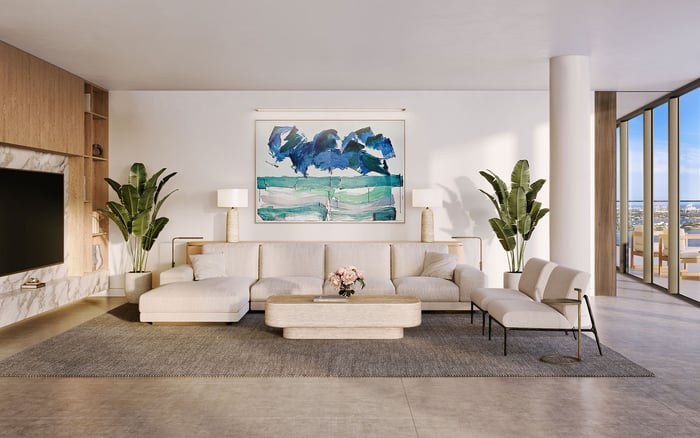
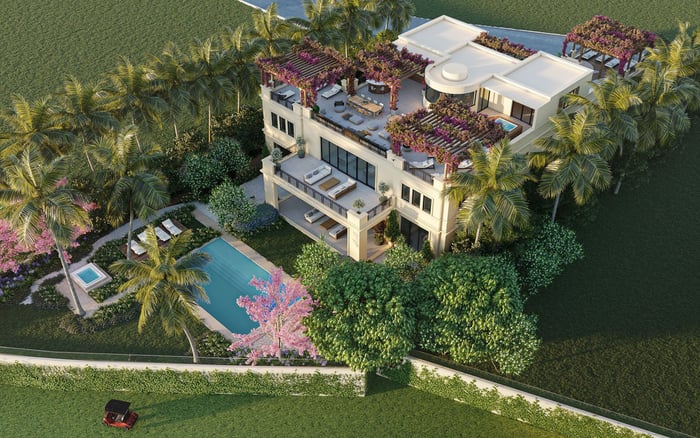
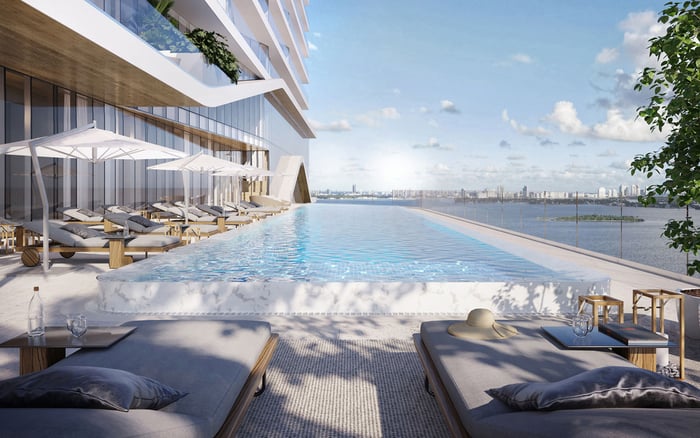
A buyer-focused editorial on how The Cove Residences Edgewater can be evaluated through discreet entertaining, privacy, and service that supports the home without overt hotel-style presence.
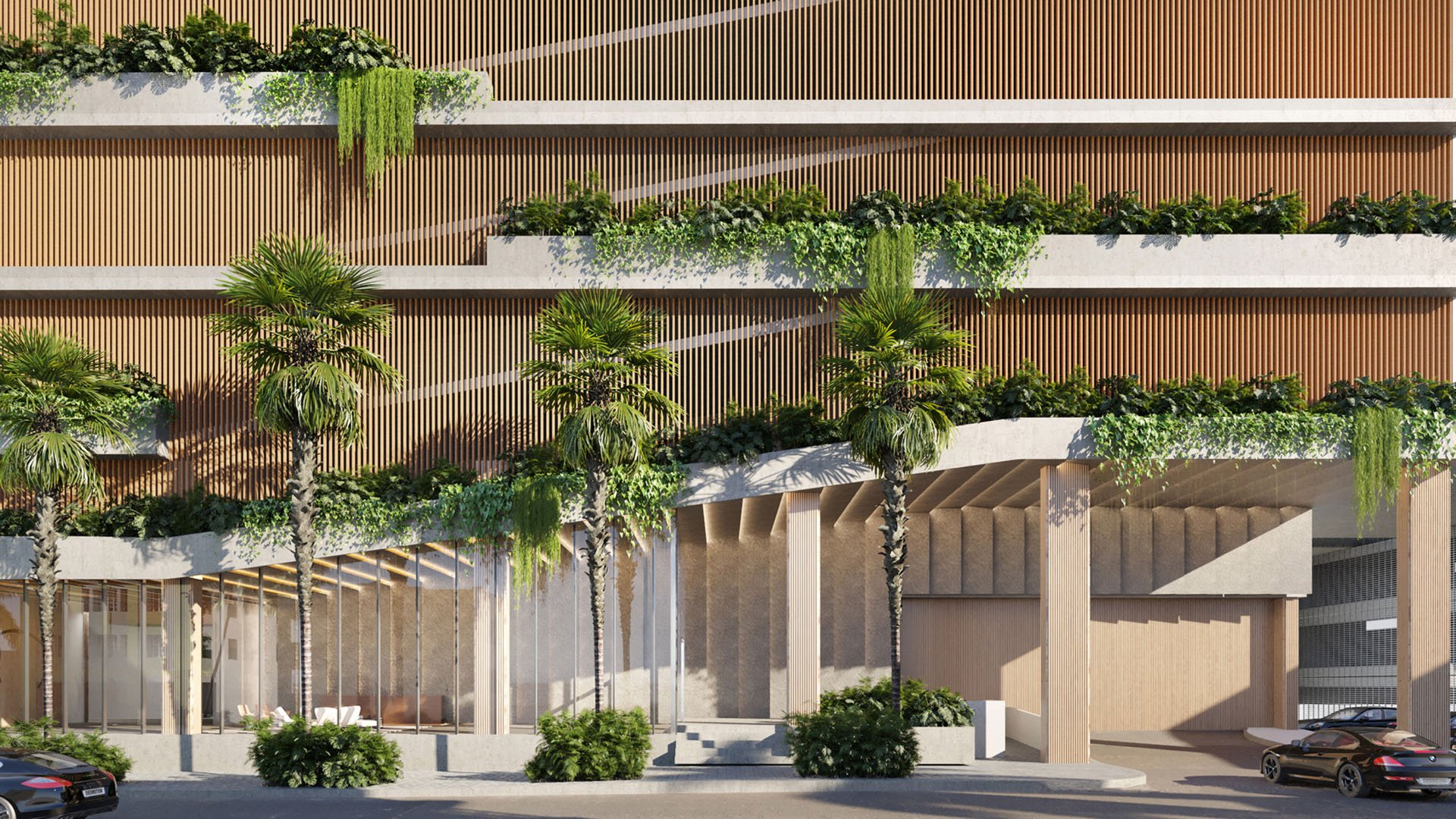
For many luxury buyers, service is no longer measured by how often staff appear. It is measured by how little the home’s private rhythm is interrupted. That distinction sits at the center of the conversation around The Cove Residences Edgewater, especially for owners who entertain seriously but do not want the atmosphere of a hotel lobby following them upstairs.
The most compelling residential service model today is neither absent nor theatrical. It is precise, well timed, and proportionate. It supports guest arrivals, terrace dinners, the movement from cocktails to dining, and the reset afterward without turning the residence into a public-facing hospitality venue. In Edgewater, where buyers often want proximity to the city while preserving a highly private domestic life, that balance matters.
Cove Miami, as buyer shorthand, belongs in this more nuanced discussion: not simply whether a building has amenities, but whether its amenity culture understands restraint. A private residence should still feel private when guests arrive. The goal is not to reproduce hotel energy. The goal is to let an owner host with confidence, then return to quiet.
The best entertaining buildings do not make the owner solve every detail in real time. They create a framework in which arrival, security, guest flow, elevator movement, package handling, valet coordination, and post-event reset feel orderly. None of this needs to be loud. In its most sophisticated form, it should feel almost invisible.
For buyers considering The Cove Residences Edgewater, the practical question is how well the residence can support different levels of hosting. A dinner for six is different from a charity committee gathering, which is different again from a family holiday weekend. Each requires a different degree of staff discretion, storage logic, arrival management, and sound separation. The home should not become stressful simply because it is being used beautifully.
This is where hotel-style intrusion can become a mismatch. Some owners appreciate a more performative service culture, with constant greetings, branded rituals, and a strong sense of managed experience. Others prefer staff who know when to step forward and when to disappear. The latter buyer is not anti-service. They are deeply pro-privacy.
In ultra-premium real estate, privacy is often discussed as if it were a single feature. In practice, it is a sequence of small decisions: how guests enter, how residents avoid unnecessary exposure, how service requests are handled, how staff communicate, how amenity spaces are reserved, and how an owner can host without broadcasting the scale or style of the event.
Edgewater buyers tend to be fluent in this language because the neighborhood attracts people who want an urban address without surrendering domestic control. Nearby luxury projects create useful points of comparison. Aria Reserve Miami speaks to the appeal of vertical residential living in the same broader district, while EDITION Edgewater introduces a different lens on branded residential expectations. The Cove conversation is most interesting when placed between these poles: service-rich, but not necessarily service-forward.
The distinction is subtle but important. Service-rich means the building can assist. Service-forward means the building’s hospitality identity is always present. For certain owners, especially those with established households, private staff, art collections, children, security needs, or a preference for low visibility, the former can be more desirable.
A terrace is more than an outdoor photograph. It is a working room in the South Florida home, and for entertainers it becomes a proving ground. Can furniture be arranged for both conversation and dining? Is there a natural path for serving without crossing every guest? Can the evening move from sunset drinks to a seated meal without turning the owner into an event manager?
When evaluating The Cove Residences Edgewater, buyers should think beyond the initial view moment. Waterview living carries emotional value, but hosting requires choreography. A beautiful outlook is only part of the equation. The deeper question is whether the residence lets people gather comfortably while preserving the owner’s sense of command.
That command often depends on what guests do not see. Back-of-house movement, staging areas, storage for entertaining pieces, elevator access, and the timing of support all shape the experience. A residence can be visually spectacular and still feel operationally thin. Conversely, a quieter plan can become deeply luxurious if it works elegantly under pressure.
Boutique does not have to mean small in ambition. It often means more controlled in tone. For the right buyer, a boutique residential environment can feel more personal, less trafficked, and less exposed than a larger hospitality-driven setting. The critical issue is whether the building’s service culture is calibrated to residents rather than visitors.
This is especially relevant for owners comparing Edgewater with other high-profile Miami corridors. In Brickell, for example, The Residences at 1428 Brickell reflects a different urban luxury proposition, one tied to financial-district energy and skyline living. In Edgewater, the mood can be softer, more residential, and more connected to the water. Neither is inherently better. The right answer depends on how an owner lives.
New-construction decisions should therefore be made with daily patterns in mind. Does the building support morning quiet as well as evening hosting? Does it allow owners to receive people elegantly without requiring a public performance? Does it offer enough assistance for entertaining, but enough restraint for family life? These questions are more revealing than a generic amenity checklist.
The most useful private tour is not only visual. It is operational. A buyer should ask how guests are received, how reservations are managed, how staff communicate with residents, and how the building handles overlapping events. They should ask what happens after a dinner ends, not just what happens when it begins. They should ask whether support can scale up without changing the emotional temperature of the home.
Owners who already employ private staff may want a building team that coordinates smoothly without overstepping. Owners who entertain less frequently may want flexible help that appears only when needed. Seasonal residents may prioritize arrival readiness and lock-and-leave confidence. Full-time residents may care more about consistency and the absence of friction.
Another useful comparison point is Villa Miami, which underscores how Edgewater has become a serious stage for residential projects with strong lifestyle narratives. The Cove Residences Edgewater should be evaluated not only against those narratives, but against the buyer’s own threshold for visibility. Some people want a residence that announces itself. Others want one that performs quietly.
The phrase “without hotel-style intrusion” is not a rejection of service. It is a demand for better service. The highest form of residential support preserves the owner’s authority over the home. It allows for ease without surrendering privacy, hospitality without spectacle, and assistance without a constant sense of being observed.
For The Cove Residences Edgewater, that is the essential buyer lens. The question is not whether entertaining is possible. In luxury real estate, entertaining is assumed. The better question is whether entertaining can happen gracefully, with the residence absorbing the complexity rather than exposing it. When that happens, the home feels larger than its square footage and calmer than its calendar.
Edgewater’s appeal lies partly in that duality. It offers access and retreat, urban life and water-facing composure, social energy and private reset. The right residence in this setting should understand both sides. It should let the owner open the doors beautifully, then close them without residue.
What does entertaining support mean at The Cove Residences Edgewater? It means the residence and building experience should help with hosting logistics while preserving the privacy and rhythm of the home.
Is this the same as hotel-style service? Not necessarily. The more discreet model emphasizes assistance when needed, rather than a constant hospitality presence.
Why is privacy so important for Edgewater buyers? Many Edgewater buyers want city access with a private residential atmosphere, especially when hosting guests or living full time.
How should buyers evaluate service during a tour? Ask how guests arrive, how requests are handled, how events are supported, and how staff communication is managed.
Does a waterview matter for entertaining? A waterview can enhance the emotional setting, but practical hosting depends on layout, flow, and service coordination.
What role does a terrace play in this kind of residence? A terrace can function as an outdoor entertaining room if it supports seating, serving, conversation, and privacy.
Is boutique living better than a larger branded building? It depends on the buyer. Boutique living may appeal to those who value discretion, while larger branded settings may suit those who prefer a more visible service culture.
What should owners with private staff consider? They should focus on coordination, boundaries, access, and whether the building team can support without duplicating or disrupting household staff.
Is new-construction always the best option for discreet entertaining? New-construction can offer modern planning advantages, but buyers still need to study how service, privacy, and guest flow actually work.
Who is The Cove Residences Edgewater best suited for? It is best evaluated by buyers who want refined entertaining support, strong privacy, and a residential mood that avoids excessive hotel-style performance.
When you're ready to tour or underwrite the options, connect with MILLION.
If branded residences are on your mind — as a home or as an allocation — we would be glad to share what we are seeing, privately.
Begin a quiet conversation