Surfside’s luxury conversation is increasingly centered on residences that can support daily life, not merely seasonal escape. Eighty Seven Park brings architectural pedigree, park adjacency and limited density to that equation, while Fendi Château Residences represents the neighborhood’s branded-residential dimension. The distinction matters, but verified owner-occupancy rates remain unavailable.
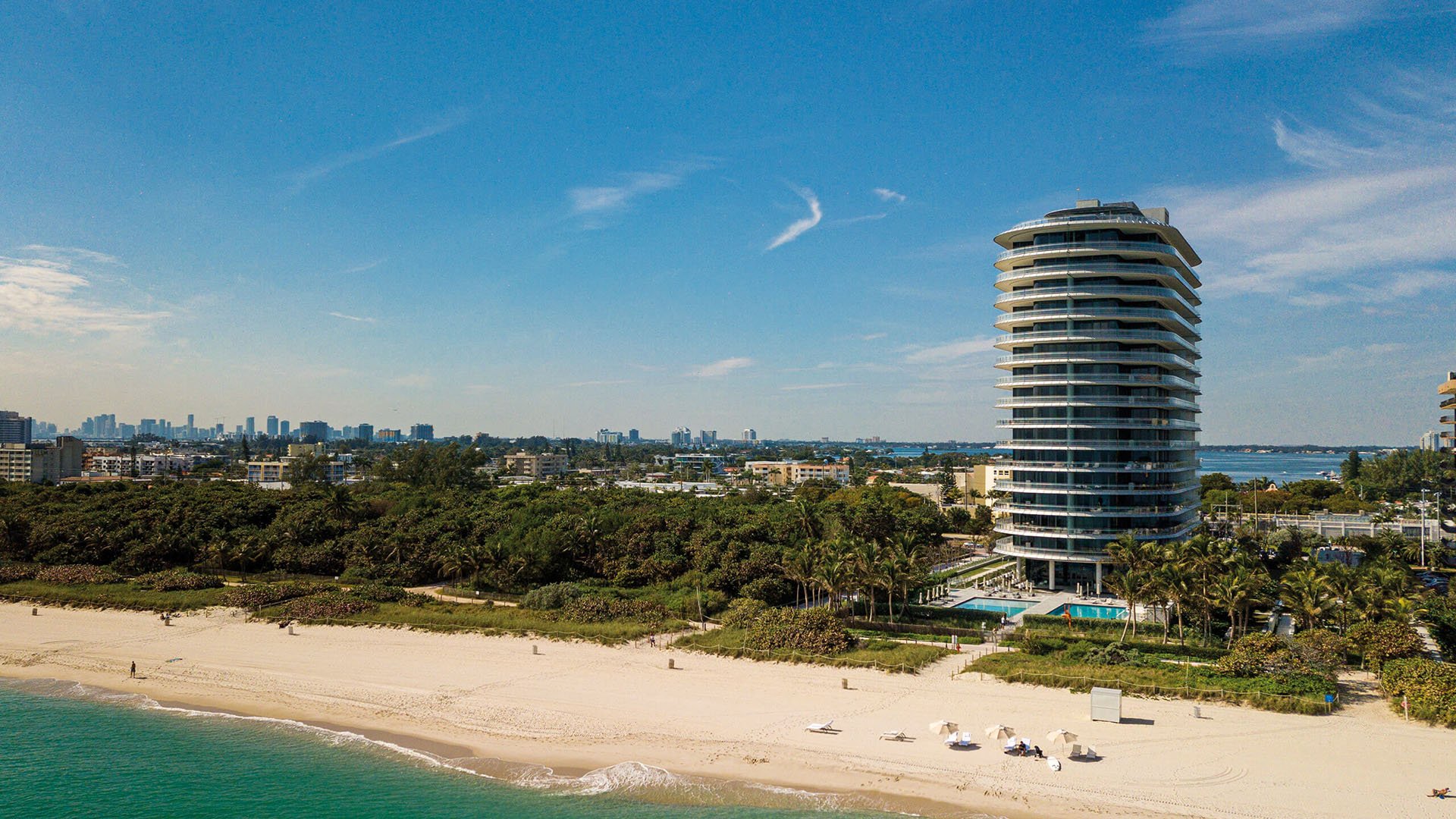
Surfside’s appeal has long rested on an unusually balanced proposition: direct Atlantic access, a quieter residential character and proximity to Bal Harbour and Miami Beach. For buyers evaluating South Florida as a primary base rather than an occasional retreat, that balance places greater emphasis on how a condominium functions throughout an ordinary week.
Privacy, usable interior volume, outdoor access and separation from busier resort districts become more consequential when ownership extends beyond winter stays. Eighty Seven Park Surfside and Fendi Château Residences Surfside express distinct facets of that preference. The former is defined by architecture, landscape and its boundary setting beside a major park. The latter represents Surfside’s Fendi-branded residential dimension.
Neither identity, however, establishes that most owners live in either building year-round. Verified owner-occupancy rates are not publicly available. The more useful question is whether the residence, location and ownership structure support sustained use.
Eighty Seven Park occupies 8701 Collins Avenue on the North Beach and Surfside boundary, beside the 35-acre North Shore Open Space Park. Its address may appear under Miami Beach or Surfside, but both labels refer to the same boundary property.
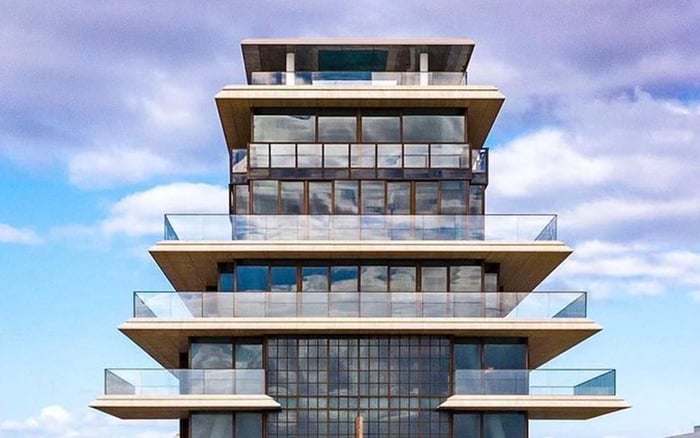
Completed in 2019, the building was designed by Renzo Piano Building Workshop as the firm’s first residential project in the Western Hemisphere. Rena Dumas Architecture Intérieure shaped the interiors, while West 8 handled the landscape. Together, these disciplines create a transition among building, park and Atlantic waterfront rather than treating the tower as an isolated object.
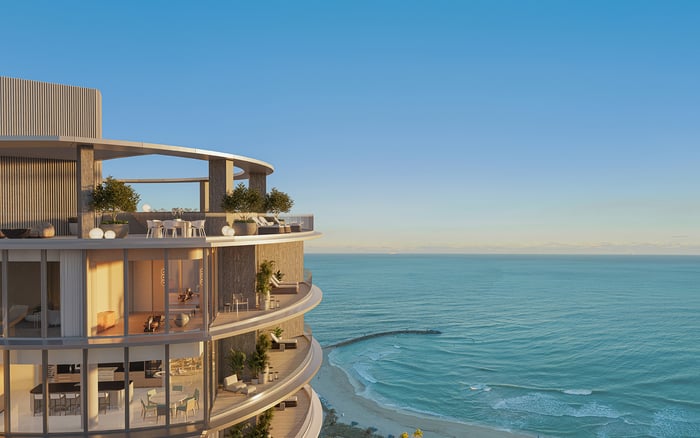
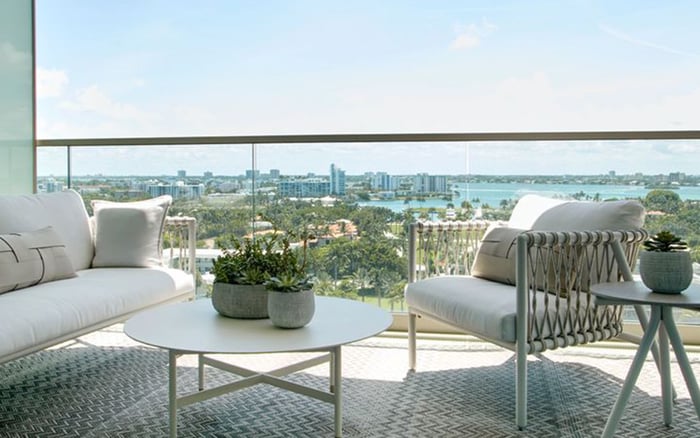
Broad glass walls, deep terraces and ocean-and-park exposures bring the outdoors into daily life. That quality has particular relevance in a primary residence: terraces become usable living zones, views shift throughout the day and the neighboring park extends the sense of open space beyond the property line.
The building comprises 70 residences with one to five bedrooms, although totals vary from 66 to 70. It rises 18 stories and contains 70 homes. Plans begin at approximately 851 square feet, while the largest configurations exceed 4,000 square feet, depending on whether interior and terrace areas are combined.
Limited density, expansive layouts and private-elevator access position Eighty Seven Park for privacy-oriented ownership and extended stays. These are more than prestige markers. For a buyer intending to work, host family or maintain routines in South Florida, circulation and separation can shape the home’s long-term practicality.
Fendi Château introduces a different ownership language, rooted in the cultural recognition of a branded residence. Yet buyers should resist drawing pricing, inventory or occupancy comparisons between the two without equivalent current data. Their shared relevance lies in the broader Surfside market, where scarcity, discretion and residential identity carry substantial weight.
Nearby choices broaden the architectural conversation. Arte Surfside offers another point of reference within Surfside, while The Surf Club Four Seasons Surfside reflects the area’s established connection between globally recognized hospitality and private residential ownership. These links provide context, not evidence that the buildings share identical service models, layouts or resident profiles.
A primary-home evaluation should begin inside the residence. Buyers should assess whether the floor plan separates private and social rooms, whether terraces remain usable across seasons and whether storage supports more than vacation occupancy. When a property is used daily, private arrival may matter as much as a dramatic view.
The wider setting deserves equal attention. At Eighty Seven Park, Atlantic frontage and park adjacency create two distinct outdoor orientations. Proximity to Surfside, Bal Harbour and Miami Beach also connects a relatively quiet home base to surrounding destinations without placing the residence at the center of their activity.
For branded residences, buyers should examine precisely what the brand governs and which obligations accompany ownership. Service standards, operating costs, use restrictions and future capital needs should be reviewed through current governing documents rather than inferred from a name.
As of August 12, 2026, visible Eighty Seven Park inventory included two residences for sale, with asking prices beginning at approximately $1.94 million. A separate snapshot placed asking prices from roughly $2.1 million to $15.5 million, with an average near $3,809 per square foot.
These figures reflect asking prices and publicly visible inventory, not closed-sale evidence. They indicate limited visible supply and a broad range of residence types, but they should not be used to infer value without considering floor plan, elevation, exposure, terrace measurement, condition and transaction history.
The shift toward full-time South Florida living does not make every luxury condominium a primary residence. It changes the criteria sophisticated buyers apply. Design pedigree remains important, but so do privacy, spatial utility, outdoor access and the ability to inhabit a home comfortably beyond a short season.
In Surfside, the strongest ownership decision is personal and document-driven. Eighty Seven Park presents a rare convergence of park, ocean, landscape and Renzo Piano architecture. Fendi Château Residences Surfside offers a branded alternative. Each should be judged by the lived experience it can support, not by unverified assumptions about who else is home.
Where is Eighty Seven Park located? It stands at 8701 Collins Avenue on the North Beach and Surfside boundary, beside North Shore Open Space Park.
Why is the address sometimes labeled Miami Beach? Both Miami Beach and Surfside are used because the property occupies a boundary location, not because there are two buildings.
Who designed Eighty Seven Park? Renzo Piano Building Workshop designed the building, with interiors by Rena Dumas Architecture Intérieure and landscape design by West 8.
When was Eighty Seven Park completed? The building was completed in 2019.
How many residences are at Eighty Seven Park? The building is identified as having 70 residences, although other totals range from 66 to 70.
What residence sizes are available at Eighty Seven Park? Plans begin near 851 square feet, while larger configurations exceed 4,000 square feet, depending on how terrace and interior areas are counted.
Does Eighty Seven Park support full-time living? Its privacy, private-elevator access, varied layouts and outdoor connections can suit extended use, but suitability depends on the individual residence and owner.
Are most owners full-time residents? Verified owner-occupancy rates are unavailable, so no reliable conclusion can be drawn about how many owners live there year-round.
How does Fendi Château compare with Eighty Seven Park? Fendi Château is Surfside’s Fendi-branded residential counterpart, while Eighty Seven Park is distinguished by its Renzo Piano design and park-edge setting. Equivalent current data is insufficient for a rigorous pricing or occupancy comparison.
What should buyers verify before purchasing? Review current inventory, closed-sale context, governing documents, operating costs, use rules, residence measurements and any planned capital obligations.
For a tailored shortlist and next-step guidance, connect with MILLION.
If branded residences are on your mind — as a home or as an allocation — we would be glad to share what we are seeing, privately.
Begin a quiet conversation