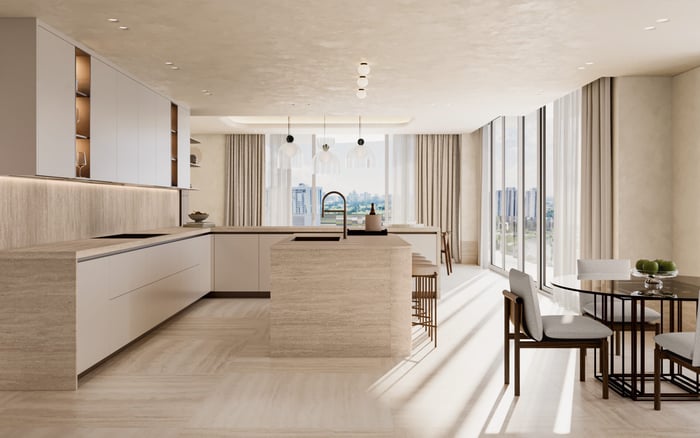
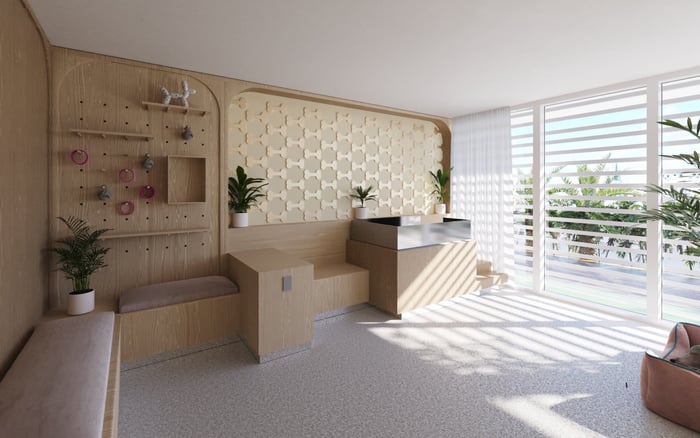
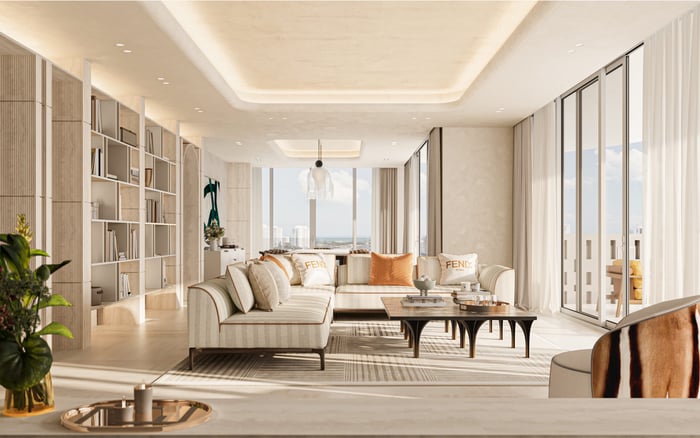
A design-led editorial view of Avenia Aventura for buyers who collect art, commission interiors, and value residences that can support personal curation without visual noise.
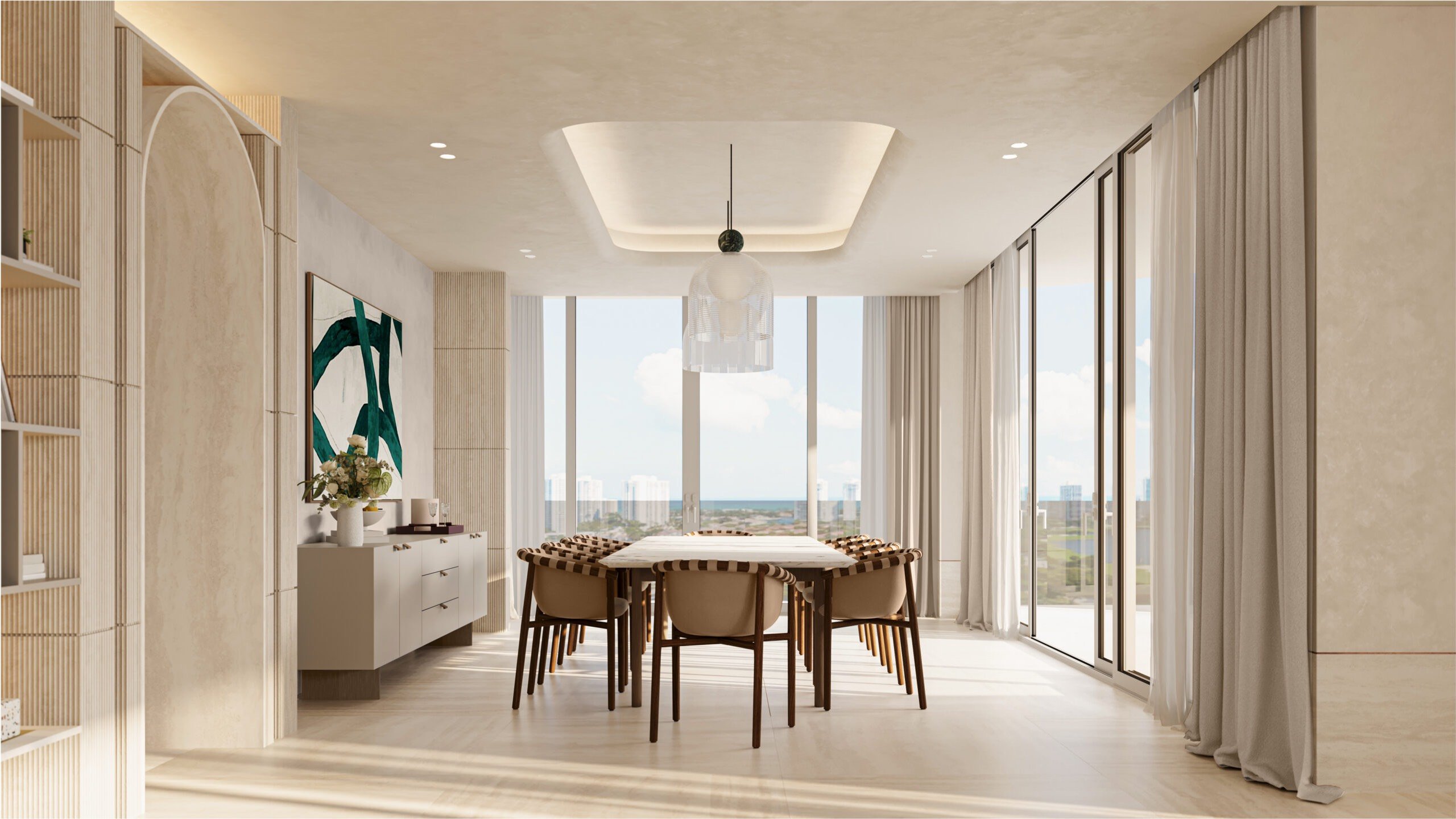
For art collectors and interior designers, a residence is never only a floor plan. It is a sequence of thresholds, sightlines, wall planes, materials, shadows, and moments of pause. That is the more compelling way to consider Avenia Aventura: not as an object to admire from a distance, but as a potential framework for private curation.
The question is not simply whether a home is large enough for a collection. Serious art living depends on proportion, restraint, and control. A salon wall needs breathing room. A sculpture requires circulation around it. A study should support both concentration and display. A dining room can become a visual event, but only when lighting, wall texture, and furniture discipline work in concert.
Avenia Aventura, considered through this lens, may appeal to buyers who do not want interiors to feel over-decorated on arrival. The best residences for collectors often begin quietly. They give the owner, designer, and art advisor room to establish a personal rhythm over time.
Aventura can appeal to buyers who want a polished South Florida setting without necessarily living inside Miami's most theatrical environments. For a collector, that distinction can matter. The home can function as a private retreat rather than a constant stage. The surrounding lifestyle may offer convenience, while the interior can remain deeply personal, almost gallery-like in mood.
This is where design becomes practical. A collector who entertains selectively may value a residence that supports arrival, compression, reveal, and conversation. A designer may look for clean circulation between living, dining, kitchen, and private rooms. A family with art may need durable finishes and flexible display zones, not rooms so precious that daily life becomes constrained.
The word Aventura also matters from a buyer psychology perspective. It suggests access to the broader Miami luxury orbit while preserving a residential cadence. That combination can be attractive to owners who spend part of the year in South Florida, or who want their primary residence to feel composed rather than performative.
Before falling for a view or a finish palette, art-driven buyers should study the fundamentals. The first is wall length. Not every blank wall is useful. Door swings, thermostat locations, window interruptions, lighting controls, and furniture clearances can quickly compromise a display wall. The second is ceiling rhythm. Recessed lighting, soffits, sprinklers, and air-conditioning details all influence where a painting or installation can live.
The third consideration is sunlight. Natural light is seductive, but collections need discipline. Designers should evaluate morning and afternoon exposure, potential glare, and how window treatments might protect sensitive works while preserving the room's atmosphere. The most successful art homes in South Florida often balance brightness with softness.
The fourth issue is storage. Crates, rotation pieces, seasonal accessories, archives, plinths, and installation supplies require more thought than many buyers expect. Even a refined residence can become difficult if every closet has already been assigned to fashion, luggage, linens, and technology.
Outdoor space can be one of the pleasures of South Florida living, but collectors should assess it with the same rigor they bring to interiors. A Balcony may be ideal for morning coffee and planted texture, yet it can also affect how furniture is oriented inside. A Terrace can extend the entertaining sequence, but it should be considered in relation to wind, sun, seating depth, and the view corridor from the principal rooms.
Waterview appeal is equally nuanced. Water can create calm and depth, giving interiors a natural focal point. It can also compete with art if every room is oriented only outward. Designers often solve this by creating layered focal points: the view in one direction, a major work in another, and a conversational furniture plan that does not force every guest to face the glass.
For Avenia Aventura buyers, the point is not to assume one answer. It is to test how exterior moments and interior curation work together. A home that lives beautifully for a collector is rarely accidental.
Boutique restraint is often more useful than maximal decoration. A designer might begin by identifying one or two anchor moments, perhaps a significant painting in the main living area, a sculptural table in the dining space, or a quieter work in the primary suite. From there, the palette can become supportive rather than competitive.
Materials should be chosen for tactility and longevity. Pale stone, warm wood, plaster-like wall finishes, and soft metal details can all work in an art-forward interior if they do not overwhelm the collection. The goal is not neutrality for its own sake. It is calibrated silence, the kind that makes a room feel intentional.
Lighting should be planned early. Collectors should ask how ambient, task, and accent lighting can be layered without visual clutter. Designers may want flexibility for future acquisitions, which means avoiding overly fixed solutions. A residence that can evolve is often more valuable to a collector than one styled perfectly for a single installation.
Avenia Aventura sits within a South Florida market where design literacy has become part of the luxury conversation. Buyers are increasingly comparing not only amenities and location, but also how a building will receive furniture, art, and personal rituals. A client considering Aventura may also study the design positioning of Casa Bella by B&B Italia Downtown Miami, the coastal restraint associated with Arte Surfside, or the Miami Beach sensibility of The Perigon Miami Beach.
Those comparisons are less about choosing one aesthetic over another and more about clarifying priorities. Does the buyer want a quiet residential base, an overtly design-branded environment, or an address with a more resort-like cadence? Does the collection require wall space, ceiling height, privacy, or strong service access? The most sophisticated buyers answer those questions before they respond emotionally to finishes.
For an art collector or designer, the smartest purchase process is both highly visual and highly technical. Bring scaled furniture plans. Mark potential art locations. Ask how lighting can be adapted. Consider how deliveries, installations, and future rotations would occur. Think about climate control, insurance documentation, and whether a room can shift from family use to formal entertaining without losing coherence.
This is not about making a residence feel like a museum. The best private collections live in rooms with books, flowers, linen, music, dogs, dinners, and quiet mornings. The art has authority, but the home still breathes.
That balance is why Avenia Aventura may be worth studying for buyers whose standards are shaped by design rather than spectacle. If the residence can support a personal point of view, it becomes more than a purchase. It becomes a setting for taste, memory, and the long life of a collection.
Is Avenia Aventura suitable for art collectors? It may be, depending on the residence layout, light exposure, wall availability, and installation needs of the specific collection.
What should collectors evaluate first inside a residence? Start with wall runs, ceiling conditions, lighting flexibility, storage, and how guests move through the main rooms.
Does natural light help or hurt an art-filled home? Natural light can be beautiful, but collectors should manage glare and exposure with thoughtful window treatments and lighting plans.
Why does Aventura appeal to design-focused buyers? Aventura offers a residential South Florida setting that can feel composed, convenient, and less theatrical than some urban cores.
Should a designer be involved before purchase? Yes, a designer can test furniture layouts, art placement, lighting assumptions, and practical constraints before a buyer commits.
Can outdoor space affect interior design? Yes, outdoor areas influence furniture orientation, focal points, material choices, and how entertaining spaces connect.
What makes a home feel collector-ready? Flexible walls, controlled light, clean circulation, proper storage, and a calm material palette are usually more important than decoration.
Is a Waterview always best for art placement? Not always. A view can enrich a room, but it should not overpower the art or limit the interior composition.
How should buyers compare Avenia Aventura with other projects? Compare lifestyle, privacy, floor plan adaptability, design tone, and how each residence would support your collection over time.
What is the biggest mistake collectors make when buying? They sometimes focus on finishes before testing whether the residence can actually support installation, storage, and future acquisitions.
When you're ready to tour or underwrite the options, connect with MILLION.
If branded residences are on your mind — as a home or as an allocation — we would be glad to share what we are seeing, privately.
Begin a quiet conversation