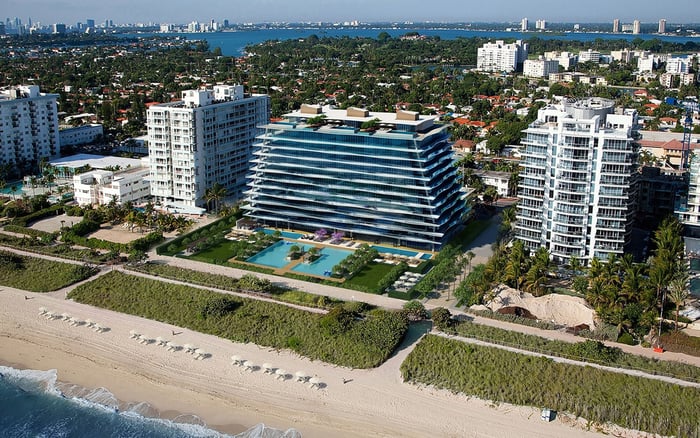
A discreet comparison of three Surfside oceanfront residences, focused on architecture, ownership fit, governance, usage rules, carrying costs, and due diligence for part-year buyers.

For a seasonal buyer, the essential question is not which Surfside residence makes the loudest impression. It is which property can best support a recurring pattern of arrival, private enjoyment, absence, and return-with the least friction.
That distinction matters when comparing Arte Surfside, Ocean House Surfside, and The Surf Club Four Seasons Surfside. Each belongs in an ultra-premium oceanfront conversation, yet each should be assessed as a home rather than reduced to a speculative asset. Architectural character, ownership structure, association governance, usage rules, recurring costs, amenities, and property-specific risks all belong in the decision.
The right choice in 2026 will therefore depend on fit. A globally mobile owner may prioritize effortless continuity. Another buyer may prefer a more intimate residential identity. A third may focus on how governance and operating obligations align with long periods away from Florida.
Arte Surfside should be approached as a seasonal residence whose architectural identity and ownership framework merit equal attention. Design may establish the emotional connection, but the practical experience will be shaped by the association’s rules, financial position, and policies governing occupancy and leasing.
A buyer should test how the residence will function during occupied and unoccupied months alike. Review who can access the property, which permissions apply to guests or representatives, and whether any rental limitations conflict with future plans. Amenities should be evaluated for their actual seasonal relevance rather than as an abstract inventory of features.
The central question is personal: Does Arte’s character correspond to how the buyer wants a South Florida home to feel, and can its current governing framework support that use without compromise?
Ocean House Surfside belongs in the conversation for buyers seeking an ultra-luxury condominium for part-year personal use. Here, architectural character should be considered alongside the full recurring responsibilities of ownership.
Seasonal buyers should examine association rules, use limitations, carrying costs, amenities, and risks as one connected picture. A beautifully suited residence can still be a poor operational match if its policies complicate family access, extended absences, or the owner’s preferred rental strategy.
The comparison should extend beyond the individual residence. Buyers need to understand how decisions are made, what the association expects of owners, and whether the property’s financial obligations remain comfortable even when the home is occupied for only part of the year.
The Surf Club Four Seasons Surfside is particularly relevant to globally mobile and high-net-worth buyers considering a seasonal home. Its appeal should nonetheless be tested through the same disciplined framework applied to the other properties: architecture, ownership structure, governance, occupancy rules, rental provisions, carrying costs, amenities, and risk.
For an owner moving among several residences, consistency can be as valuable as visual distinction. Due diligence should determine whether the property’s operating model aligns with the buyer’s expectations through arrival, residence, departure, and absence. Brand association or service positioning should never replace a document-level review of the buyer’s rights and obligations.
Second-home ownership works best when the residence supports a predictable annual rhythm. Before selecting among the three properties, buyers should define how many months they expect to occupy the home, who else may use it, whether leasing is contemplated, and how the property will be overseen while vacant.
Those answers should then be tested against current condominium declarations, association rules, budgets, reserve information, insurance terms, assessments, and rental policies. Rental minimums and occupancy provisions should be confirmed directly rather than inferred from prior practice or marketing language.
Carrying costs also require a broader view than the regular association payment. The buyer’s advisers should examine the complete ownership burden, possible assessments, insurance exposure, residence-level expenses, and the cost of maintaining the home during extended absences. No property should be characterized as tax-efficient without advice tailored to the buyer’s domicile, ownership entity, estate plan, and personal circumstances.
Amenities merit similar discipline. The most valuable offering is not necessarily the longest amenity list, but the one the owner will genuinely use during the season. Access policies, guest provisions, operating rules, and any associated charges can matter as much as the physical spaces themselves.
Begin with lifestyle fit, then move to documents and economics. Compare the architectural experience of each property, clarify its legal and practical ownership structure, and ask counsel to identify restrictions that could affect family use, guests, staff, leasing, or periods of vacancy.
Next, review association governance and financial materials with qualified advisers. Understand decision-making authority, reserves, insurance, existing or possible assessments, and the responsibilities attached to the residence. Finally, model annual costs under realistic personal-use assumptions without relying on rental income or generalized tax claims.
This process does not diminish the romance of a Surfside home. It protects it. The objective is to arrive each season knowing that the residence, its rules, and its financial commitments remain aligned with the life it was purchased to serve.
Which Surfside property is best for seasonal ownership? There is no universal winner. The best fit depends on architectural preference, intended use, service expectations, governance, restrictions, and total recurring costs.
Should a seasonal buyer prioritize design or ownership rules? Both matter, but the rules can determine whether the residence functions as intended. Architectural appeal should be confirmed alongside legal and operational compatibility.
Can owners rent their residence when they are away? Rental rights and minimum terms may vary by property and can change. Buyers should verify the current declaration, rules, and approval procedures before purchasing.
Are association fees available for a reliable 2026 comparison? Current fees, budgets, assessments, and included services should be obtained directly during due diligence. Comparisons should apply the same cost categories to every property.
What governance documents deserve close review? Review the declaration, bylaws, rules, budgets, reserve information, meeting materials, insurance terms, and assessment history with qualified advisers.
How should amenities influence the decision? Focus on amenities the household will actually use. Confirm access, guest policies, operating rules, availability, and any separate charges.
Is seasonal ownership automatically tax-efficient? No. Tax consequences depend on the buyer’s circumstances, domicile, ownership structure, and use, requiring individualized legal and tax advice.
What should buyers examine regarding insurance and reserves? Buyers should review current insurance terms, reserve information, financial statements, and potential assessment exposure with appropriate professional guidance.
Is rental income essential to the purchase case? A seasonal home should first work under realistic personal-use and carrying-cost assumptions. Any rental strategy must comply with current property rules.
What is the final step before making an offer? Align the preferred residence with a written use plan, then have legal, financial, insurance, and property specialists verify the relevant documents and costs.
For a discreet conversation and a curated building-by-building shortlist, connect with MILLION.
If branded residences are on your mind — as a home or as an allocation — we would be glad to share what we are seeing, privately.
Begin a quiet conversation