A buyer-focused look at Aria Reserve Miami, examining why its private residential condominium positioning, Biscayne Bay frontage, terraces, and resident-oriented amenity concept matter for owners who value control and ease over transient-use flexibility.
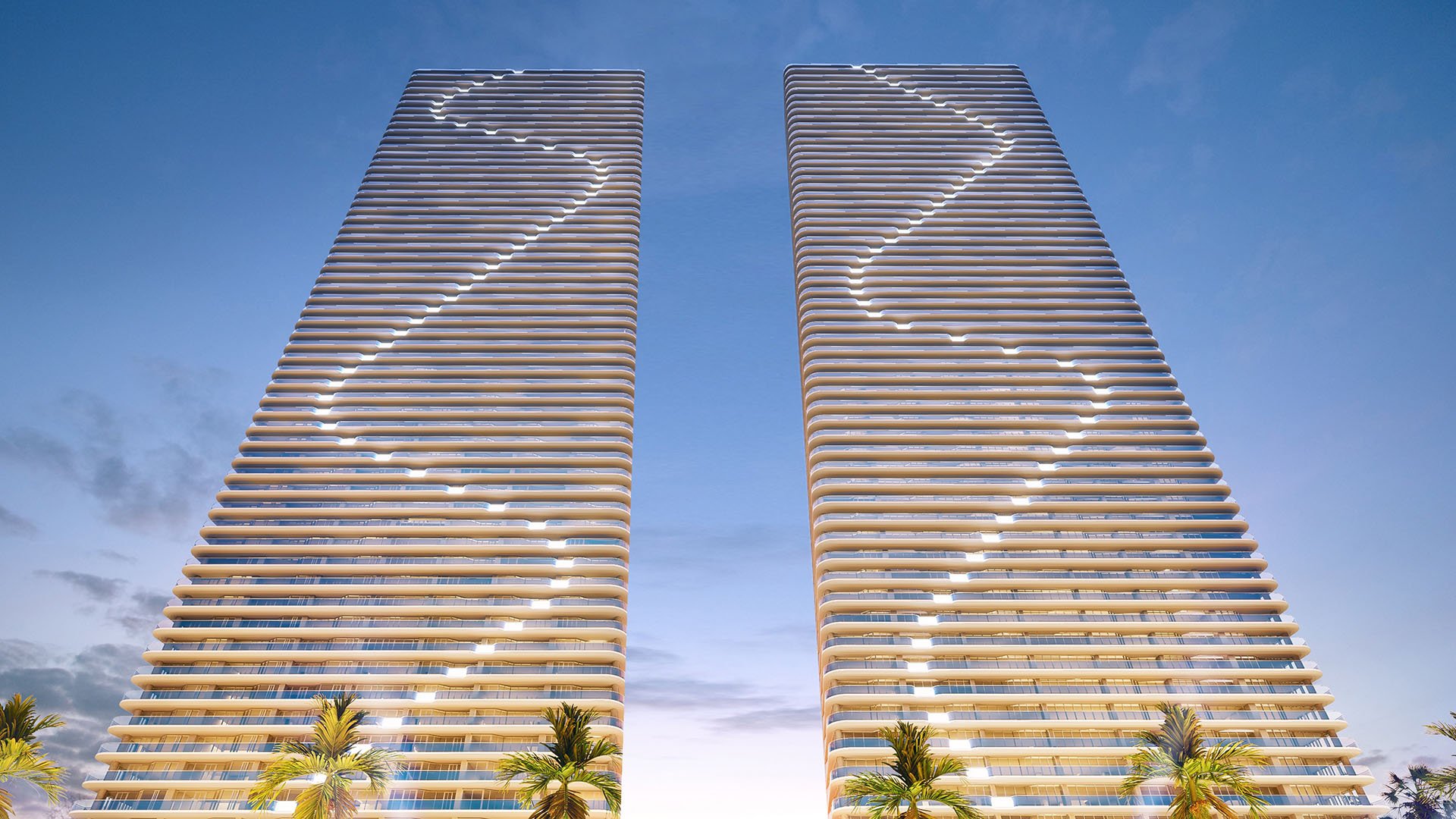
For a certain Miami buyer, the highest luxury is not spectacle. It is control: control over the tone of the building, the rhythm of daily life, the character of the amenities, and the degree to which ownership feels residential rather than transient. That is the ownership case behind Aria Reserve Miami, a twin-tower luxury condominium project in Edgewater with frontage on Biscayne Bay.
The distinction matters because South Florida’s luxury market now offers many versions of convenience. Some are hospitality-driven, some are branded, some are structured around flexible use, and some are designed for owners who want a refined private residence that performs smoothly in the background. Aria Reserve Miami sits in the latter category: a private residential condominium rather than a hotel-residential hybrid or condo-hotel.
For buyers prioritizing ease, that framing is not a minor technicality. It influences how a building is used, how owners think about neighbors, and how the property’s common spaces are experienced over time. The appeal is less about short-stay optionality and more about predictable residential patterns.
Edgewater has become one of Miami’s active waterfront high-rise corridors, and Biscayne Bay frontage remains central to its appeal. The neighborhood gives buyers proximity to the urban core while preserving a water-facing residential identity. Within that setting, the practical ownership question is direct: does the building feel like a home base, or does it operate like a rotating hospitality environment?
Aria Reserve’s positioning is designed for the buyer who prefers the former. The project’s bayfront context supports a polished lock-and-leave narrative, but without relying on a hotel-style operating model. That nuance matters for second-home owners, frequent travelers, and full-time residents who want convenience without the sense that the building’s priorities are divided among owners, guests, and an outside hospitality operator.
Edgewater buyers often compare different expressions of new luxury in the same corridor. A buyer looking at EDITION Edgewater may be drawn to one kind of lifestyle language, while another considering Villa Miami may be evaluating design identity and neighborhood presence. Aria Reserve enters that conversation with a more specific message: private condominium ownership with emphasis on stability and daily usability.
In luxury real estate, governance and operating strategy can be as consequential as architecture. A building that must balance residents, hotel guests, and hospitality operations may deliver compelling services, but it also introduces more stakeholder groups into the ownership experience. Aria Reserve’s private residential condominium framing gives owners a clearer environment, at least in concept, because the building is presented around residents rather than transient-use activity.
That does not mean a buyer should skip due diligence. Rental policies, association rules, condominium documents, delivery details, and operating procedures should always be reviewed carefully before purchase. But from a strategic perspective, the ownership pitch is clear: Aria Reserve is not presented as an income-first short-stay product. It is positioned for buyers who want the building to behave like a residential condominium.
That distinction can be especially valuable for owners who care about arrival sequences, elevator patterns, amenity availability, lobby tone, and the general predictability of who is using the property. These are not always glamorous details, but they shape daily comfort. In the upper tier of the market, the quiet absence of friction is often the real amenity.
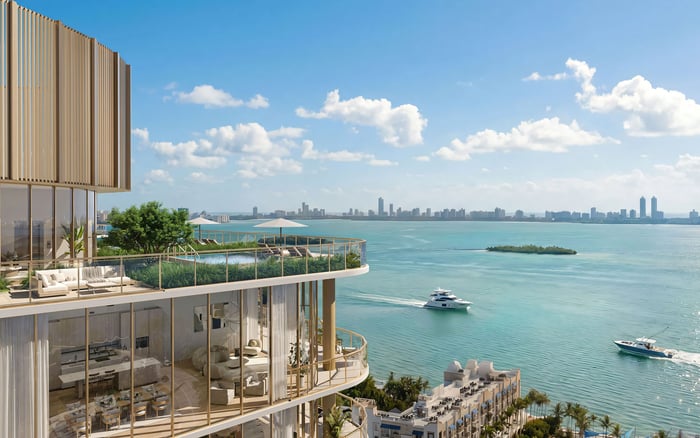
Aria Reserve is designed with deep private terraces, a feature that reinforces its residential character. In Miami, outdoor space is not merely decorative. A well-scaled terrace can function as a second living room, a private viewing platform, and a daily connection to Biscayne Bay.
This is where the project’s physical design supports its ownership thesis. Deep terraces make the waterfront experience more personal, allowing owners to enjoy the bay without relying solely on shared amenity decks or public-facing social spaces. For control-focused buyers, that privacy has meaningful value. It makes the home feel complete even when the building is active.
The same logic is visible across Edgewater, where buyers often distinguish between buildings based on how private the water experience feels. The Cove Residences Edgewater offers another point of comparison within the neighborhood, but Aria Reserve’s strongest argument remains its alignment between bayfront living, private outdoor space, and a residentially oriented building concept.
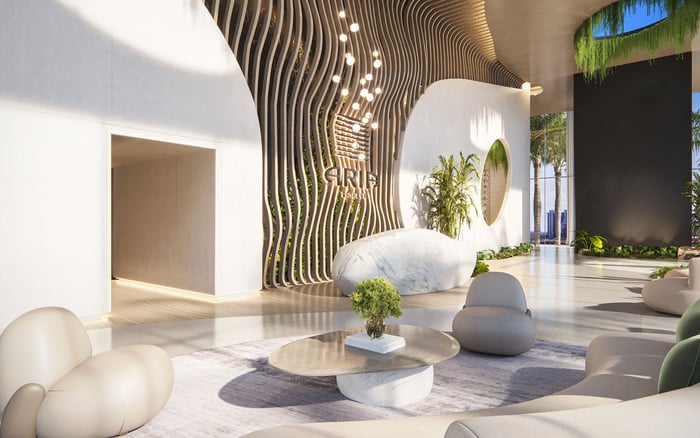
Amenities are often marketed as the centerpiece of luxury condominium life. Yet the more important question is who they are designed to serve. Aria Reserve’s amenity concept is resident-focused rather than guest- or hotel-operator-focused. That emphasis supports the project’s broader case for ease.
For an owner, the difference is practical. Resident-oriented amenities are typically evaluated through the lens of repeat use: morning fitness routines, family visits, quiet pool time, remote work, wellness, and everyday social rhythms. Hospitality-oriented spaces may be more animated, but they can also shift the building’s energy toward performance and turnover.
A control-focused owner may prefer the quieter proposition. The building does not need to be sleepy. It simply needs to be legible. Owners want to understand how the property will feel on an ordinary Tuesday as much as during a holiday weekend. Aria Reserve’s positioning suggests that the ordinary day is central to the ownership experience.
Lock-and-leave ownership is often misunderstood as a purely service-led idea. In reality, it is also about trust. An owner wants to leave Miami knowing the residence sits within a building whose use patterns, management priorities, and resident culture remain consistent.
Aria Reserve supports that narrative by emphasizing convenience without adopting a hotel-style operating model. This may appeal to buyers who want the freedom to travel but do not want their building to feel like lodging inventory. It may also appeal to families who use Miami seasonally and want a home that feels familiar every time they return.
The lesson extends beyond one address. Legal structure, design, amenities, and operating strategy all shape the lived experience of ownership. The best luxury purchase is not only the most beautiful residence. It is the residence whose rules, rhythms, and priorities match the way the owner actually intends to live.
The first step is to separate emotional appeal from ownership mechanics. Aria Reserve’s Biscayne Bay setting, twin-tower profile, and private terraces may create the first impression, but the deeper decision rests on how the condominium will operate. Buyers should understand the residential framework, the anticipated amenity culture, and the rules that govern use.
The second step is to test the project against personal priorities. A buyer seeking short-term rental flexibility may evaluate the opportunity differently from someone who wants stable full-time or seasonal use. Aria Reserve’s ownership case is strongest for the latter: buyers who value predictable residential patterns more than transient-use income potential.
The third step is comparison. Miami’s luxury inventory includes many excellent propositions, from branded residences to boutique buildings to private waterfront towers. Aria Reserve should be evaluated not as the loudest option, but as a case study in controlled ownership. For the right buyer, that restraint may be precisely the point.
What is the central ownership case for Aria Reserve Miami? Aria Reserve Miami is positioned around control, building stability, and ease of daily residential use.
Is Aria Reserve Miami framed as a condo-hotel? No. It is framed as a private residential condominium rather than a hotel-residential hybrid or condo-hotel.
Where is Aria Reserve Miami located? It is in Edgewater, with frontage on Biscayne Bay in one of Miami’s active waterfront high-rise corridors.
Why does the private condominium structure matter? It can create a clearer stakeholder environment than buildings balancing residents, hotel guests, and hospitality operators.
Who is the best-fit buyer for Aria Reserve Miami? The strongest fit is a buyer who values predictable residential use patterns over short-stay flexibility.
Does Aria Reserve support a lock-and-leave lifestyle? Yes. Its positioning supports convenience for owners without relying on a hotel-style operating model.
What role do the terraces play in the ownership experience? The deep private terraces support a more personal outdoor waterfront-living experience.
Are the amenities resident-focused? Yes. The amenity concept is resident-focused rather than guest- or hotel-operator-focused.
Should buyers review condominium documents before purchasing? Yes. Buyers should review condominium documents, rental policies, association rules, and delivery details carefully.
How should Aria Reserve be compared with other Miami luxury projects? It should be compared through the lens of legal structure, design, amenities, and operating strategy.
To compare the best-fit options with clarity, connect with MILLION.
If branded residences are on your mind — as a home or as an allocation — we would be glad to share what we are seeing, privately.
Begin a quiet conversation