For Vancouver buyers moving into Edgewater, Florida condominium insurance requires a fresh framework. The essential work is to separate the association’s building protection from the owner’s responsibility for interiors, assessments, and personal liability.

A move from Vancouver to Edgewater can appear seamless on the surface: vertical living, water views, shared amenities, and a professionally managed building. The insurance architecture beneath that lifestyle, however, demands a deliberate reset. In British Columbia, loss-assessment protection often centers on a strata deductible when a claim originates in an owner’s residence. In Florida, planning must also account for common expenses, uninsured building losses, and potentially significant hurricane-related deductibles.
That distinction matters whether the purchase is a primary home, a second home, or part of a broader investment strategy. In Edgewater, the considered approach is not simply to obtain an HO-6 quote. It is to coordinate the condominium association’s coverage, the residence’s reconstruction exposure, loss-assessment protection, personal liability, and any umbrella policy as one integrated program.
The purchase price measures the asset; reconstruction cost measures the insurance need.
Florida condominium associations must maintain adequate property insurance based on full replacement cost, supported by an independent appraisal at least once every 36 months. Buyers should request the latest appraisal, the complete master policy, all hurricane and other deductibles, claims history, and records of recent or pending special assessments.
The appraisal date is only the starting point. A careful review should determine what property was valued, whether the policy limit reflects that valuation, how percentage deductibles operate, and which losses or components remain uninsured. Percentage deductibles, insufficient valuations, and uncovered property can create a post-loss funding gap that ultimately reaches owners through a special assessment.
This review belongs in the same diligence file as contracts and building financials. Buyers comparing Aria Reserve Miami with EDITION Edgewater should examine each association’s actual documents rather than assume that new-construction status, amenities, or price defines the scope of insurance.
The association’s master policy generally covers the building, common elements, and components initially installed under the condominium’s original plans and specifications. It generally excludes an owner’s floor, wall, and ceiling coverings; electrical fixtures; appliances; water heaters; built-in cabinets and countertops; window treatments; and personal property.
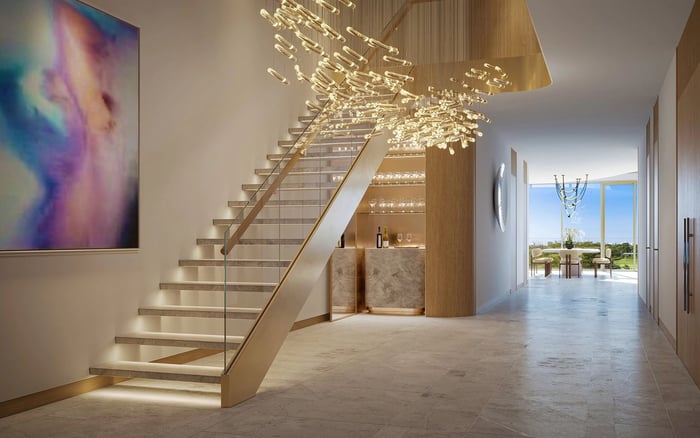
For a highly finished residence, those exclusions can represent a substantial private obligation. Stone flooring, bespoke millwork, upgraded lighting, cabinetry, counters, integrated appliances, and other owner-insured interiors should be measured by the cost to reconstruct them after a covered loss. The residence’s purchase price, market appreciation, and view premium do not answer that question.
An HO-6 policy should therefore address personal property, additions and alterations, interior finishes and fixtures, personal liability, loss of use, and loss-assessment exposure. Unit owners are responsible for reconstructing the portions they must insure. If the association performs work on those portions, the cost may be charged back through an assessment.
For waterfront residences such as Lilli Miami Edgewater, buyers can ask a Florida-licensed insurance professional to develop the improvements limit from a room-by-room reconstruction schedule. The objective is precision, not a generic allowance tied to the acquisition price.
Under Florida’s default rule, property-insurance deductibles and losses above the association policy’s limits are common expenses shared by unit owners. An association may assess owners for shared deductibles and uninsured losses even when damage originates in a single residence, although it may have recourse against a negligent owner.
Florida residential condominium unit policies must include at least $2,000 of property loss-assessment coverage for qualifying assessments, with a deductible of no more than $250. That statutory floor should not be mistaken for a recommended limit for a luxury residence. Higher limits are available, subject to carrier terms.
Coverage is not automatic for every assessment. It is limited by the policy and generally responds only when the assessment arises from a type of loss covered by the owner’s policy. Buyers should also distinguish the overall loss-assessment limit from any smaller sublimit that applies specifically to an assessment of the master-policy deductible.
A useful stress test begins with the association’s largest relevant deductible and considers how it would be allocated under the governing documents. The buyer can then compare that potential share with the HO-6 limit, deductible-assessment sublimit, exclusions, and personal liquidity. This is especially relevant when considering a residence at The Cove Residences Edgewater or any other community where a polished sales presentation cannot substitute for policy language.
Loss-assessment insurance and umbrella liability address different risks. Loss assessment concerns an owner’s covered share of certain association assessments. An umbrella adds excess protection for third-party liability after the applicable underlying HO-6 or auto limits are exhausted.
Retail Florida HO-6 policies commonly offer approximately $300,000 in personal-liability coverage, but the actual limit and exclusions must be confirmed in the quote. Many umbrella insurers require at least $300,000 of underlying homeowners or condominium liability. Umbrella protection of $1 million or more is commonly recommended for Florida condo owners exposed to guest injuries or damage spreading from their residence, but the appropriate limit remains personal.
Affluent households should examine more than the headline umbrella amount. Relevant questions include the treatment of domestic employees, rental activity, watercraft, business pursuits, and liabilities connected with Canadian homes, vehicles, or other retained assets. Every required underlying policy must remain aligned, because an umbrella does not replace the first layer of coverage.
Owners can face individual liability for uninsured repair or replacement costs arising from intentional conduct, negligence, or condominium-rule violations, while insurer subrogation rights may be preserved. The association’s required fidelity protection for people controlling or disbursing its funds does not replace an owner’s property or liability insurance.
A disciplined buyer can organize the process into three files. The association file contains the replacement-cost appraisal, master policy, deductibles, claims record, governing documents, and assessment history. The residence file contains a reconstruction estimate for owner-insured finishes, personal-property values, loss-of-use needs, and the HO-6 proposal. The liability file aligns HO-6, auto, umbrella, and any exposures that continue across the border.
This is the practical core of a buyer’s-guide approach: documents first, limits second, price last. Before committing to Villa Miami or another Edgewater address, have Florida-licensed insurance and legal professionals review current policy forms, association obligations, deductibles, and exclusions. Carrier appetite, statutory requirements, and terms can change, so the program should also be revisited after renovations, a change in occupancy, or a material acquisition.
For a private conversation about selecting an Edgewater residence with disciplined due diligence, connect with MILLION.
If branded residences are on your mind — as a home or as an allocation — we would be glad to share what we are seeing, privately.
Begin a quiet conversationIt generally covers the building, common elements, and components initially installed under the condominium’s original plans and specifications.
Common exclusions include floor, wall, and ceiling coverings, fixtures, appliances, water heaters, built-in cabinets, countertops, window treatments, and personal property.
Base it on the actual cost to reconstruct owner-insured flooring, millwork, cabinetry, fixtures, appliances, and other interiors, not the purchase price.
Florida requires an independent appraisal at least once every 36 months to support full replacement-cost insurance.
Residential condominium unit policies must include at least $2,000 for qualifying property loss assessments, with a deductible no greater than $250.
Not necessarily. Buyers can seek higher limits and should compare them with potential assessments and any deductible-assessment sublimit.
No. It is subject to policy limits and generally applies only when the assessment results from a type of loss covered by the owner’s policy.
Yes. Shared deductibles and uninsured losses can be common expenses, although the association may have recourse against a negligent owner.
Umbrella insurance adds excess third-party liability above qualifying underlying policies, while loss-assessment coverage addresses certain covered association assessments.
Request the replacement-cost appraisal, full master policy, deductibles, claims history, governing documents, and records of recent or pending assessments.