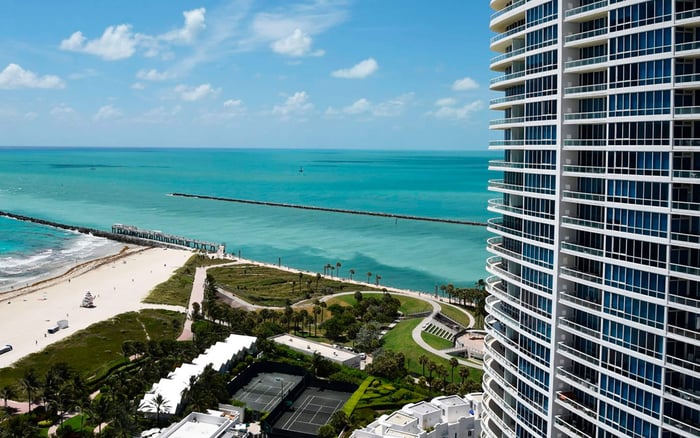
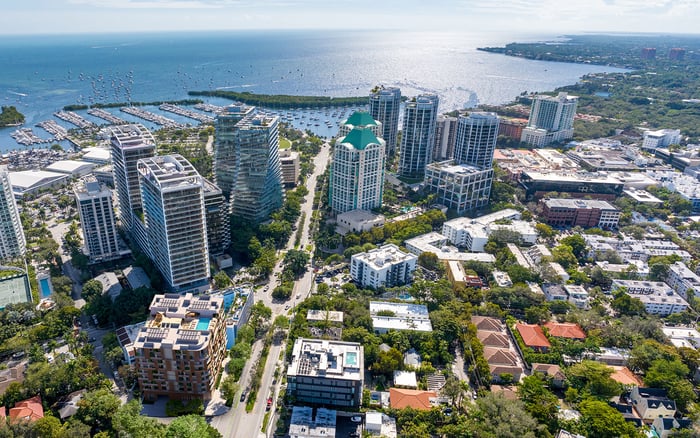
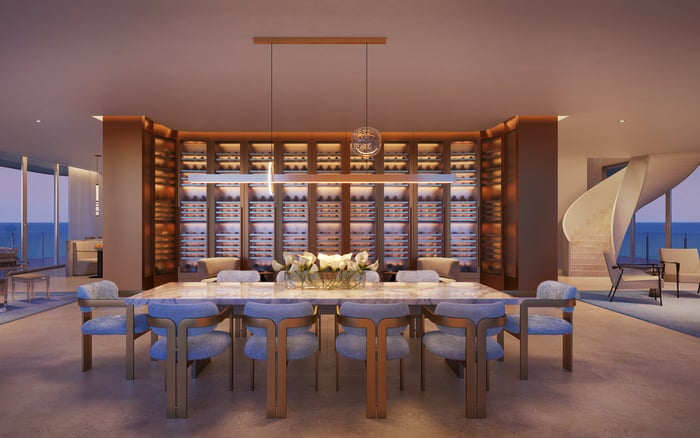
A privacy-focused framework for comparing three South Beach residences, from curb approach and vehicle handling to lobby circulation, elevator access, and the front door.
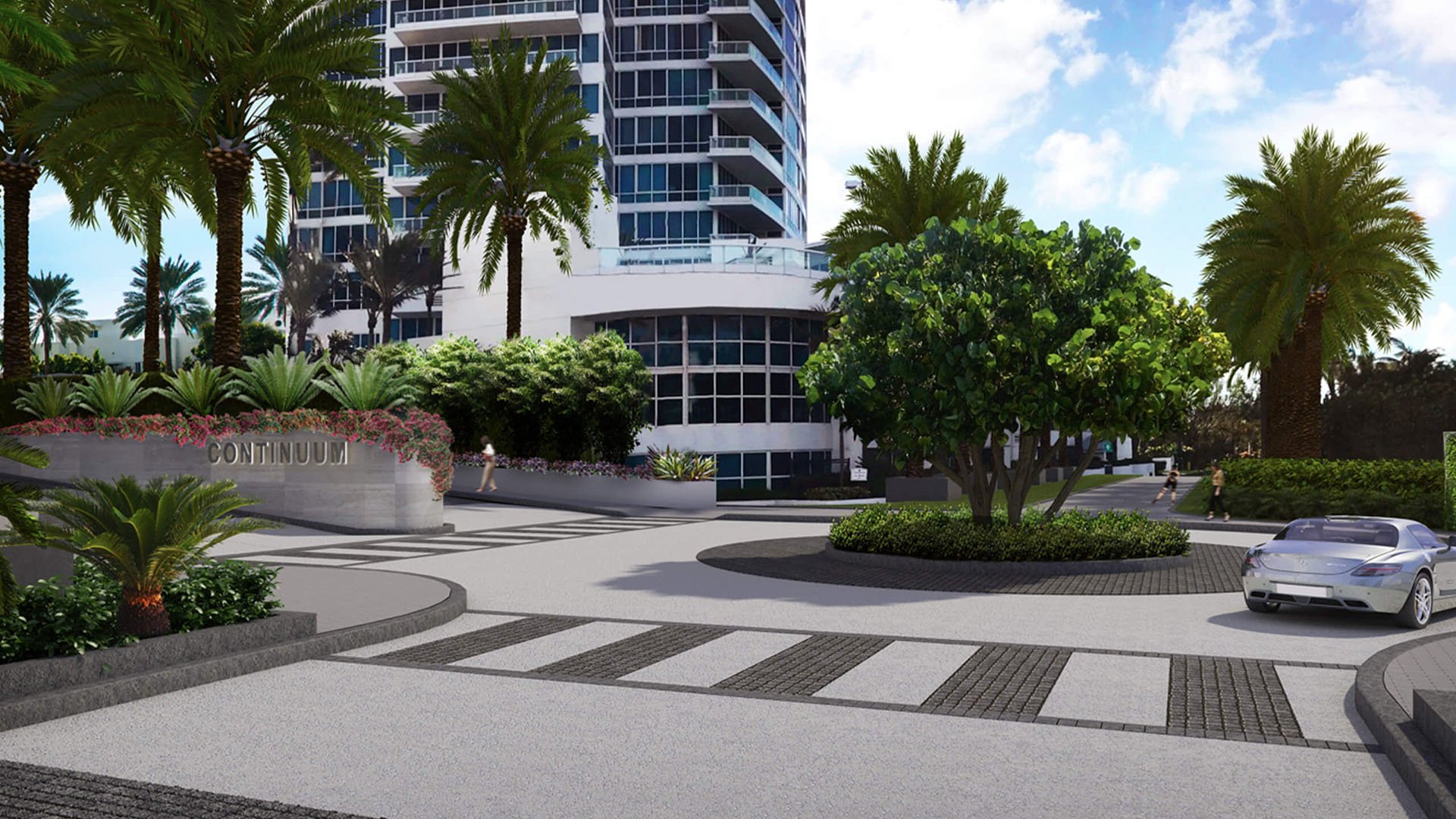
For an ultra-prime buyer, privacy does not begin at the residence door. It begins on the street, as a vehicle slows, turns, crosses the property boundary, and enters a managed environment. The full sequence continues through the drive court or porte-cochère, valet or parking operation, lobby, elevator, corridor, and residence threshold.
Each transition can reveal or conceal a resident. It can increase contact with staff, neighbors, guests, and passersby-or minimize it. In Miami Beach, where tourism, hospitality traffic, nightlife, and social-media visibility can intensify activity near residential entrances, these details carry unusual weight.
Discretion has three distinct dimensions: personal safety, separation between public life and home, and the prestige conveyed by a calm, controlled entrance. Lifestyle priorities still matter, but an exposed, congested, or awkward arrival can function like a design defect, regardless of the interiors’ quality.
At Apogee South Beach, the central question is not whether any single feature sounds private. It is whether drive-court geometry, valet and garage operations, elevator zoning, lobby design, and security protocols function as one continuous system. Buyers prioritizing anonymity should examine pauses, sightlines, handoffs, and points where resident circulation may intersect with other activity.
For Continuum on South Beach, diligence should center on the transition from South Beach’s visible public realm to private residential movement. A rigorous review tests how routine arrivals manage visibility, staff interaction, resident circulation, and the boundary between shared and private space. Consistency is essential, particularly when surrounding activity increases.
At The Ritz-Carlton Residences® South Beach, buyers should assess the residence as both a luxury address and an engineered movement system. Branded hospitality can add polish and service, but a privacy-minded purchaser should determine whether those touchpoints preserve residential discretion during entry and exit. The objective is attentive service without unnecessary exposure.
These observations do not establish a universal winner. This framework does not verify building-specific entrance layouts, parking configurations, elevator arrangements, or current security procedures. Those elements require direct inspection, management confirmation, and, where available, review of relevant plans and operating protocols.
Begin before reaching the property line. Observe the street approach, the moment a driver must signal intent, and whether waiting or turning increases visibility. Continue through vehicle identification, greeting, luggage handling, valet exchange, or self-parking. Record every pause and every point at which a resident, guest, employee, or observer can identify who is arriving.
Repeat the exercise rather than treating one polished visit as conclusive. Test daytime and evening conditions, an ordinary weekday, and an event night. Arrive once with a chauffeur and once as a self-driver. If relevant, model a family arrival, a guest arrival, household staff access, and the movement of a security detail. A sequence that feels effortless in light traffic may perform differently under pressure.
Inside, follow the precise route a resident would take. Assess staff contact, lobby exposure, elevator authorization, waiting time, shared circulation, and the final transition to the residence. Ask how guests are verified and directed, how vehicles are handled, and which credentials control elevator access. The answers should reveal a coherent chain, not a collection of unrelated safeguards.
The most useful standard is practical repeatability. Privacy should not depend on a particular employee, an unusually quiet hour, or an informal workaround. It should be embedded in routine operations.
Request clear explanations of resident, guest, vendor, and staff pathways. Ask who can see a resident’s name or destination, when identification occurs, how elevator permissions are assigned, and what happens when the primary arrival point is busy. Security-conscious families should also understand how children, caregivers, deliveries, and protection personnel move through the property.
Compare those responses with direct observation. If a stated protocol diverges from the physical experience, investigate further. Renderings and amenity descriptions can communicate design intent, but they cannot replicate the friction, visibility, or timing of an actual arrival.
For resale purchasers and other 2026 buyers, the arrival sequence deserves the same scrutiny as views, interior finishes, design quality, and residential brand. Oceanfront cachet should also be distinguished from operational privacy. A compelling setting does not, by itself, reveal how discreetly a resident can move from public space to home.
Create a simple scenario matrix for each property. Score street exposure, vehicle transfer, staff contact, guest control, lobby visibility, elevator access, and the residence threshold. Weight each category according to personal risk, family routines, and tolerance for recognition.
The best choice is the property whose sequence remains composed across the situations that matter most to the buyer. That conclusion should follow repeated observation and confirmed procedures-not assumptions attached to a name, aesthetic, or service concept.
What is a discreet residential arrival sequence? It is the complete progression from the street approach through property entry, vehicle handling, lobby access, elevator travel, and the residence threshold.
Why is arrival privacy especially important in South Beach? Tourism, hospitality traffic, nightlife, and social-media visibility can increase activity and observation around residential entrances.
Is Apogee South Beach automatically the most private choice? No. Its drive court, parking or valet operations, elevator zoning, lobby, and security protocols should be tested as one connected sequence.
What should buyers examine at Continuum on South Beach? Focus on visibility, staff interaction, resident circulation, and the transitions separating the public environment from private space.
How should branded service be assessed at The Ritz-Carlton Residences® South Beach? Determine whether hospitality touchpoints provide attentive service while preserving residential privacy during entry and exit.
When should an arrival inspection take place? Visit during the day, in the evening, and on an event night to understand how the sequence performs under different conditions.
Should a buyer test both valet and self-parking? Yes. Each mode can produce different handoffs, waiting periods, sightlines, and levels of staff contact.
What should security-conscious families ask about? Ask about vehicles, guests, caregivers, staff access, elevator permissions, deliveries, and the final transition into the residence.
Can architectural renderings establish whether an entrance is discreet? No. Realistic arrival scenarios are necessary to reveal congestion, exposure, timing, and operational friction.
What should decide the final choice among the three? Choose the property whose verified procedures and physical sequence best match the buyer’s safety needs, routines, and desired separation from public life.
If you'd like a private walkthrough and a curated shortlist, connect with MILLION.
If branded residences are on your mind — as a home or as an allocation — we would be glad to share what we are seeing, privately.
Begin a quiet conversation