A discreet buyer’s guide to evaluating water pressure, booster-pump redundancy, emergency power, commissioning records, and capital planning at a luxury tall tower.
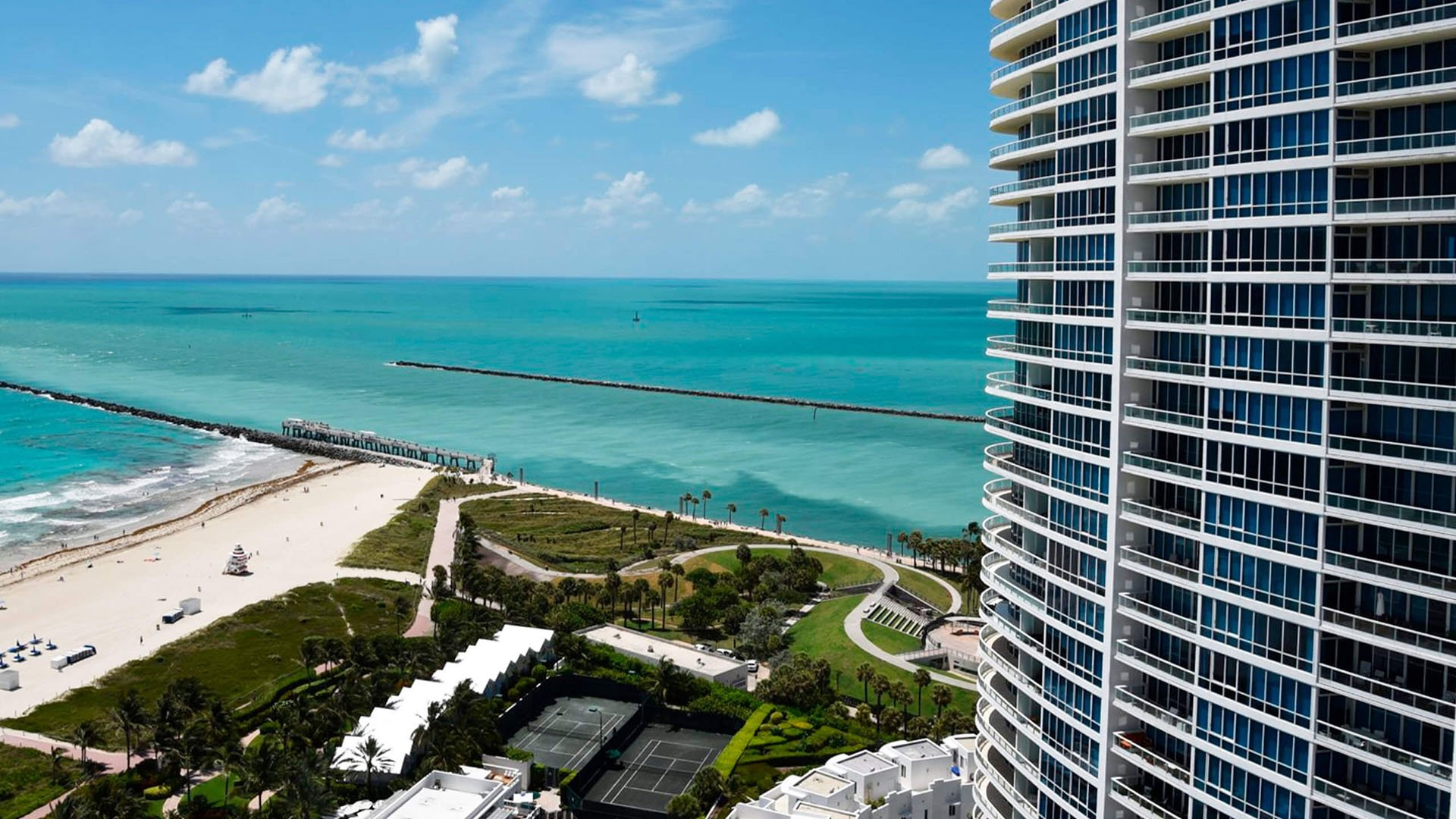
At Continuum on South Beach, the visible proposition is compelling: an oceanfront setting in Miami Beach’s South of Fifth enclave, direct beach access, and impact-rated exterior assemblies. Yet the experience of a tall luxury condominium also depends on systems most owners never see. Domestic-water pressure, booster pumps, pressure-reducing valves, electrical feeders, controls, and standby capacity determine whether showers remain consistent, service work stays unobtrusive, and upper residences function smoothly during periods of heavy demand.
That distinction is particularly important in SoFi, where buyers may focus first on exposure, floor height, privacy, and views. Mechanical diligence belongs alongside those considerations. Municipal pressure alone cannot reliably serve fixtures on the upper levels of a tall residential building. Pumps must add pressure, while zoning and pressure-reducing devices protect the lower reaches of the system from excessive pressure.
In a tall tower, quiet reliability is not an amenity; it is the product of disciplined engineering and maintenance.
Continuum’s actual pressure zones, pump count, redundancy arrangement, and generator coverage are not established here. Those details should be verified in building records rather than inferred from the property’s stature, service level, or life-safety systems.
Water creates approximately 0.433 psi of static pressure for every vertical foot. In a tall, unzoned riser, the pressure required to reach upper floors could expose lower-floor fixtures and piping to impractical loads. Pressure zoning addresses that problem by dividing the building into floor bands, each managed by pumps and pressure-reducing devices appropriate to its elevation.
The operating window is narrower than many buyers expect. High-rise fixtures generally require about 15 to 22 psi of flowing pressure, while static pressure is commonly limited to roughly 65 to 80 psi to reduce noise, wear, and component damage. Intermediate pressure-reducing valves, often called PRVs, can help maintain acceptable conditions at both the top and bottom of a zone.
Multiple mechanical rooms may also moderate pressure extremes. A lower booster set can serve lower floors, while another raises water to higher residences. Where pressure zones operate in series, the system may require a properly sized break tank or hydroaccumulator between pumping stages. For towers of roughly 40 to 60 stories using components rated at 300 psi or less, a separate booster-pump package for each pressure zone is favored.
For buyers considering high floors across South Beach, including Apogee South Beach, the useful question is not simply whether water reaches the residence. It is whether pressure remains stable when morning demand peaks, several fixtures run simultaneously, or one component is out of service.
The phrase “backup pump” can conceal important distinctions. N+1 redundancy means the system has all pumps required to satisfy design demand, plus an equal-sized spare. One pump can be removed from service without impairing design performance. A 1+1 configuration is fully redundant only when either pump can independently deliver 100 percent of the required flow at the required head.
In a 2+1 arrangement, two duty pumps share the design load, and the standby unit must be capable of replacing either one without reducing total design capacity. Some buildings instead use a single backup pump that maintenance personnel can manually valve into different zones. That approach may provide flexibility, but it depends more heavily on staff availability, clear procedures, operable valves, and a successful changeover.
The buyer’s inquiry should extend beyond pump count. A shared controller, electrical feeder, sensor, PRV, or other common component may remain a single point of failure. Ask whether the loss of any one pump or shared element can disable an entire pressure zone. A properly sized standby pump should allow planned service without a full domestic-water shutdown-an important operational advantage in an occupied luxury condominium.
This framework is equally relevant when comparing newer Miami Beach offerings such as Five Park Miami Beach. Newness alone does not answer the redundancy question. The decisive evidence lies in equipment schedules, control sequences, as-built diagrams, commissioning results, and the building’s operating history.
A pump-based domestic-water system without elevated storage depends on continuous electrical service. Generator diligence should identify precisely which cold-water and hot-water pumps receive emergency power, how much generator capacity is assigned to them, and how long the supported configuration is expected to operate.
Buyers should also confirm whether all pressure zones receive equivalent coverage. A generator may support selected pumps but not every booster package, recirculation pump, controller, or associated component. The relevant question is not merely whether the generator starts, but whether the domestic system can maintain appropriate service throughout the building in its intended emergency operating mode.
Fire-pump redundancy provides useful context but cannot be treated as proof of domestic-water resilience. Buildings with occupied levels more than 250 feet above fire-department access require a redundant fire pump for each required fire pump, with redundant fire pumps required for zones above the low zone. These are life-safety benchmarks for a separate system. They do not establish that domestic-water pumps have comparable backup capacity.
For purchasers evaluating The Ritz-Carlton Residences® South Beach or another tall coastal residence, the same principle applies: emergency-power scope must be confirmed equipment by equipment, not assumed from the presence of a generator.
A serious review begins with domestic-water riser diagrams, pump schedules, control narratives, as-built drawings, commissioning files, testing and balancing records, maintenance logs, and recent water-interruption history. Commissioning documentation should include pressure measurements, plumbing-circuit balancing, pump sequencing, correct PRV operation, proper pump assignments, and any dependence among multiple pressure systems on shared equipment.
Static-pressure readings taken during quiet hours are not enough. Request flowing-pressure measurements at representative fixtures, particularly on upper floors and during peak-use periods. Domestic hot-water testing should confirm suitable pressure at every level, positive pressure throughout the system, balanced circulation, and stable operation as demand changes.
Warning signs include weak upper-floor showers, abrupt pressure fluctuations, noisy PRVs, slow hot-water delivery, or repeated interruptions during pump maintenance. None proves a design deficiency by itself, but each warrants closer examination of zoning, controls, balancing, maintenance practices, and standby capacity.
At Continuum’s South Tower, a separate engineering remediation removed more than 10,000 unsafe aluminum façade panels that were detaching from the building. That exterior project does not establish anything about the domestic-water system. It does, however, illustrate why resale diligence at a complex property should examine documented building systems and completed capital work rather than rely on appearances.
Before closing, ask management or the association to identify every domestic- and hot-water pressure zone, the pumps assigned to each, and the design flow and head for duty and standby units. Confirm whether redundancy is automatic or requires manual valve changes, and ask when the last full changeover test occurred.
Review reserve studies and budgets for pump replacement, PRV overhauls, control modernization, electrical work, and generator upgrades. Determine whether planned maintenance can proceed without shutting down a complete zone and whether replacement components are readily supportable. The objective is not to demand a system without complexity; tall towers are inherently complex. The objective is to understand whether that complexity is documented, tested, funded, and managed with the discretion expected of an exceptional oceanfront residence.
For private guidance on evaluating South Florida’s most distinguished condominiums, connect with MILLION.
If branded residences are on your mind — as a home or as an allocation — we would be glad to share what we are seeing, privately.
Begin a quiet conversationMunicipal pressure alone cannot reliably serve upper-floor fixtures. Booster pumps add the pressure required to move water through the tower.
Pressure zoning divides a tower into floor bands so pumps and pressure-reducing devices can keep fixtures within acceptable operating limits.
It means the system has the pumps needed for design demand plus an equal-sized spare, allowing one pump to be removed without reducing design performance.
No. Each pump must independently provide 100 percent of the required design flow at the required head.
Two duty pumps share the design load, while the standby pump must replace either duty unit without reducing total design capacity.
Pump-based systems without elevated storage depend on electricity. Buyers should identify which domestic and hot-water pumps receive emergency power and for how long.
No. Fire protection and domestic water are separate systems, so domestic pump backup capacity must be verified independently.
Request riser diagrams, pump schedules, control sequences, as-built drawings, commissioning files, balancing records, maintenance logs, and water-interruption history.
Measure flowing pressure at representative fixtures during peak demand, rather than relying only on static readings taken during low-use periods.
Weak showers, fluctuating pressure, noisy PRVs, slow hot-water delivery, and interruptions during pump service can warrant further investigation.