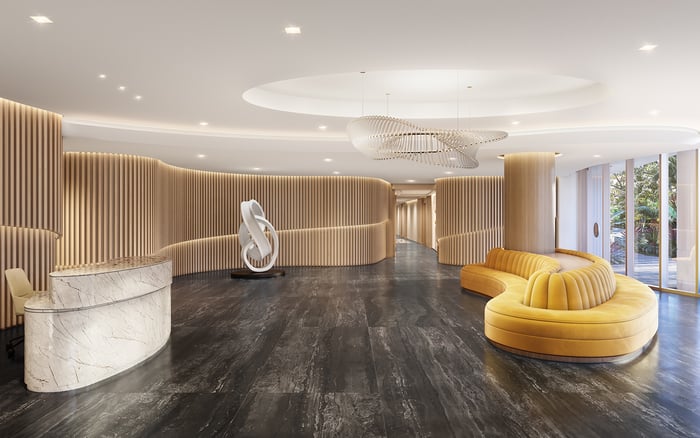
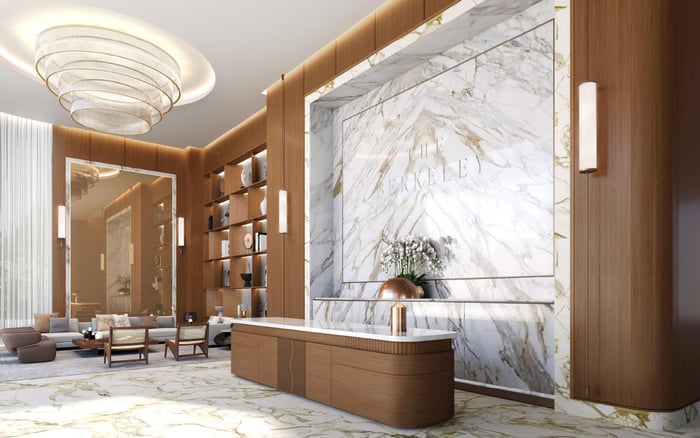
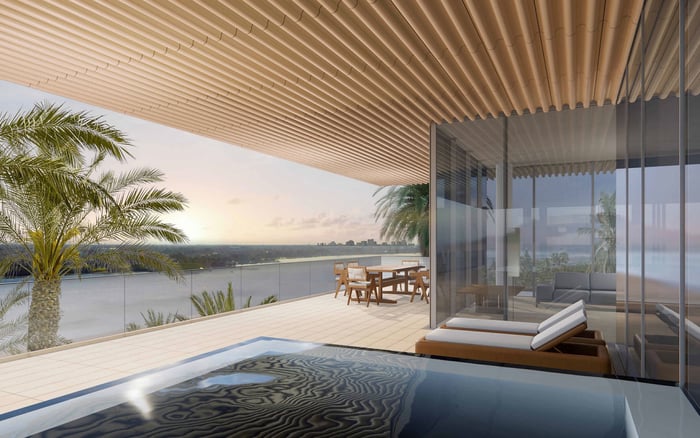
A collector-focused guide to evaluating West Palm Beach residences for discreet access, controllable daylight, secure installation, and responsible art stewardship.
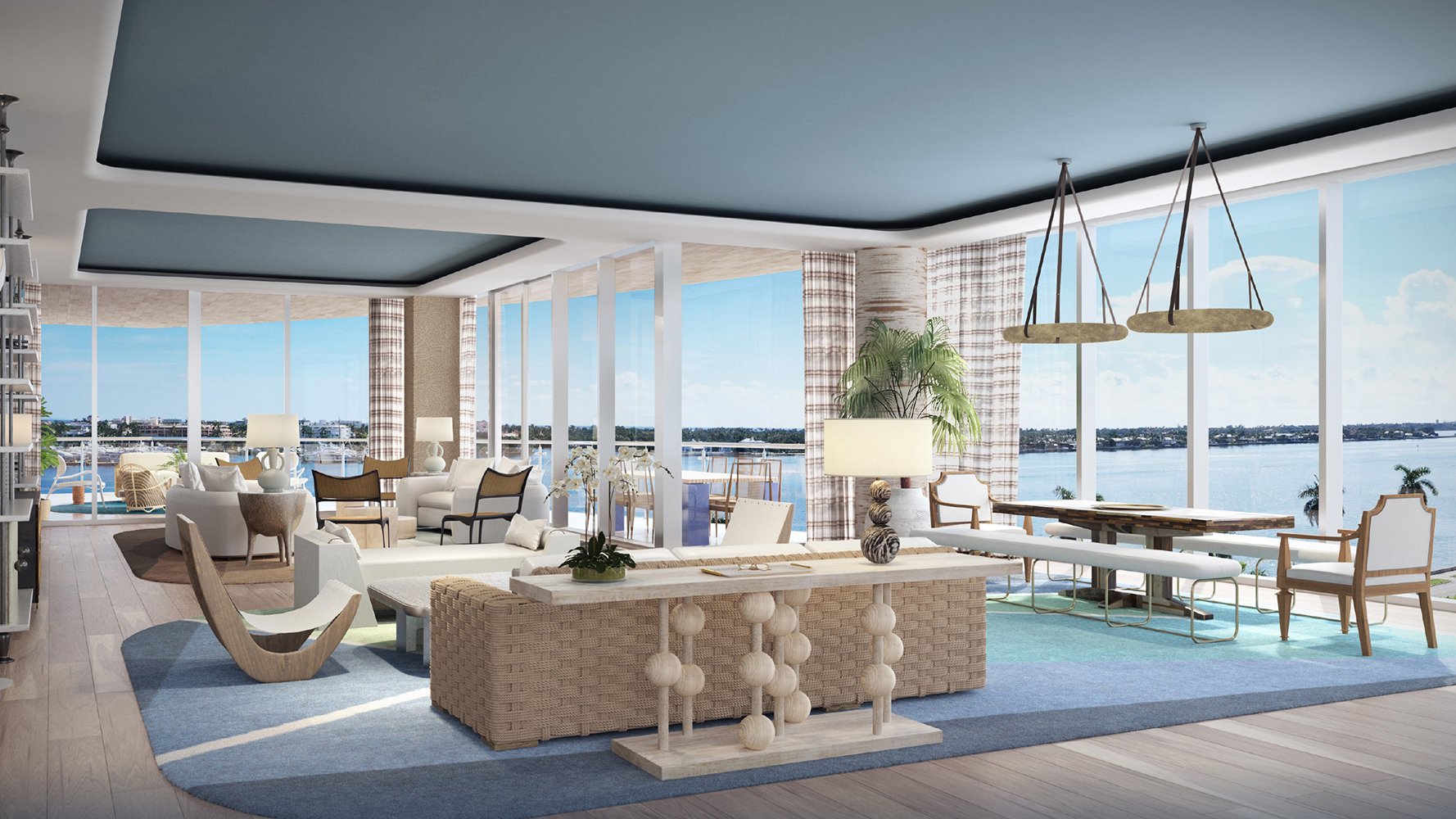
For an art collector, a beautiful condominium is only the beginning. The more consequential questions are how the residence receives daylight, separates public and private circulation, supports secure installation, and preserves discretion from arrival through delivery. A dramatic glass wall can be visually compelling yet difficult for light-sensitive works. A generous great room may photograph beautifully yet provide too little uninterrupted wall area for a serious hanging plan.
In 2026, a discerning West Palm Beach search should begin with a collector brief rather than a conventional amenity checklist. Establish the dimensions and media of important works, preferred viewing distances, sensitivity to ultraviolet exposure, storage requirements, installation frequency, and the degree of privacy expected for family, guests, advisers, and art handlers. The objective is not simply more space. It is controlled space.
Several prominent residential names offer a practical starting point for a tailored review, but each should be evaluated against current plans, condominium documents, building policies, and written specifications.
Alba West Palm Beach belongs in the initial comparison for collectors considering West Palm Beach. Request dimensioned plans, then identify where direct sun, reflected light, doors, glazing, and mechanical grilles interrupt potential display walls.
At Forté on Flagler West Palm Beach, the exercise is equally exacting: map every artwork’s route from loading arrival to final placement. Elevator dimensions, turning radii, thresholds, service scheduling, and protection requirements can matter as much as room size.
Mr. C Residences West Palm Beach should be assessed through the lens of hospitality and privacy. Buyers should ask how resident, guest, staff, vendor, and delivery movements are managed rather than assume branding alone resolves operational questions.
For Shorecrest Flagler Drive West Palm Beach, compare floor plans for continuous usable wall space, controllable exposures, separation of private rooms, and feasible locations for lighting controls, sensors, and concealed shades.
Finally, The Ritz-Carlton Residences® West Palm Beach warrants consideration within the same disciplined framework. Confirm the specific residential service protocols, access rules, alteration procedures, and installation permissions that would govern the contemplated home.
Privacy is not a single feature. It is a sequence that begins at the property boundary and continues through arrival, lobby, elevator, corridor, entry, entertaining rooms, private rooms, and service access. During a tour, note every point at which a resident, guest, contractor, or delivery team could be visible or identifiable.
Ask who may authorize access, how temporary credentials are issued, whether activity is logged, and how art handlers are escorted. Determine whether the elevator opens directly into the residence or into a shared hall, but do not presume either arrangement is inherently superior. What matters is the full protocol, including staffing, surveillance coverage, key control, and response procedures.
Art-friendly daylight is rarely achieved by adding decorative curtains after closing. Commission a room-by-room light study before finalizing major acquisitions or interior work. Review orientation, seasonal sun paths, neighboring reflections, glazing information, shade pockets, electrical capacity, and the proposed control system.
A layered approach is generally more adaptable: architectural shading for broad reduction, concealed shades for daily control, and carefully specified artificial lighting for display. Confirm compatibility with the collection’s media and conservation requirements. Paintings, works on paper, photography, textiles, sculpture, and time-based art do not share a universal standard.
The reflected ceiling plan deserves the same scrutiny as the furniture plan. Coordinate fixture locations, beam spread, glare, color quality, dimming behavior, and heat with actual artwork positions. Preserve flexibility: collections evolve, loans return, and new acquisitions alter the scale.
A collector-grade security review should encompass physical access, digital controls, environmental monitoring, communications, and emergency response. Request a confidential discussion with the appropriate building representatives, then retain independent specialists where the collection warrants it. Avoid circulating a complete inventory more widely than necessary.
Within the residence, consider layered zoning, discreet sensors, monitored entry points, secure network architecture, and alerts for temperature, humidity, water, smoke, and power interruption. Confirm which systems belong to the building, which belong to the owner, and where responsibility shifts. Written clarity is essential: even a sophisticated private system depends on common infrastructure and operating rules.
Installation logistics are also part of security. Verify loading reservations, approved contractor procedures, insurance requirements, elevator protection, crate staging, debris rules, and permissible working hours. Test large works against the entire route using exact dimensions rather than visual estimates.
Request current floor plans, reflected ceiling information when available, glazing specifications, shade provisions, elevator and doorway dimensions, alteration rules, vendor access policies, emergency procedures, and applicable insurance requirements. A buyer considering reinforced walls, specialty lighting, additional controls, or environmental equipment should obtain written approval rather than rely on informal assurances.
The final comparison should set architectural potential against operational reality. Favor the residence where privacy, conservation, installation, and daily enjoyment can coexist without cumbersome workarounds. For a collector, restraint and control are often the most valuable luxuries.
What should an art collector inspect first in a luxury condo? Begin with usable wall area, daylight exposure, privacy circulation, and the complete installation route.
Are floor-to-ceiling windows unsuitable for art? Not necessarily, but glazing, orientation, reflections, shades, and artwork sensitivity require professional evaluation.
Should a buyer rely on renderings to plan a collection? No. Use dimensioned plans, current specifications, field verification when possible, and written approvals.
Why do elevator dimensions matter? A work that cannot clear the elevator, doorway, corridor, or turning radius may require costly alternatives.
Is a private elevator automatically more secure? No. Security depends on credentials, surveillance, staffing, visitor controls, and response procedures as a whole.
What environmental conditions should be monitored? Temperature, humidity, water, smoke, and power status should be evaluated for the collection’s specific media.
Can specialty lighting be added after purchase? Potentially, subject to electrical capacity, ceiling conditions, building rules, permits, and required approvals.
Should art storage be inside the residence? Only after assessing space, environmental stability, fire protection, security, access, and conservation needs.
How should buyers compare West Palm Beach projects? Apply one written collector brief to every residence and verify all decisive details in current documents.
What is the best way to shortlist comparable options for touring? Start with location fit, delivery status, and daily lifestyle priorities, then compare stacks and elevations to validate views and privacy.
For a confidential assessment and a building-by-building shortlist, connect with MILLION.
If branded residences are on your mind — as a home or as an allocation — we would be glad to share what we are seeing, privately.
Begin a quiet conversation