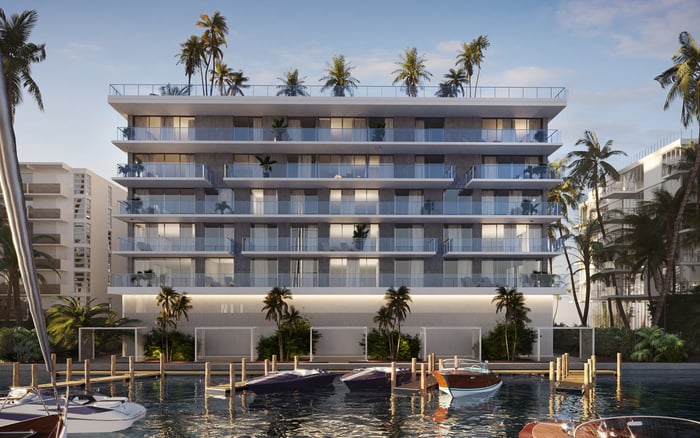
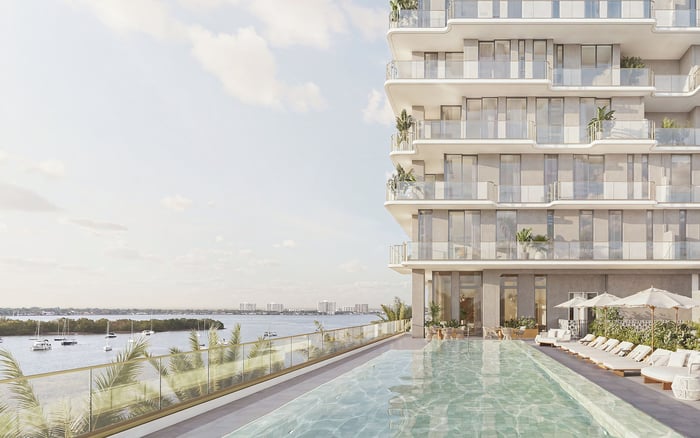
For yacht owners, the decisive North Bay Village amenity is not simply a water view. Slip rights, vessel fit, route conditions, operating rules, and development timing can determine whether a luxury condo truly works.

For many luxury buyers, a condominium search starts with architecture, views, privacy, and service. Yacht ownership changes the sequence. In North Bay Village, the practical review should begin with the intended vessel, the legal basis for dockage, the marina configuration, and the navigation route.
A bayfront setting does not by itself establish yacht suitability. Dockage may be unavailable, too small for the vessel, subject to separate terms, or governed by rules that do not match the owner's plans. Floor plans and finishes become relevant only after these operational questions have been addressed.
“Marina access” should not be treated as confirmation that a residence includes a berth. Buyers should determine whether any slip is deeded, assigned, leased, licensed, separately acquired, transferable with the unit, or subject to availability. The condominium declaration, marina agreement, purchase contract, and current offering materials should establish the controlling terms.
This distinction is especially important when reviewing planned developments. Marketing language, conceptual plans, and amenity descriptions may not establish an enforceable right to dock a specific yacht.
At Continuum Club & Residences North Bay Village, yacht-oriented buyers should evaluate the residence and any marina-related opportunity as separate components of the purchase. The same principle applies across North Bay Village: verify the precise dockage arrangement rather than inferring it from a waterfront location.
Existing residences may allow a buyer to inspect present dockage, marina operations, and the navigation route. Planned projects require an additional review of development timing, approvals, construction phases, and the contractual treatment of proposed amenities.
A broader residential search may include Shoma Bay North Bay Village and Tula Residences North Bay Village. Their suitability for a yacht owner should be assessed through project-specific documents and the buyer's actual boating requirements, not through assumptions about location or construction status.
The useful comparison is therefore not simply resale versus new construction. It is verifiable dockage today versus a future marina feature whose availability, specifications, and delivery must be confirmed.
A berth can exist without fitting the intended yacht. Buyers should request written details concerning permitted vessel size, beam, draft, controlling depth, tidal conditions, shore power, utilities, boarding arrangements, security, access hours, and storm procedures.
The route deserves equal attention. A yacht owner should evaluate water depth, bridge clearance where relevant, maneuvering space, and the path between the berth and open boating waters. A qualified marine professional can help assess the route and berth for the specific vessel.
When comparing nearby waterfront markets, Onda Bay Harbor may provide another residential reference point. It still requires the same vessel-first analysis rather than reliance on a general waterfront description.
Slip value depends on what the owner is permitted to do. Relevant documents may address guest use, overnight occupancy, commercial activity, leasing, transfers, vessel insurance, maintenance obligations, utilities, parking, marina access, and hurricane preparation.
Buyers should also verify which association, marina operator, or other entity controls the berth. A slip connected to a condominium can still be subject to separate agreements, fees, approvals, or operating rules.
Any assumption that a berth can produce rental income should be tested against the condominium documents, marina agreement, insurance terms, and applicable local requirements. Potential income should not be included in a purchase analysis unless the proposed use is clearly permitted.
A yacht-oriented purchase benefits from two coordinated reviews. Residential due diligence should address the unit, condominium documents, association finances, insurance, parking, restrictions, and transfer provisions. Marine due diligence should address slip rights, vessel compatibility, utilities, navigation, operating procedures, insurance, and timing.
For a planned residence, review the current contract and offering materials for the treatment of any marina feature or slip. For an existing residence, inspect the berth and route with the intended vessel in mind. In either case, written rights and practical compatibility matter more than a general promise of waterfront access.
Does marina access guarantee a private slip? No. It may refer to proximity or shared facilities rather than a berth legally allocated to a particular residence.
Which slip rights should a buyer verify? Determine whether the berth is deeded, assigned, leased, licensed, separately purchased, transferable, or subject to availability.
Why should the yacht be evaluated before the condo floor plan? A residence may be appealing while its dockage, route, or operating rules fail to accommodate the intended vessel.
Why does project timing matter? A planned marina feature may have a different approval, construction, or delivery schedule from the residence.
What vessel specifications should be checked? Confirm length, beam, draft, power needs, utility requirements, boarding configuration, and other berth-specific limitations.
What route conditions deserve review? Evaluate depth, tidal conditions, maneuvering space, and bridge clearance where relevant to the intended route.
Can a buyer assume a slip is transferable with the condo? No. Transfer rights should be confirmed in the controlling condominium, marina, and purchase documents.
Can an owner rent out a slip? Only if the applicable documents, marina rules, insurance terms, and local requirements permit the proposed arrangement.
Do water views establish yacht suitability? No. Views do not confirm berth availability, vessel fit, legal rights, or navigational access.
Which documents should guide the purchase decision? Review the current purchase contract, offering materials, condominium declaration, marina agreement, rules, insurance requirements, and any documents governing slip use.
If you'd like a private walkthrough and a curated shortlist, connect with MILLION.
If branded residences are on your mind — as a home or as an allocation — we would be glad to share what we are seeing, privately.
Begin a quiet conversation